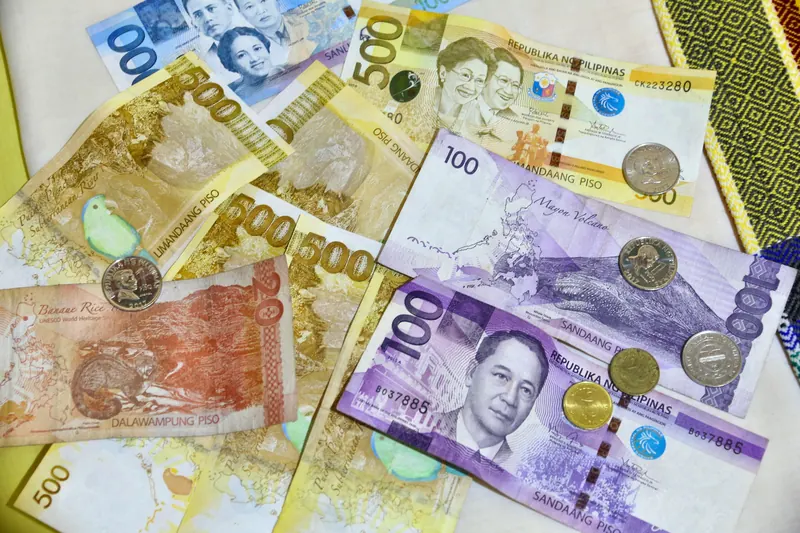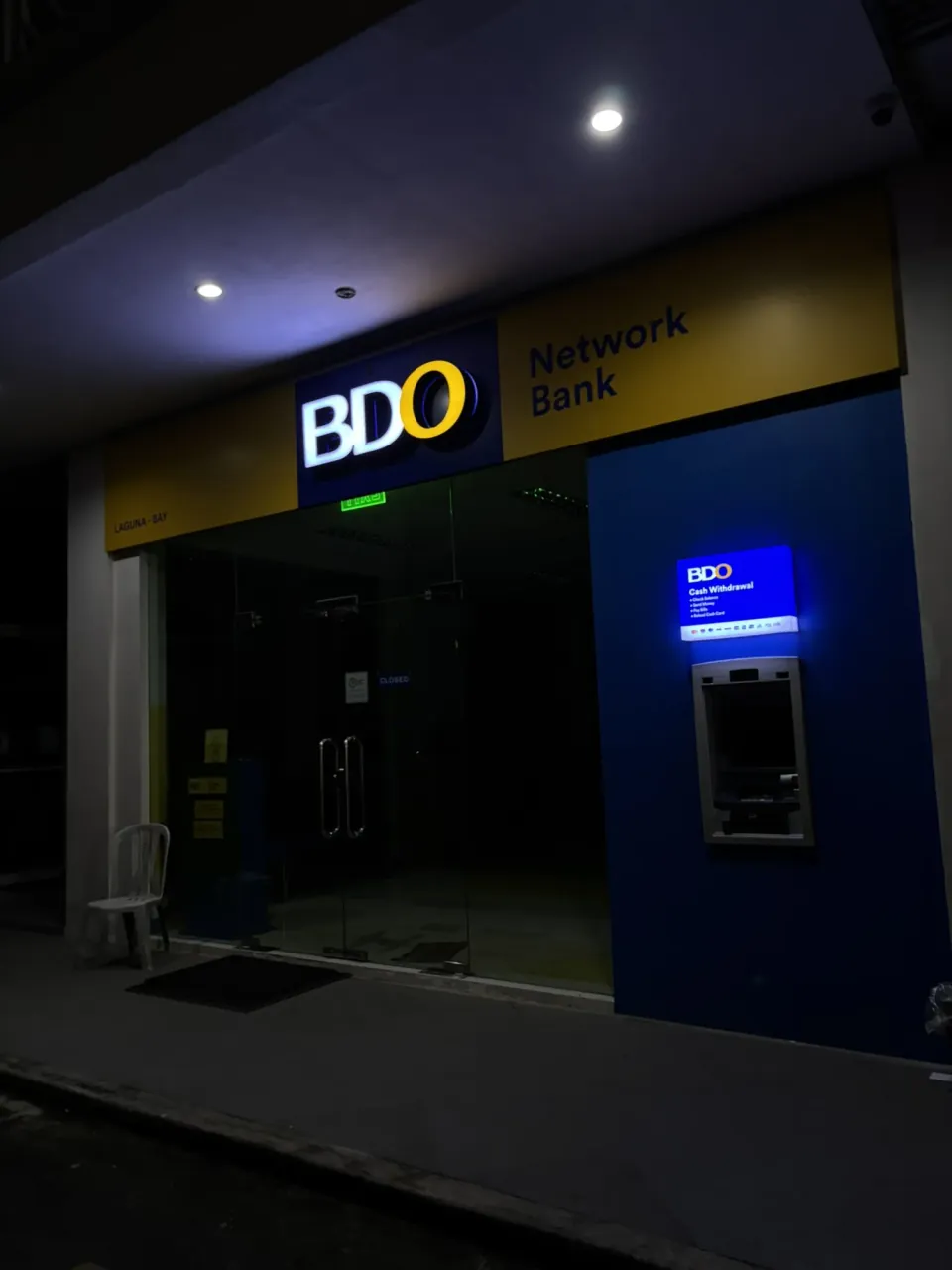
A US tourist landing in Cebu with a Bank of America debit card pays three separate charges on one PHP 10,000 withdrawal: the operator’s foreign-card surcharge, a USD 3–5 out-of-network fee from the home bank, and roughly 1–3% on the conversion. A Philippine-issued card standing at the same machine pays PHP 10 to PHP 18. The fix isn’t a different bank. It’s a different card.
Most “best debit card Philippines” lists on the SERP still rank Revolut in the top three, despite Revolut not being available to PH-resident applicants and never having been. The right card depends on the passport you hold and where you opened the account, not the country you spend in.
The card decision tree, by passport and status
Most people searching “best debit card Philippines” fall into one of five profiles. Pick your row, then read the section that explains it.
| Profile | Best card | Why |
|---|---|---|
| US citizen, opened pre-move | Schwab Investor Checking or Fidelity CMA | ATM fee rebates worldwide, 0% FX. The two best instruments for PH cash withdrawals. |
| PH resident (any passport) | Wise PH-issued | PHP-domiciled, BIN-routed as local. PHP 13,000/month free at ATMs, then 2.69%. |
| EU/UK tourist or expat | Wise UK/EU + home no-FX credit | GBP 250/month free at ATMs, then 2.69%. No Schwab or Fidelity equivalent exists in Europe. |
| Non-US/EU passport, PH-resident | Maya or GoTyme + Wise if eligible | Local Visa for the daily-spend layer, and a PDIC-insured bank behind it. Wise covers a long tail of home countries. |
| Anyone holding a Revolut card from elsewhere | Works in PH for spending | Spend and withdraw fine. You just can't apply from a PH address. |
The two highlighted rows are the only ones with structurally superior answers. Everyone else is making a layered tradeoff.
What a card actually pays at a Philippine ATM
Two different fee worlds run on the same machine. A Philippine-issued card pays the acquirer’s posted withdrawal fee, which the Bangko Sentral ng Pilipinas puts at PHP 10 to PHP 18, with balance inquiries at PHP 0.00 to PHP 2.50. A foreign-issued card pays a surcharge no Philippine bank publishes anywhere.
The domestic side is documented. BSP moved the country to acquirer-based ATM fee charging on 7 April 2021, and its own explainer sets out the model and the expected rates: the BSP page on acquirer-based ATM fee charging describes “a market-based pricing model that lets the ATM-owner … set the fees for transactions”, and states that “usage of ATMs of a cardholder’s own bank shall remain free of charge.”
| Card at a Cebu ATM | What the machine charges | Where the figure comes from |
|---|---|---|
| PH-issued card, its own bank's ATM | Free | BSP, acquirer-based ATM fee charging, effective 7 Apr 2021 |
| PH-issued card, another bank's ATM | PHP 10 to PHP 18 withdrawal; PHP 0.00 to PHP 2.50 balance inquiry | BSP, expected rates under the same model |
| GCash Visa, any ATM | PHP 8 to PHP 20, varies per machine | GCash Services Fees, read 16 Aug 2026 |
| Wise PH-issued card, any ATM | Free to PHP 13,000 per calendar month, then 2.69% of the excess | wise.com/ph card fees, read 16 Aug 2026 |
| Foreign-issued card (Schwab, Fidelity, UK Wise, Revolut, home bank) | An operator surcharge that no PH bank publishes | No primary source exists. Read the on-screen figure. |
| Foreign-issued card, DCC accepted | The surcharge plus the operator's own conversion markup | Decline it. Always select PHP. |
The number nobody publishes
Every guide to this topic asserts that BDO charges PHP 250 to a foreign-issued card. Earlier versions of this article did too. We went to confirm it at source on 12 July 2026, re-checked on 16 August 2026, and still could not.
- BDO publishes a card fee schedule, but it prices BDO’s own cards. Its pages timed out on repeated attempts from our tooling, and nothing we could retrieve carries a foreign-card ATM surcharge figure.
- BPI’s debit-card fees page addresses non-BPI cards in one line: “Service charges may vary per bank or ATM owner.” No number.
- BSP’s Table of Fees and Charges covers Philippine-issued credit cards. It does not cover what a Philippine ATM charges a foreign card.
That silence is not obviously lawful. Section 8(c) of RA 11765, the Financial Products and Services Consumer Protection Act, approved 6 May 2022, requires financial service providers to give “updated and accurate disclosure of information such as pricing or any cost associated with the product or service.” The disclosure that does exist arrives at the machine rather than on a website. BSP’s acquirer-based rules say transaction fees “shall be displayed on the ATM screen and on signages near ATM terminals”, and that cardholders “may cancel the transaction if he/she does not agree with the charge stated in the confirmation notification.”
So here is the honest state of it. The only figures that exist are two named secondaries, not bank rate sheets. YouTrip’s Philippines ATM guide, updated April 2026, puts BDO and Security Bank at PHP 250 and calls PHP 250 the typical fee at the major banks. Wise’s ATMs in the Philippines guide states “BDO charges a fee of 250 PHP for ATM withdrawals using a foreign-issued card”, but that page is dated 9 July 2024. Both are travel guides, not tariffs. PHP 250 is the assumption the modelled table further down runs on, and no Philippine bank publishes it, so we are not going to dress it up as a rate. Read the on-screen figure and back out if it is worse than you expected. That is your statutory right at the confirmation screen, and it is the only enforcement anyone has here.
For the operator-by-operator picture in metro Cebu, ATM fees and withdrawal limits in Cebu is the canonical page and carries the machine-level detail.
Schwab and Fidelity: the two US accounts that erase the surcharge
For a US citizen, two consumer accounts refund ATM operator fees on withdrawals abroad and charge nothing on the conversion. Schwab credits the refund at month-end. Fidelity credits it the same day the fee is debited. Neither can be opened from a Philippine address, which makes the timing of the application the whole decision.
| US account | ATM fees abroad | Foreign-transaction fee | The catch |
|---|---|---|---|
| Schwab Bank Investor Checking | Rebated on cash withdrawals worldwide, credited at the end of the same month | None | The rebate excludes non-local-currency (DCC) withdrawals. No US address, no account. |
| Fidelity Cash Management Account | Reimbursed at any ATM showing the Visa, Plus or Star logo, credited the same day the fee is debited | None charged by Fidelity | A brokerage cash account sold to US residents. Same open-before-you-fly problem. |
| Capital One 360 Checking | Not reimbursed. The ATM owner's fee stands. | None | Fine for hotels and Grab. Wrong instrument for a Cebu cash run. |
| Chase or Bank of America debit | Not reimbursed, and a USD 3–5 out-of-network fee on top | 1–3% | The card most arrivals actually land with, and the worst of the four. |
Schwab’s terms are documented at schwab.com/checking and the Schwab checking FAQs, though schwab.com returns an authorization error to our fetcher, so we confirmed the wording through a site-restricted search rather than a rendered page. Fidelity’s we read directly: the Fidelity Cash Management Account overview states the account “will automatically be reimbursed for all ATM fees charged by other institutions while using the Fidelity Debit Card at any ATM displaying the Visa, Plus, or Star logos”, and its ATM and debit card page adds that “Fidelity does not charge foreign transaction fees.”
For a US citizen pulling PHP 10,000 from a BDO ATM in IT Park or at Mactan-Cebu Terminal 2, the machine levies its surcharge upfront and the account refunds it. No FX fee on top, just the network spot rate. Net cost: roughly zero. Against the same pull on a Chase or Bank of America debit card, you keep the surcharge, add a USD 3–5 home-bank fee, and pay 1–3% on the conversion.
The structural catch applies to both. Schwab requires a US Social Security Number plus a US residential address at application, and virtual mailboxes and PO Boxes fail identity verification because the address is checked against credit-bureau and utility records. Fidelity’s Cash Management Account is likewise a US-resident product; we did not verify its application requirements at source, so treat the open-before-you-fly rule as covering both. If you’re inbound, do this two months before the move, not two weeks.
Wise PH-issued card: the local winner for residents
For anyone with PH residency (long-stay visa, ACR I-Card, or PH passport), the Wise PH-issued debit Mastercard is the cleanest local card for cash. The Wise PH card pricing page carries the current numbers; everything below was read off it on 16 August 2026 and matches the 12 July reading exactly.
Three things separate the PH-issued Wise card from the UK or US version for PH use:
- PH ATMs treat it as domestic. BIN routing flags it as a local card, so the foreign-card surcharge does not attach. This is the single biggest structural advantage on the list, and it is why a UK-issued Wise card is not a substitute once you live here.
- PHP-denominated balance. Hold PHP directly and spend without conversion. If you’re paid in USD or EUR, the conversion happens when you choose, at mid-market plus a stated fee.
- PHP 13,000 per calendar month free at ATMs. Above that, 2.69% on the excess. There is no cap on the number of withdrawals, only on the amount, which covers roughly one PHP 10,000 pull a month.
The three Wise flavours readers compare, all read from Wise’s own country pricing pages on 16 August 2026:
| Issuing country | Card order fee | Free ATM allowance / month | Above the allowance |
|---|---|---|---|
| Philippines | PHP 369.60 (replacement PHP 156.80) | PHP 13,000 | 2.69% of the excess |
| United Kingdom | GBP 7 (replacement GBP 2.50) | GBP 250 | 2.69% of the excess |
| United States | USD 9 | USD 250 | USD 1.95 + 1.95% per withdrawal |
The allowances look similar. The surcharge line is what separates them: a UK-issued Wise card is a foreign card at a Cebu ATM and eats the operator surcharge, while the PH-issued card does not. Over a year of regular withdrawals that gap is the whole argument.
Where the Wise PH card is the expensive option
Pulling pesos out at a machine is Wise’s strong side. Pushing pesos into a Philippine bank account is its weak one, and almost nobody says so. BSP’s Summary of Transfer Fees via Digital Channels, as of 24 July 2026, records Wise Pilipinas Incorporated at PHP 35.00 for an individual InstaPay or PESONet transfer, before VAT. On the same sheet, GCash charges ₱10 (GCash, individual send) (from 04 Jul 2026; BSP fee disclosure, 10 Jul 2026) and the Maya wallet charges ₱10 (Maya (wallet), individual send) (from 06 Jul 2026; BSP fee disclosure, 10 Jul 2026), while BPI, BDO, Metrobank, Landbank and PNB all went to free for individuals during July 2026.
The practical rule: hold your PHP where you spend it and withdraw it, not where you push it out. If rent goes to a landlord’s BPI account every month, route that leg through a bank or a wallet rather than through the Wise balance. InstaPay vs PESONet covers which rail to use for which size of transfer.
Why Revolut is a dead-end for Philippines residents
The SERP fact most “best debit card Philippines” lists keep getting wrong: Revolut does not let Philippines residents open an account. Its supported-countries page lists the EEA, UK, US, Australia, Japan, New Zealand, Singapore, Switzerland and Brazil. The Philippines is absent, alongside Indonesia, Malaysia, Thailand and Vietnam.
What that means in practice:
- You cannot sign up for Revolut with a PH address, foreign passport or not.
- A Revolut card issued in your home country still works here for spending and ATM withdrawals, on the same Visa or Mastercard rails as any other foreign card, and with the same foreign-card surcharge.
- Existing customers who move here can run the account for a while, but Revolut reverifies addresses periodically and may close accounts where residence no longer matches.
N26 and Monzo sit in the same bucket. The closest local equivalent is the Wise PH-issued card; for US citizens, Schwab or Fidelity. There is no Revolut-shaped slot to fill in the PH stack, and no announced timeline for one.
Non-US, non-EU passport holders: the local stack
For Australians, Canadians, South Africans and most South-East Asian passport holders already in the Philippines, the answer is rarely a single card. Schwab and Fidelity are closed, Revolut and N26 are closed, and a home-country Wise card still meets the foreign-card surcharge at every machine.
The realistic 2026 stack:
- Maya Visa debit as the primary daily-spend card. Issued to PH residents on a passport plus a long-stay visa or ACR I-Card, and native to QR Ph and InstaPay. The Maya wallet’s InstaPay send fee for individuals is ₱10 (Maya (wallet), individual send) (from 06 Jul 2026; BSP fee disclosure, 10 Jul 2026); the separate Maya Bank entity sits behind the deposit.
- GoTyme Visa as a free alternative, issued on the spot at any Robinsons Supermarket kiosk. BSP’s transfer-fee sheet footnotes GoTyme Bank at 20 free InstaPay transfers per calendar month, then PHP 9.00 from the 21st onward, which is the most generous free tier of the three.
- GCash Visa for QR Ph and online checkout. PHP 250 to order and PHP 8 to PHP 20 per ATM withdrawal depending on the machine, per GCash’s published fee schedule; its InstaPay send fee is ₱10 (GCash, individual send) (from 04 Jul 2026; BSP fee disclosure, 10 Jul 2026). For limits and mechanics, see GCash for foreigners.
- Home-country Wise card if eligible. Australia, Canada, Singapore, NZ, UK, EU and US all qualify. Use it for receiving USD/EUR income, not for cash pulls.
QR Ph is the reason a local card is not optional. It runs on BSP-regulated transaction accounts under the National Retail Payment System framework, whose national QR code standard was adopted by BSP Circular 1055, Series of 2019. A foreign-issued Visa or Mastercard is not one of those accounts, and no amount of fee optimisation gets you into the QR layer without a local account. The document that opens the local account is usually the ACR I-Card, issued by the Bureau of Immigration.
For account-opening logistics, opening a bank account in Cebu as a foreigner covers Maya, GoTyme, BPI and BDO on the ground.
Which card actually protects the money behind it
Fee tables ignore the question that matters after a fraud or a failure: is the balance a bank deposit or an e-money float, and does Philippine law give you a route to get it back? The two answers split along the same line, and no ranking page on this keyword covers either.
Deposit insurance first. RA 11840, which amended the PDIC Charter and lapsed into law on 17 June 2022, provides that “the deposit liabilities of any bank which is engaged in the business of receiving deposits … shall be insured with the Corporation.” PDIC’s maximum deposit insurance coverage has been PHP 1,000,000 per depositor, per bank since 15 March 2025, up from PHP 500,000. Which issuers count as banks is settled by BSP’s own classification on its transfer-fee sheet: Maya Bank, Inc. and GoTyme Bank Corporation are listed under digital banks, while G-Xchange, Incorporated (GCash) and Wise Pilipinas Incorporated are listed under electronic money issuers.
| Where the balance sits | BSP's own classification | Deposit insurance | RA 12010 recourse in PH |
|---|---|---|---|
| Maya Bank, Inc. | Digital bank | Insured deposit liabilities under RA 11840 | Yes |
| GoTyme Bank Corporation | Digital bank | Insured deposit liabilities under RA 11840 | Yes |
| GCash wallet (G-Xchange, Incorporated) | Electronic money issuer, NBFI | Not a bank deposit. Cover unconfirmed. | Yes |
| Wise PHP balance (Wise Pilipinas Incorporated) | Electronic money issuer, NBFI | Not a bank deposit. Cover unconfirmed. | Yes |
| Schwab, Fidelity, home-country Wise | Not BSP-supervised | None in the Philippines | No |
The e-money rows are honest rather than tidy. PDIC insures deposits in its member banks, and an e-money balance is not a deposit. Whether the trust accounts an issuer holds at a partner bank pass cover through to the individual wallet holder is not something PDIC states on any page we could retrieve, so we are not going to assert it either way. Treat a GCash or Wise PHP balance as uninsured until PDIC says otherwise, and keep the working float small.
Fraud recourse runs the other way. RA 12010, the Anti-Financial Account Scamming Act, lets a BSP-supervised institution temporarily hold the funds behind a disputed transaction. BSP Circular 1215, Series of 2025 sets the clock: an initial hold of not more than five calendar days, extendable by not more than twenty-five, for a total of not more than thirty. Its companions cover the surrounding machinery, Circular 1213 on IT risk management and Circular 1214 on BSP’s inquiry into financial accounts. Section 9 of the Act puts teeth on the whole thing: an institution that fails to hold those funds when required “shall be liable for loss or damage arising from such failure, including the restitution of the disputed funds to the Account Owner.” That route covers a Maya, GoTyme, GCash or BPI account. It does not cover a Schwab card or a UK-issued Wise card, where you are back on your home issuer’s chargeback rules and a time zone away from the fraud. For the mechanics of a live dispute, GCash scams and refunds walks the process.
The stacking strategy: one card is the wrong frame
The “best debit card” framing assumes a single answer. For most expats it is three cards, by job:
- Daily spend, tap and QR: a local Visa (Maya, GoTyme, GCash Visa or a BPI debit card). Tap works at SM, Ayala, Robinsons and Gaisano, and at most chain restaurants. Carinderias and palengke stalls remain cash.
- ATM cash pulls: Schwab or Fidelity if you have one, otherwise the PH-issued Wise card. All three neutralise the foreign-card surcharge, two by rebate and one by BIN routing. Pull in PHP 10,000–20,000 batches and never accept DCC. A local bank card is the cheap fallback: free at its own machines, PHP 10 to PHP 18 elsewhere.
- Emergency backup: a home-country credit card with no FX fee, kept active. Lost cards happen, and typhoon evacuation is a bad time to discover you have one payment method. Keep the home-country card rather than waiting on a local one: a Philippine credit card as a foreigner is a slow, collateral-heavy process.
The stack costs almost nothing to run. The comparison that matters is the annual cost of the wrong stack against the right one:
| Category | Range | Notes |
|---|---|---|
| Wrong stack: home US debit only | ₱25,800–₱41,400 | PHP 250 surcharge times 48 pulls (12,000), plus a USD 3-5 home-bank fee times 48 converted at PHP 62.487/USD (9,000 to 15,000), plus 1-3% on the PHP 480,000 withdrawn (4,800 to 14,400). The band is the sum of these three lines. |
| Right stack (US): Schwab or Fidelity + Maya + home backup | ₱0–₱0 | Surcharge rebated on all 48 pulls, at month-end with Schwab and same-day with Fidelity. No FX fee. No home-bank fee. |
| Right stack (PH resident): Wise PH + Maya/GoTyme | ₱370–₱2,500 | PHP 369.60 to order, once. PHP 13,000/month free, then 2.69% on the excess in heavier months. |
Modelled from Wise PH card pricing (16 Aug 2026), Schwab's checking FAQs, Fidelity's Cash Management Account pages (16 Aug 2026), and the BSP reference rate (10 Sep 2026). The surcharge input is an unverified assumption; no PH bank publishes it.
Read that table as a model, not a measurement. Its inputs are the Wise fee schedule (published, dated) and the ATM surcharge (not published, assumed). What survives even if the surcharge assumption is wrong is the ordering: a US citizen on the wrong stack pays somewhere between PHP 25,800 and PHP 41,400 a year for cash they would have walked away with anyway, and roughly the same leak runs on POS and online at 1–3% of every Grab fare and every Lazada checkout. The right stack takes that to approximately nothing. Halve the surcharge assumption and the ordering does not change.
Currency: hold USD/EUR, or convert in chunks
For Wise users, the second-order call is whether to hold USD/EUR and convert on spend, or convert into PHP in chunks and spend from the PHP balance.
Holding foreign currency makes sense if you’re paid in it and want to time the conversion. Holding PHP maximises the PHP 13,000 monthly free ATM quota. Most residents land on a hybrid: receive in USD or EUR, then convert to PHP in chunks aligned with rent and bills.
What the conversion actually costs, by rail, read live from our USD→PHP corridor ledger:
| Rail | FX margin | Explicit fee | All-in on USD 1,000 |
|---|---|---|---|
| WiseUSD balance → PHP, then InstaPay to PH bank | — | 0.45–0.83% | ₱519 (0.83%) |
| PayoneerInternal currency conversion (e.g. USD→EUR), holding to holding | 0.5% | — | ₱312 (0.5%) |
| PayoneerWithdraw to PH bank in PHP (cross-currency) | 1.2–4% | — | ₱2,499 (4%) |
| RemitlySend USD → PHP bank deposit, mobile wallet (GCash/Maya), or debit-card deposit | not published | — + $0 | unpriceable — FX margin not published |
| PayPalReceive USD → convert → withdraw to PH bank (PH-side cash-out) | 3% | — | ₱1,875 (3%) |
| USD wire to PH bank FCDUSWIFT wire into a foreign-currency deposit account, then convert (unverified band) | 2–4% | — | ₱2,499 (4%) |
| Western UnionOnline send to GCash or PH bank deposit (bank-funded) (unverified band) | 1.5–2.5% | — + $0 | ₱1,562 (2.5%) |
Wise’s structure is a mid-market rate plus a stated fee that tapers with size, which is why chunked conversions beat drip-feeding. The peso figures are benchmarked against the BSP reference rate, currently ₱62.49/USD (BSP RERB, 10 Sep 2026), published daily on the BSP exchange rate page; the full series is at /data/php-fx-rates, and how we build and check it is at /methodology. The sending-money pillar covers the corridors in depth, and the Wise card in day-to-day PH use covers spending mechanics.
How much cash to land with
Enough for a week, and well under the declaration thresholds. The Bureau of Customs foreign currency page states that no person may bring into or out of the country Philippine notes and coins “in an amount exceeding PHP 50,000.00 without authorization from the Bangko Sentral ng Pilipinas”, and that foreign currency or bearer instruments above USD 10,000.00 require a Foreign Currency Declaration Form. Arriving with USD 500–800 in clean bills and one working card beats arriving with a brick of pesos you had to declare.
Failure modes: eaten, lost, expired
Card eaten. Most common at high-traffic Cebu ATMs after a declined transaction. Call the operating bank inside 30 minutes, and your home bank too if it is a foreign card. The retrieval runbook and the current hotlines live in the Cebu ATM guide.
Lost or stolen. Freeze in-app for Wise, Maya, GoTyme and GCash before you do anything else, then file the dispute in writing the same day. For a PH-issued card that written dispute is what triggers the RA 12010 machinery described above, and the five-day initial hold under Circular 1215 runs from the institution’s receipt of the complaint. Maya and GoTyme reissue at a branch or kiosk quickly. Wise ships a replacement internationally and quotes the delivery window in-app at order time; it does not publish a Philippines delivery estimate, so take the in-app quote as the real one.
The close
The best debit card for the Philippines isn’t one card. It is a structural product, Schwab or Fidelity or the Wise PH-issued card depending on your passport, paired with a local daily-spend card that sits behind a PDIC-insured bank. That combination removes the two costs that bite, the ATM surcharge nobody will quote you in advance and the 1–3% conversion margin on every tap, and it puts you inside the one legal framework that can claw back a fraudulent debit.
Revolut isn’t coming to the Philippines on any timeline anyone will confirm. Schwab and Fidelity won’t open from a PH address. Wise PH is the floor for everyone else.
US passport, moving here? Open Schwab or a Fidelity CMA before you fly. Already here? Order the Wise PH card before the next ATM run, and put the daily-spend layer at a bank rather than a wallet.
FAQ
Frequently asked.
What's the best debit card for spending in the Philippines as a US tourist?
Is Revolut available for Philippines residents in 2026?
Can I open a Schwab account from the Philippines?
Does the Wise card work better than a BDO or BPI debit card for spending in the Philippines?
What ATM fee does a Schwab card pay in Cebu?
Is money on a GCash, Maya or Wise card in the Philippines insured?
Data note. Prices, rates, and details are verified as of publication and may change. Always confirm with the listed provider or landlord before committing. This article is informational, not financial, legal, or immigration advice. Full disclaimer.