The most common bad advice for foreigners trying to get a Philippine credit card in 2026 is “just apply at BPI or BDO.” Unsecured approvals for ACR I-Card holders are materially harder than the memes suggest, and AUB Easy Mastercard’s old foreigner-friendly reputation has largely expired. The realistic 12-month path: Security Bank Fast Track (secured) with a PHP 15,000 hold-out, then six months of clean usage, then an unsecured application at BPI Ayala Cebu Business Park. The Credit Information Corporation tracks your ACR I-Card payment history the same way it tracks a Filipino’s. That payment history is the unlock.
The 2026 verdict: the 12-month sequence
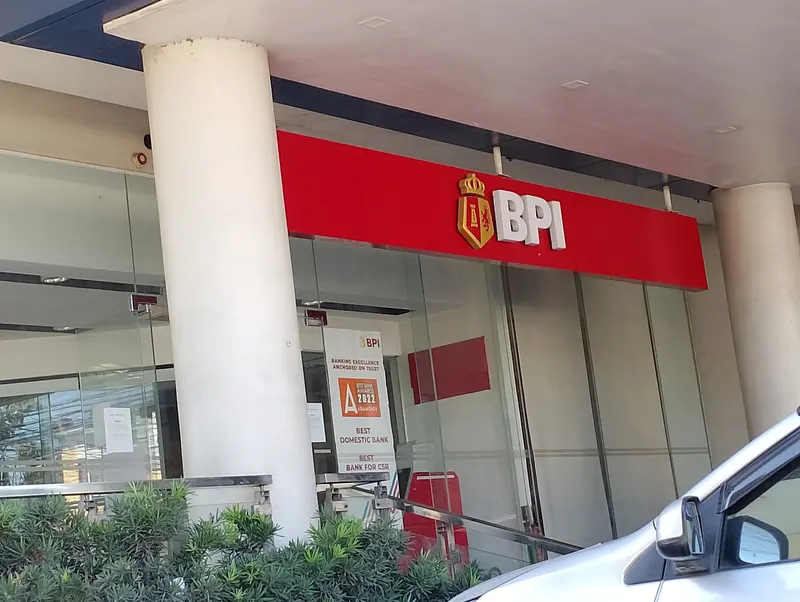
Most foreign applicants who walk into BPI Ayala Cebu Business Park on month one with no PH credit history get declined. Same at BDO IT Park. Same at Metrobank Cebu Capitol. Not because of malice or red tape, but because the CIC file is empty. The bank cannot price the risk.
Security Bank’s Fast Track Mastercard exists precisely to bypass this. The card is secured: your own peso deposit funds the credit line. The bank takes effectively zero credit risk, so underwriting collapses to a document check. As long as your ACR I-Card, passport, and long-stay visa are valid, Security Bank’s own help centre puts the card application at roughly 3 banking days once the hold-out is funded (the savings account itself opens the same day you apply).
The full sequence:
- Month 1. Open a Security Bank peso savings account at Cebu Business Park (Cardinal Rosales Avenue) or IT Park. Fund the hold-out at ₱15,000 (2026-07) minimum.
- Month 1, same visit. File the Fast Track Mastercard application. Security Bank’s published timeline is about 3 banking days.
- Months 2 to 6. Use the card for normal monthly spending and pay the full statement balance every cycle. Never minimum-only.
- Month 6. Pull your CIC report (PHP 45–PHP 299 per pull (2026-07), depending on the accredited app) to confirm Security Bank is reporting.
- Months 6 to 12. Apply for an unsecured card from BPI, BDO, or Metrobank. Approval probability climbs with each clean CIC month.
- Month 12+. Foreigners with a clean file who meet the issuer’s published income tier typically clear underwriting on the same desk that would have declined them at month one.
Unglamorous. It works.
Why “just apply at BPI or BDO” fails on month one
Forum advice from 2018 to 2022 still circulates as if it is current. “Walk into BPI Ayala with your ACR I-Card and a payslip and you’ll get a card.” In 2026, this is mostly false for new foreign applicants without an existing banking relationship.
The actual underwriting at BPI, BDO, and Metrobank pulls three signals:
- CIC credit history through one of the accredited Special Accessing Entities. For a foreigner under 12 months in-country with no prior PH card, this file is empty.
- Income proof. BIR Form 2316 or the latest Income Tax Return is preferred. Payslips are accepted but rank below.
- Banking relationship depth. A six-month-old, lightly funded savings account is a weak signal. A two-year-old account with a substantial average daily balance is strong.
A first-month foreign applicant is missing signal one entirely and usually signal three. The decline is not personal; it is how the credit-scoring model weights inputs. Fast Track generates signal one. After 6 to 12 months of reported on-time payment, the same BPI or BDO application that would have been declined becomes approvable.
Bank-by-bank approval friendliness for foreigners
| Bank | ACR I-Card required | Income proof minimum | FX markup | Foreigner approval reality |
|---|---|---|---|---|
| Security Bank (Fast Track, secured) | Yes | None (secured) | Per cardholder agreement | Effectively 100% with documents |
| BDO (Secured Credit Card) | Yes | None (secured) | Per cardholder agreement (~2%) | High with PHP 10,000 hold-out |
| BDO (unsecured Standard) | Yes | Published tier applies; verify | Per cardholder agreement (~2%) | Low without CIC history |
| BPI (Edge, Gold, Signature) | Yes | Published tier applies; verify | 1.85% (0.85% + 1% network) | Low at month 1; high at month 12 with CIC |
| Metrobank Travel Signature Visa | Yes | Published tier applies; verify | 1.68% (from Nov 20, 2025) | Low without relationship |
| UnionBank (ex-Citi cards) | Yes | Published tier applies; verify | Per cardholder agreement | Low for new foreign applicants |
| HSBC PH (Red Platinum, Live+) | Yes | PHP 400,000/year | Per cardholder agreement (~2%) | Better with existing HSBC home-country file |
| AUB Easy Mastercard | Yes | PHP 50,000/month, 1yr employment | Per cardholder agreement | Tightened post-2024; many declines |
The pattern: secured cards (Security Bank Fast Track, BDO Secured) approve effectively everyone with documents. Unsecured cards from any issuer treat a new foreigner as a thin-file applicant and decline on default unless income is very high and a multi-year deposit relationship exists.
Security Bank Fast Track: the documented entry path
The Fast Track is structurally a secured card. You deposit funds in a Security Bank savings account or time deposit, the bank places a hold-out on those funds (you cannot withdraw them while the card is active), and your credit limit is set at roughly 80% of the held amount.
Security Bank’s published terms (per the Fast Track product page):
- Minimum hold-out: ₱15,000 (2026-07) in a savings account, or ₱100,000 (2026-07) in a time deposit
- Card tiers: Wave Mastercard, Gold Mastercard, Platinum Mastercard (higher tier requires higher hold-out)
- Processing time: about 3 banking days for the card application after the hold-out is funded (the savings account opens same-day)
- No income proof required
- Marketing language: “100% credit approval” because the card is collateralised
What Security Bank actually asks for at the branch:
- Original passport with at least 6 months validity
- Original ACR I-Card
- Long-stay visa documentation: 13a probationary or permanent stamp, SRRV PRA card, 9g work permit plus AEP, SIRV approval, or SVEG approval
- Proof of Philippine address (notarised lease, recent VECO bill in your name, or barangay certificate)
- Embassy Accreditation Papers as an acceptable secondary path per Security Bank’s own foreigner documentation list
- TIN (Tax Identification Number); some branches insist, others accept the application without it pending issuance
The Cebu Business Park branch on Cardinal Rosales Avenue and the IT Park branch handle foreign applicants regularly. Smaller neighbourhood branches sometimes refer applicants to these locations because their relationship managers have less foreigner experience.
13a probationary applicants (1-year stamp) sometimes face more friction than permanent 13a holders even on the secured product; branches read the 1-year stamp as flight risk. Fast Track still approves because it is collateralised. SRRV holders often see the smoothest application because the underlying PRA retirement deposit signals collateral capacity even when unrelated to the card. 9g work-permit holders need a current Certificate of Employment and 1-year tenure to push for an unsecured card later; Fast Track itself does not require either.
BDO Secured Credit Card: the direct alternative
BDO operates its own secured credit card with comparable mechanics. The hold-out minimum is around PHP 10,000, the card builds CIC history identically, and BDO’s branch network is the largest in the country (useful if you live outside Cebu City proper, say in Talisay or Liloan).
The BDO Secured tilts more bureaucratic at the branch. Application forms require more itemised personal information, and BDO sometimes asks for income proof even on the secured product despite published rules saying it is optional. If you bank with Security Bank already, Fast Track is the cleaner path. If you bank with BDO already and the BDO Secured product is on offer at your branch, that route works and avoids opening a second relationship. Current product terms live on the BDO secured credit card page.
Maya Bank and GoTyme: digital-bank credit cards
Maya launched a secured-style credit card flow tied to its Maya Black tier. The deposit range is lower than Security Bank’s PHP 15,000 to 100,000 hold-out, onboarding happens inside the Maya app, and the credit card reports to CIC like any BSP-regulated issuer. Maya does not publish a headline hold-out figure for the product, so confirm the required deposit in-app before you commit.
The 2026 reality for foreigners is more ambiguous. Maya Bank’s deposit account opens for ACR I-Card holders with a passport and a PH SIM, but the credit card product appears to apply additional internal screening that is not publicly documented. Acceptances and declines both appear in recent expat forum reports. If you are already verified on Maya Bank, attempt the Black Credit Card Express. If declined, Fast Track is the documented backup. GoTyme has not launched a credit card product as of May 2026; only its debit and savings products are live.
For payments mechanics on either digital bank, see the Maya vs GCash guide and the best digital bank Philippines guide.
AUB Easy Mastercard: the outdated forum darling
AUB Easy Mastercard ranks high on every foreigner credit-card listicle from 2018 to 2022. Its headline features remain attractive: PHP 0 annual fee for life, fast online application, no first-card waiver gimmicks. The product still exists in 2026, but the foreigner-approval picture has changed.
AUB Easy remains a useful second card once your CIC file is non-empty. As a first card for foreigners in 2026, it is a coin flip at best.
CIC: how the Credit Information Corporation tracks your ACR I-Card
The Credit Information Corporation was established under Republic Act 9510, the Credit Information System Act of 2008. It is the central credit registry of the Philippines, and every BSP-regulated bank is legally required to submit credit data on its borrowers, including credit card holders.
You can pull your own CIC credit report through the Corporation’s accredited consumer channels. Per CIC’s own get-your-credit-report page, the fee runs roughly PHP 45 to 299 depending on which accredited app you use (CreditMo sits at the low end, Lista near the top), with delivery in a few business days:
- CreditMo and Lista. CIC-accredited consumer apps that surface your report and score for a small fee.
- CIBI Information Inc. The oldest PH credit bureau, with offices in Makati; also runs a consumer-facing app.
- TransUnion Information Solutions Philippines. The local TransUnion entity, business-facing.
Pulling your CIC report at month 6 of Fast Track usage serves two purposes: it confirms Security Bank is actually reporting (legally required, but verify), and it gives you a baseline file to bring to a second-card application at BPI or BDO.
Visa status mapping: who qualifies
PH credit card eligibility for foreigners reduces to ACR I-Card plus a qualifying long-stay visa:
- 13a (spouse of Filipino): full eligibility. Probationary 1-year stamps are accepted; some banks prefer the permanent card. See the 13a spouse visa guide.
- SRRV (retiree, PRA): full eligibility, often the preferred profile. Banks read the USD retirement deposit as a collateral signal. See the SRRV retirement visa guide.
- SIRV (investor): full eligibility. Less common at branch level; underwriters may ask for PEZA or BOI registration.
- 9g (work permit + AEP): full eligibility. Certificate of Employment and 1-year tenure usually required for unsecured cards; Fast Track does not require either.
- SVEG (Special Visa for Employment Generation): full eligibility, but branch experience is thinner.
- 9(a) tourist (even with an ACR I-Card from an extension): zero. The tourist ACR I-Card is not a long-stay visa. No issuer accepts.
For ACR I-Card mechanics and the BI annual report obligation, see the ACR I-Card annual report guide.
True 12-month cost of the Fast Track path
The headline is the PHP 15,000 hold-out, but the hold-out is your money. You reclaim it on card conversion or closure. The real cost is the soft costs around it.
| Category | Range | Notes |
|---|---|---|
| Hold-out deposit (returned at exit) | ₱15,000–₱15,000 | Reclaimed when the card converts or closes — not a cost in principle, but it locks the hold-out out of your liquidity |
| Savings account opening minimum | ₱100–₱500 | Depends on the Security Bank account type you open |
| Annual membership fee, Year 1 | ₱0–₱1,500 | Many Fast Track applications waive the Year 1 fee; verify your cardholder agreement |
| CIC report pull (1 verification at month 6) | ₱45–₱299 | Via a CIC-accredited consumer app (CreditMo, Lista, CIBI) |
| Late fee buffer (avoid by autopay) | ₱0–₱850 | BPI charges PHP 850 per late cycle. Autopay the full balance to keep this at zero. |
| FX surcharge if used overseas (avoid) | ₱0–₱0 | Use Wise or Schwab abroad. Keep the PH card on peso spend only. |
| Realistic 12-month carrying cost (excluding reclaimable hold-out) | ₱15,145–₱18,149 |
Costs from Security Bank, BPI, and CIC published disclosures (verified July 2026). Verify Fast Track annual-fee terms in your own cardholder agreement before signing.
The true twelve-month cost lands well under PHP 2,000 if you autopay the full balance and pull the CIC report only once. The hold-out is liquidity-locked, not consumed.
BSP rules every foreign cardholder should know
The Bangko Sentral ng Pilipinas regulates credit card issuance under Republic Act 10870 (the Philippine Credit Card Industry Regulation Law) and its implementing rules in BSP Circular 1003 (May 16, 2018). The current price ceilings sit in a later issuance, BSP Circular 1165 (Series of 2023). Two consumer-facing caps every foreigner should memorise:
- Maximum finance charge: 3% per month, 36% per year. Circular 1165 raised the ceiling to this level in early 2023, and BSP has retained it at every subsequent semi-annual review since. This cap covers retail purchases, cash advances, and penalty interest; installment loans carry a separate 1% monthly add-on cap. Issuers cannot exceed it.
- Maximum cash-advance processing fee: PHP 200 per transaction. Flat, not percentage-based, regardless of cash-advance amount, and no other fee may be charged on the advance.
The BSP reviews the 3% cap every six months. Track the BSP credit card interest rate page if a change is rumoured.
Using your existing home-country card instead
For shorter stays or for foreigners who already hold a no-FX-fee card from home, the case for getting PH plastic is weaker.
The cost stack on a PH peso card used at a London restaurant: the Visa wholesale rate, plus the 1% Visa network assessment, plus the issuer’s own conversion fee (0.85% at BPI, more at most others). That is 1.85% at the cheapest PH issuer and around 2 to 2.5% at the rest, on top of the mid-market rate. Compare with a Wise multi-currency card in the region of half a percent all-in, or your no-FX home-country card at nothing above wholesale. The PH credit card is for peso transactions and CIC history. The Wise card or your home-country card is for travel.
Our peso conversions read live from the BSP reference-rate dataset, and the methodology explains how every figure on the site is dated and sourced. For sending money in, the Wise vs Remitly vs GCash guide covers inbound rails.
What to avoid
Dynamic Currency Conversion (DCC). Some PH POS terminals and many overseas terminals prompt “Continue in your home currency?” Always decline. DCC stacks a 5 to 8% markup on top of standard FX, and PH cards used overseas charge their own FX on the converted figure anyway.
Carrying a balance on a secured card. Paying minimum-only on Fast Track means you are paying 3% per month interest on credit backed by your own deposit. The bank profits on both sides. Autopay the full statement balance from your settlement account.
Late payments. BPI charges PHP 850 per late cycle. BDO is in the same band. A single late payment can wipe several months of CIC progress. Autopay the full balance on day one of card activation.
Closing the card too early. Closing Fast Track at month 6 reclaims the hold-out but ends the CIC reporting that you bought with 6 months of usage. Hold the card open for a full 12 months minimum, ideally 18, before converting to unsecured or closing.
Tax. Credit card spending has no PH tax consequence for the cardholder. For tax-resident foreigners claiming business deductions, the tax for foreigners in Cebu guide covers documentation. For BIR registration if you freelance, see the BIR registration for freelancers guide.
If the Security Bank account itself is still ahead of you, the open bank account in Cebu as a foreigner guide covers the day-one branch process. The credit card is the next step once that account is funded.
Twelve months. A held-out deposit. A card used for groceries, the VECO bill, the MCWD water bill, and the Converge fibre subscription. Pay in full every cycle. At month 12 you walk into BPI Ayala Cebu Business Park with a CIC file that reads like a Filipino’s, and the second card approves on the same desk that would have declined you on month one.
FAQ
Frequently asked.
Can I get a credit card on a tourist visa (9a) in the Philippines?
Do PH banks check my home-country credit score when I apply?
What is the typical FX markup on a BPI or BDO peso credit card used overseas?
Is HSBC Philippines still issuing credit cards to foreigners in 2026?
What happens to my credit card balance if I leave the Philippines suddenly?
Should I bother with a PH credit card if I already have a no-FX-fee card from home?
Data note. Prices, rates, and details are verified as of publication and may change. Always confirm with the listed provider or landlord before committing. This article is informational, not financial, legal, or immigration advice. Full disclaimer.