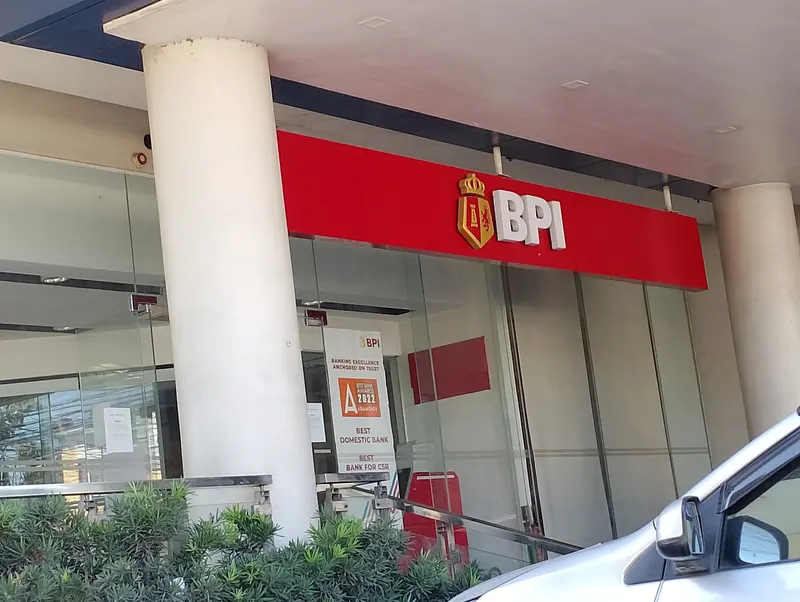
Pick AND if you want both spouses to sign on every withdrawal. Pick OR if you want either spouse to move money alone. That is the structural decision on a Filipino-foreigner joint account in 2026, and most couples make it in 30 seconds at the counter without realising it cannot be changed without closing the account. The other thing nobody warns you about: the survivorship clause printed on the signature card does not bypass the BIR. When one spouse dies, the bank freezes the account pending estate-tax clearance, even under OR, even with the survivorship line signed. In Cebu, BPI Ayala Cebu Business Park, BDO IT Park (TGU Tower), and Metrobank Banilad handle foreigner+spouse joint openings without manager escalation.
The 2026 verdict: AND vs OR
Until late 2022, banks let couples sign up under a hybrid “AND/OR” that allowed either joint or individual transactions depending on context. BSP Circular 1163 (issued December 14, 2022) ended that ambiguity. Section 276 of the Manual of Regulations for Banks now requires banks to designate every joint account as either AND (all signatures required) or OR (any one signature suffices). Banks were given one year to convert legacy AND/OR accounts to the new binary, with full depositor consent. By December 2023 the conversion was effectively complete for active accounts; legacy time deposits flipped on next rollover.
Banks default to OR when you walk in. It is the easier rail for the branch: fewer return visits when one spouse needs to withdraw, no callback queue when a transfer fails because the second signature is missing. If you want AND, you have to ask for it explicitly, and the branch officer will sometimes try to talk you out of it.
OR fits couples where both spouses trust each other fully with the balance, one spouse travels often, or one spouse may be hospitalized and the other needs to pay bills. The cost is unilateral access. Either spouse can drain the account without the other’s knowledge or consent.
AND fits couples pooling savings, or where one spouse manages household cash separately from shared funds. The cost is friction. Every withdrawal, every transfer above small ATM limits, every cheque needs both signatures. If your Filipino spouse is in Mactan and you are in Manila, neither of you can move money until you are in the same room.
| AND (both sign) | OR (either signs) | |
|---|---|---|
| Deposits | Either spouse alone | Either spouse alone |
| Withdrawals over the ATM limit | Both signatures required | Either spouse alone |
| Bank operational friction | High | Low |
| Risk of unilateral drain | Protected | Exposed |
| Online banking transfers | Limited (joint OTP) | Single-signer OTP |
| On death of one spouse | Frozen pending Section 97 | Frozen pending Section 97 |
| Default at BPI / BDO / Metrobank | No, must request | Yes |
The survivorship myth and the Section 97 estate freeze
Every Philippine bank prints a survivorship line on the joint-account signature card. Couples read it and assume the surviving spouse walks into the branch, shows the death certificate, and withdraws. That is not how it works.
Under Section 97 of the National Internal Revenue Code, banks must restrict withdrawals from any account jointly or solely held by a deceased depositor until the BIR has been satisfied. The bank freezes the account on the day it learns of the death. The survivorship clause does not override Section 97. AND/OR did not, OR does not. Two release paths exist after the 2018 TRAIN Law and BIR Revenue Regulations No. 8-2019, which clarified the bank-deposit rules.
Path A: the 6% final withholding tax route. The surviving spouse or any legal heir may withdraw from a joint account within one year of the death, provided the bank deducts a 6% final withholding tax on the deceased’s share (presumed equal unless documented otherwise). To use it, the heir presents the estate’s TIN, a duly stamped BIR Form 1904 (Application for Registration of the Estate), and the death certificate. No eCAR needed. The withdrawn amount is excluded from the gross estate for the estate-tax computation. RMC 62-2018 governs the operational mechanics; banks rolled it out branch by branch through 2019.
Path B: the full eCAR route. The surviving spouse files BIR Form 1801 (Estate Tax Return), pays the 6% estate tax on net estate value (post-TRAIN, due within one year of death and extendable), and presents the Electronic Certificate Authorizing Registration (eCAR) to the bank. The bank then releases the balance. Real release timelines run 3–9 months for straightforward estates, longer if the foreign spouse needs apostilled documents from the home country.
Most couples end up using both. Path A releases the joint balance fast, useful for funeral costs, ongoing bills, the foreign spouse’s plane ticket home. Path B closes the estate cleanly. A withdrawal made by the surviving spouse the day before the bank learns of the death is technically clawback-eligible if the estate later proves insolvent.
PDIC coverage on a joint account in 2026
The Philippine Deposit Insurance Corporation (PDIC) raised the maximum deposit insurance coverage from PHP 500,000 to ₱1,000,000 per depositor per bank (March 15, 2025) under PDIC PR No. 11-2025. The change covers every bank in this article automatically. No application, no fee.
The joint-account split rule sits inside the PDIC Charter (RA 3591 as amended by RA 9576): a joint account between two natural persons is treated as one deposit, split equally between co-depositors unless the signature card stipulates otherwise. Each spouse’s joint share is then aggregated with any other joint accounts at the same bank and capped at PHP 1,000,000. A sole account in either spouse’s name at the same bank is a separate PHP 1,000,000 bucket.
Practical implication for a Cebu mixed-citizenship couple. A joint BPI account holding PHP 2,000,000 is insured PHP 1,000,000 to each spouse (the full balance, under the cap). The same PHP 2,000,000 split as PHP 1,000,000 joint at BPI plus PHP 1,000,000 joint at BDO is also fully insured. A single joint account holding PHP 2,500,000 leaves PHP 500,000 uninsured.
Foreigner-spouse documents (especially marriage abroad)
The branch will ask for, from the foreigner:
- Foreign passport, valid 6+ months
- ACR I-Card (mandatory at BPI, BDO, Metrobank, UnionBank, Security Bank, same gatekeeper as a sole account)
- Philippine visa: 13(a) ideal, SRRV accepted, 9(g) work accepted with AEP, 9(a) tourist refused on joint openings at all five traditional banks
- Proof of address: notarized lease, or a VECO/MCWD/Converge bill under the foreigner or spouse name
- Secondary ID: Philippine TIN card, PhilID, SSS/UMID, or Philippine driver’s license
From the Filipino spouse:
- PhilID, Philippine passport, or two government IDs (UMID, driver’s license, postal ID, voter’s ID, PRC ID)
- Proof of address (lease, utility bill, barangay certificate)
From both:
- PSA-issued marriage certificate, original, plus one photocopy. If you married abroad, that means an apostilled foreign marriage certificate plus the Report of Marriage filed at the Philippine Consulate or Embassy in the country where you married. The PSA then issues the local certificate referencing the foreign record. The PSA process is described at psa.gov.ph.
The marriage-abroad path is the most common trip-up. Apostille turnaround in the US, UK, Australia, and Canada runs 2–8 weeks. The Report of Marriage at a Philippine Consulate then adds another 2–6 weeks before PSA issues the certificate locally. Without the PSA certificate, BPI, BDO, Metrobank, UnionBank, and Security Bank refuse the joint opening even with both passports and an ACR I-Card on the table.
CENOMAR is not required for already-married couples; that document certifies you were single before marrying. The 13(a) spouse visa article covers the same document chain for the immigration side.
Family Code default: who owns the money inside
The Family Code of the Philippines (Executive Order 209, 1988) sets the property regime between spouses. Article 75 lets future spouses choose their regime in a pre-nuptial settlement: Absolute Community of Property (ACP), Conjugal Partnership of Gains (CPG), Complete Separation of Property, or any other regime allowed by law. Without a pre-nup, marriages solemnised on or after August 3, 1988 default to ACP under Article 75. Marriages before that date fall under the older CPG default in the Civil Code.
Under ACP (Article 91), all property either spouse owns at marriage and acquires during marriage becomes community property, with narrow exclusions in Article 92 (gratuitous gifts to one spouse, personal effects, property for exclusive personal use). Funds deposited into a joint account during the marriage are presumed community property regardless of who funded the deposit and regardless of whether the account is AND or OR.
This matters at death. The Section 97 freeze treats the deceased spouse’s share (typically half, by ACP default and PDIC split convention) as estate property. If the foreign spouse can document a separate-source contribution, say an inheritance from abroad before marriage, that share may be excluded from the estate. The documentation has to exist before the death; reconstructing it from bank records 18 months later rarely persuades the BIR examiner.
Cebu branches that handle foreigner+spouse joint openings without escalation
Joint foreigner+spouse openings are standard joint accounts. There is no special “expat-spouse” product. What varies branch by branch is staff familiarity with the foreigner-document layer. Three Cebu branches handle these without bumping it to a manager:
- BPI Ayala Cebu Business Park (ACC Corporate Center, Cebu Business Park, Barangay Luz): the corporate expat default, sees 13(a) and SRRV spouses weekly, the most experienced branch in Cebu for mixed-citizenship couples
- BDO IT Park (TGU Tower, J.M. del Mar Street corner Salinas Drive, Lahug): BPO-adjacent, processes foreigner paperwork daily, opens both peso and FCDA joints
- Metrobank Banilad (Banilad Town Centre, Gov. M. Cuenco Avenue): comfortable with mixed-citizenship couples, opens USD joint accounts for confirmed residents on 13(a) or 9(g)
Both spouses must appear in person. BPI and BDO joint accounts cannot be opened through the app or website in 2026; branch visit is mandatory, confirmed in BPI’s published help-centre answer. Bring originals plus one photocopy of every document. The signature-card session takes 60–90 minutes once you reach the new-accounts officer.
Cost of opening and carrying a joint account
The opening cost is small and mostly one-off. The carry cost is where couples get caught, and it is also where the banks are least transparent. Of the three Cebu-friendly branches, only BPI publishes its savings initial deposit and maintaining balance on its own site, and even those numbers move. The table below carries only what is confirmable at a primary source; the recurring penalty fees are a published gap, handled in the callout beneath it.
| Category | Range | Notes |
|---|---|---|
| Initial deposit = maintaining balance (BPI Regular Savings) | ₱3,000–₱3,000 | BPI's own page: PHP 3,000 to open, PHP 3,000 minimum monthly average daily balance |
| Notarial fee on lease (proof of address) | ₱200–₱500 | Representative band; skip if a utility bill is in your name |
| Passport + 2x2 photo prep | ₱200–₱400 | Representative band; skip if already on hand |
| Total | ₱3,400–₱3,900 |
BPI Regular Savings Account page (bpi.com.ph), fetched 2026-07-16. Notarial and photo lines are representative bands. Recurring fees are unconfirmed at any primary source; see the gap callout.
The fall-below fee is what catches couples who shift the balance into a higher-yielding sole account and forget the joint. Banks debit it monthly until the balance recovers, so a forgotten joint can bleed for months before anyone notices; most banks charge only after two consecutive months below the minimum. Ask for the exact figure and the trigger at opening. A joint FCDA is quoted in dollars, with a minimum opening around USD 500, and the BSP reference rate that converts it is ₱62.49/USD (BSP RERB, 10 Sep 2026); the full series is published at /data/php-fx-rates, and how we date and verify every figure on this page, including the bank fees we could not confirm, is in the methodology.
Where the five big banks stand on foreigner+spouse joint accounts
Branch-level variance is real but the bank-level policy is consistent. Below is the 2026 ground truth across the five traditional banks Cebu expats actually use, plus a UnionBank line for couples who already bank there.
| Bank | AND or OR offered | Foreigner signatory rejection on tourist visa | Joint FCDA (USD) allowed | Survivorship clause printed? |
|---|---|---|---|---|
| BPI | Both, OR default | Yes (refuses 9(a)) | Yes, 13(a)/9(g)/SRRV only | Yes (subject to Section 97) |
| BDO | Both, OR default | Yes (refuses 9(a)) | Yes, 13(a)/9(g)/SRRV only | Yes (subject to Section 97) |
| Metrobank | Both, OR default | Yes (refuses 9(a)) | Yes, 13(a)/9(g)/SRRV only | Yes (subject to Section 97) |
| Security Bank | Both, OR default | Yes (refuses 9(a)) | Yes, resident foreigners only | Yes (subject to Section 97) |
| UnionBank | Both, OR default | Yes (refuses 9(a)) | Limited; ask in branch | Yes (subject to Section 97) |
| PNB | Both, OR default | Yes (refuses 9(a)) | Yes, 13(a)/9(g)/SRRV only | Yes (subject to Section 97) |
The non-spouse joint case is different. For a parent and adult child, business partners, or two unmarried friends, the bank can still open a joint account, but the Family Code default does not apply, the PSA marriage certificate is not on the document list, and Section 97 still freezes on death of either co-holder. Couples reading this for a parent or sibling situation should treat the documentation as identical to a sole account doubled, with the Path A 6% withholding rule still on the table.
Beneficiary designation: cheaper than fighting the BIR later
A handful of Philippine banks let you nominate an in-trust-for (ITF) beneficiary on a sole or joint deposit account. BPI offers it on selected products. BDO offers it through trust products rather than the standard signature card. The mechanic is narrow (it does not bypass Section 97), but it simplifies the eCAR documentation on the survivor’s side because the bank already has the beneficiary’s KYC on file.
The bigger move is a properly drafted last will and testament or living trust, neither of which is a banking product. Both let you steer estate flow around the joint-account default and reduce the calendar time the surviving spouse spends on Path B. Cost ranges PHP 25,000–80,000 for a will drafted by a Cebu estate lawyer, more for a trust. That is roughly an order of magnitude cheaper than the typical penalty bill on a delayed Form 1801: 25% surcharge plus 12% annual interest under the NIRC penalty schedule.
When a joint account is the wrong setup
Skip the joint account if any of the following apply.
- You are on a tourist visa. All five traditional banks refuse joint openings to 9(a) holders. Open Maya Bank in your own name and run separate accounts until your 13(a) lands.
- You want the foreign spouse’s funds segregated from Philippine estate exposure. A foreign-domiciled account in a low-friction jurisdiction is structurally cleaner on death than a Philippine joint. Many expats keep retirement savings outside the Philippines and use the joint only for household cash.
- You are not yet married under Philippine law. Cohabiting or married abroad without the Report of Marriage and PSA certificate. Banks treat you as unrelated parties.
- Your marriage is under a pre-nuptial complete-separation regime. A joint account muddles a regime you explicitly contracted around. Run two solo accounts and a third “household” sole account in one name with limited deposits.
For everyone else, the joint account works. Pick AND or OR with eyes open, keep the PSA marriage certificate and apostille documents in a folder you can find in five minutes, and treat the survivorship clause as a 1980s relic rather than an estate-planning tool. The foreigner bank-account guide covers the sole-account document list and branch hours. The foreigner tax guide covers interest withholding and estate exposure. The sending money guide compares Wise, Remitly, and GCash payout for funding the joint from abroad.
Sources: BSP Circular 1163, Series of 2022; BSP Manual of Regulations for Banks, Section 276; PDIC Charter (RA 3591, RA 9576); PDIC PR No. 11-2025; BIR Section 97 NIRC, BIR RR 8-2019 and RMC 62-2018; Family Code of the Philippines (EO 209); PSA marriage certificate; BPI, BDO, Metrobank, Security Bank, UnionBank published 2026 joint-account terms.
FAQ
Frequently asked.
Is it AND, OR, or AND/OR, and what is the difference in 2026?
Can a foreigner on a tourist visa open a joint account with a Filipino spouse?
If my Filipino spouse dies, can I withdraw immediately from the joint account?
Does PDIC insure both names on a joint account separately at PHP 1 million each?
Is OR better than AND for a foreigner-Filipino couple in the Philippines?
Can we open a joint USD (FCDA) account at BPI in 2026?
Data note. Prices, rates, and details are verified as of publication and may change. Always confirm with the listed provider or landlord before committing. This article is informational, not financial, legal, or immigration advice. Full disclaimer.