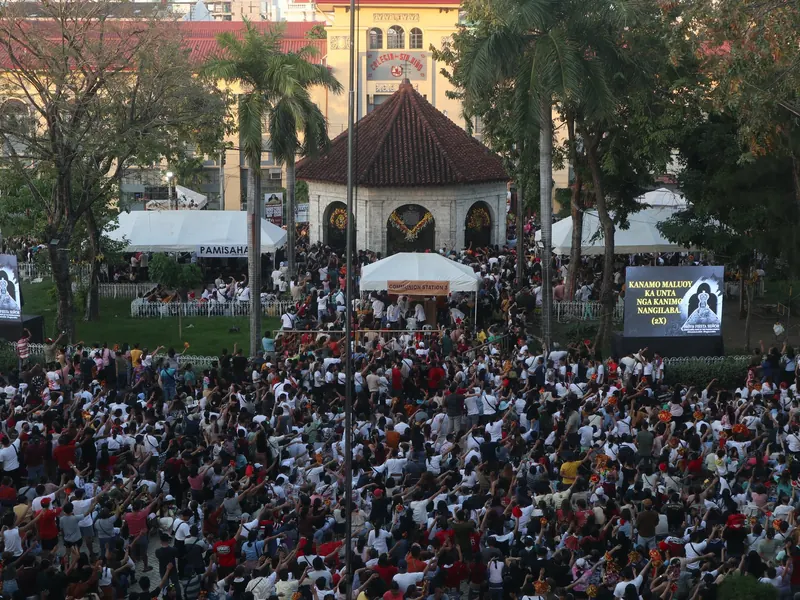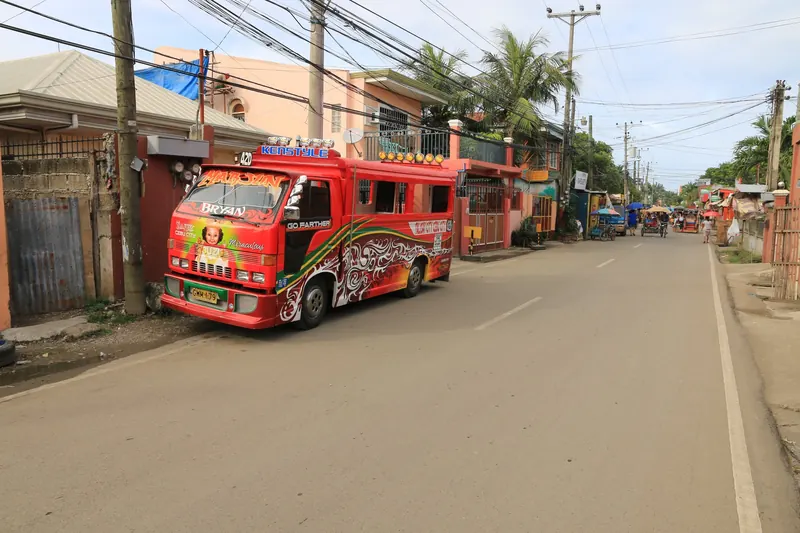
Typhoon Tino (international name Kalmaegi) crossed Cebu twice on the morning of November 4, 2025: landfall at Pilar at 3:10 a.m., then at Tabogon at 5:10 a.m., after coming ashore at Silago in Southern Leyte at midnight. Those are PAGASA’s own figures, from its preliminary report on the cyclone (published 26 December 2025, revised 14 January 2026). The same report records 183.0 mm of rain in 24 hours at the Lapu-Lapu (Mactan) station, the second-highest 24-hour total anywhere in the country during the storm and, per Cebu Daily News, close to 40 percent more than Cebu’s 131 mm November monthly normal. PAGASA said several areas exceeded the rainfall expected from a 20-year return period.
Cebu was also still digging out of the magnitude-6.9 Bogo earthquake of September 30, 2025, five weeks earlier. The province stayed under a state of calamity until the Provincial Board lifted it on May 4, 2026, with recovery still running in 19 municipalities and cities.
Four years before Tino, Typhoon Odette (Rai) crossed Cebu as a far stronger wind event. Visayan Electric said 95 percent of its franchise area was interrupted. It took the utility until February 20, 2022 to report 98 percent of its 474,182 affected customers re-energised. That is 66 days.
Two major storms in four years, and one still-fresh earthquake. Cebu sits in the main Philippine typhoon belt, and any serious plan to live here needs a real preparedness routine rather than the assumption that it will be fine. This is the Cebu renter’s playbook: what the last two storms actually did, which flood lines to check before you sign a lease, the pre-season and 72-hour checklists, what goes in the kit, and what the week after a major hit looks like. Iloilo’s exposure is a different shape, water on a season rather than wind on a calendar, and the Iloilo typhoon guide builds its renter’s clock around that record.
The Tino fact block
Every Cebu page on this site cites the same numbers, and they come from here. Where the official record is ambiguous, this table says so rather than picking a figure.
| What | Figure | Who says so |
|---|---|---|
| Landfalls on Cebu | Pilar 3:10 a.m., Tabogon 5:10 a.m., 4 Nov 2025 (Silago, S. Leyte at midnight) | PAGASA preliminary report on Typhoon Tino (primary) |
| Peak intensity (lifetime) | 175 km/h sustained, 945 hPa | PAGASA preliminary report (primary) |
| 24-hour rainfall, Lapu-Lapu (Mactan) station | 183.0 mm — 2nd highest in the country during the storm | PAGASA preliminary report (primary) |
| Cebu November rainfall normal | about 131 mm for the whole month | Cebu Daily News, Nov 2025 (named secondary) |
| National toll, tally A | 269 dead, 523 injured, 113 missing (as of 17 Nov 2025) | Office of Civil Defense, via GMA and SunStar (named secondary) |
| National toll, tally B | 253 dead, 502 injured, 119 missing — all 'under validation' (as of 26 Nov 2025) | NDRRMC Situation Report No. 30, quoted in the PAGASA report |
| Cebu province deaths | 150 (of the 269 tally), plus 451 injured | Office of Civil Defense, via GMA (named secondary) |
| Cebu City deaths | NOT PUBLISHED — no source we can retrieve breaks casualties down to city level | gap, see below |
| People affected nationally | 5,458,858 | NDRRMC SitRep No. 30, quoted in the PAGASA report |
| Total cost of damage | PHP 1,332,598,520.40 (agriculture, infrastructure, housing, other assets) | NDRRMC SitRep No. 30, quoted in the PAGASA report |
| PHP 17.44 billion | DPWH flood-control SPENDING on four Cebu rivers, 2016–2025. Not damage. | SunStar Cebu analysis of DPWH records, 5 Nov 2025 (named secondary) |
What Tino and Odette actually taught Cebu
Both storms hit Cebu directly. Both caused long-duration damage. Both were late season, December and November, outside what casual guides call the peak months.
Odette (December 16–17, 2021):
- Visayan Electric reported 95 percent of its franchise interrupted. Restoration was triaged from the centre out. IT Park and the Ayala district came back in days; the utility did not reach 98 percent of its 474,182 affected customers until 20 February 2022, 66 days after landfall, with about 10,800 still out.
- Water failed with power. Pumping stations lost electricity, tower storage depleted, and condos above the 5th floor lost pressure almost immediately because building pumps stopped, even where city service held.
- Mobile networks and fixed fiber both went down across large parts of Metro Cebu alongside power and water. Voice and SMS came back before data; fiber took longer, because splitters and physical runs were damaged.
- Cash became the only currency. ATMs without power cannot dispense, stores went cash-only, and GCash and Maya both need a network that was not there.
- High-rise condos were only habitable by people willing to walk the stairs with water on their backs.
Tino (November 4, 2025):
- Flooding, not wind, was the story. PAGASA put Tino’s lifetime peak at 175 km/h, and the Mactan station recorded 183.0 mm of rain in 24 hours against a 131 mm November monthly normal. The Butuanon River in Mandaue overflowed into Casuntingan, Umapad, Paknaan, and Pulangbato. Parts of Cebu City along the Guadalupe River and the Mahiga system flooded.
- Cebu was still recovering from the magnitude-6.9 Bogo earthquake of September 30, 2025. Retaining walls, foundations, and drainage already compromised by the quake had less margin under flood pressure. Compound disasters are not hypothetical here. The earthquake side of that compound risk, from the fault map to what a condo renter can actually do about it, is in the Cebu earthquake guide.
- Flood-control structures on the Butuanon had already been failing before the storm. A 20-metre section of a 265-metre riprap in Barangay Casuntingan collapsed on 20 August 2025, months ahead of Tino, after heavy rain pushed the river over its bank. See the callout below.
- Cebu province went under a state of calamity, and stayed there until 4 May 2026. NDRRMC put the national figure at 5,458,858 people affected.
- The Transcentral Highway and the roads to Talisay and the mountain barangays were impassable for days from landslides and debris.
The through-line from both storms: wind is the short danger, and the long-duration risks are what turn a 12-hour event into a two-week disruption. Power loss, water loss, network loss, flooding, no working ATMs, and compound damage from a prior quake. Plan for the aftermath, not the landfall.
Typhoon season in Cebu and what PAGASA expects for the rest of 2026
PAGASA’s climate outlook for October 2026 to March 2027, issued on 23 September 2026, expects 1 or 2 tropical cyclones in the Philippine Area of Responsibility in each of October, November and December, 0 or 1 in January 2027 and only a slim chance in February and March: 3 to 5 across the six months. A strong El Nino is present in the tropical Pacific, and PAGASA expects it to reach a very strong state by the end of 2026 and to persist until the first half of 2027. El Nino years typically produce fewer cyclones. They do not produce weaker ones, and PAGASA’s July outlook said explicitly that some systems may still reach typhoon or super typhoon intensity.
The historical pattern for Cebu:
- January to May: low activity. Most cyclones form well north or skip Cebu.
- June to August: moderate and rising. Early-season typhoons often graze Cebu or miss.
- September to October: the historically most likely window for a major Cebu-impacting storm.
- November to December: unpredictable, and capable of producing the worst. Both Odette (December 2021) and Tino (November 2025) landed here. Late-season cyclones tend to move slower and dump more rain even when their winds are lower.
The wrong assumption is that the season ends in October. It would have left you unprepared for both of the worst storms in living memory. Keep preparedness high June through December, and relax only January through May.
The flood zone map: rivers, creeks, named barangays
Cebu City has at least eight major waterways that flood in heavy rain: Bulacao, Butuanon, Estero de Parian, Guadalupe, Kinalumsan, Lahug, Mahiga, and Tejero. Choosing a rental away from the immediate vicinity of one of them is the single most effective flood decision a Cebu renter makes. For the address-level workflow before you sign, see the flood-prone barangays rental check, which walks the hazard maps parcel by parcel.
| Waterway | Flood risk areas | Flood risk level |
|---|---|---|
| Butuanon River (Mandaue) | Casuntingan, Umapad, Paknaan, Pulangbato, Tipolo, Subangdaku | Very high — named in Tino 2025 overflow reporting |
| Guadalupe River (Cebu City) | Guadalupe, Punta Princesa, Kalunasan, Tisa | Very high |
| Kinalumsan River (Cebu City) | Banawa, Labangon, Pardo, San Nicolas | High |
| Mahiga Creek (Cebu-Mandaue) | Mabolo east of the creek, Subangdaku, lower Mandaue | High |
| Bulacao Creek | Bulacao, Pardo, Talisay north | Moderate to High |
| Lahug Creek | Lower Lahug near the creek line, parts of Banilad | Moderate |
| Estero de Parian, Tejero Creek | Parian, Tejero, inner Colon area | Moderate to High |
Beyond the waterways, specific barangays recur in Cebu City’s flood-prone lists and in storm reporting: Bonbon, Kalunasan, Guadalupe, Pardo, Tejero, Tinago, Carreta in Cebu City, and Casuntingan, Umapad, Paknaan, Pulangbato in Mandaue. If your lease is in one of them, start by learning exactly how high your unit sits above street level, where the November 2025 water line was on your building, and what the evacuation plan is if water rises again.
Which Cebu neighborhoods are safer during a typhoon
No Cebu neighborhood is typhoon-proof, but some are clearly safer. The safer ones share three features: higher ground, distance from rivers and creeks, and modern building stock with backup generators.
Lower flood risk:
- Cebu IT Park (Lahug): elevated, set back from the Lahug Creek line. Wind risk is real, but building stock is modern and many towers have generators. See the IT Park and Lahug guide.
- Cebu Business Park (Ayala): elevated, central, drained by the estate’s own infrastructure.
- Upper Banilad and the Banilad hillside: higher ground, away from the Mahiga system. Risk concentrates in wind and landslide, not flood.
- Maria Luisa Estate Park: hillside gated community, low flood risk, but road access can be cut by landslides. See the Banilad and Talamban guide.
- Busay and upper Lahug: hillside, and landslide risk rises with elevation.
- Mactan Newtown (Lapu-Lapu): engineered elevation on reclaimed land. Wind exposure is high, and the Mactan station is exactly where the 183 mm of Tino rain was recorded, but the construction is newer and built for it.
Higher flood risk:
- Central Mandaue near the Butuanon: Casuntingan, Umapad, Paknaan, Pulangbato, Tipolo, Subangdaku, Guizo.
- Mabolo east of Mahiga Creek.
- Guadalupe, Kalunasan, Punta Princesa: near the Guadalupe River.
- Colon and Carbon: low-lying, older drainage, flash-flood risk from Tejero and Estero de Parian.
- Talisay outer zones and Consolacion low-lying areas: coastal and river-adjacent.
For a fresh move, the safer-by-default picks are IT Park, Cebu Business Park, and upper Banilad. If cost wins and a Mandaue or older-downtown unit is on your shortlist, walk the area during heavy rain before you commit, and ask the landlord and the immediate neighbours about the Odette 2021 and Tino 2025 water lines for that specific street. If nobody can answer, assume the worst.
Pre-season preparation: April and May
The easiest time to get ready is before the season starts. April and May are the quietest months, supplies are cheap and available, and everything gets scarcer the moment PAGASA raises a signal.
Do all of this before June:
- Buy and stock the emergency kit (see below). Do not wait for a forecast.
- Fill one or two 20-litre water containers. Rotate quarterly. Stored water should reach 2 litres per person per day for 5 days at minimum.
- Learn your building’s evacuation plan. Ask the condo admin or landlord where residents are expected to go, where the fire stairs exit, and what the generator actually powers.
- Photograph and back up your documents: passport, ACR I-Card, lease, insurance, marriage certificate, bank cards. Store in email and on a cloud drive.
- Get ECC and visa paperwork done ahead of any November-December travel. Post-storm BI closures delay everything. See the visa options guide.
- Save emergency numbers: PAGASA, NDRRMC, the Cebu City Disaster Office, your embassy’s Manila line, the Visayan Electric outage hotline, the MCWD hotline, and your nearest hospital from the hospitals and healthcare guide.
- Know your flood elevation. Walk to the nearest river or creek and estimate how many metres below your street the water sits. Do it once in April and you will remember it in every future storm.
- Stock 7 to 10 days of rice, canned goods, and medication that you rotate through normal cooking.
- Test your portable power station and replace old batteries.
72 hours before a forecast storm
When PAGASA raises a signal over Cebu, you have roughly 72 hours before conditions deteriorate.
- Top up the water stock. Add another 20-litre container if you can. Fill the bathtub, the largest pots, and every clean bottle you own.
- Withdraw cash. ATMs do not work without power. Hold ₱10,000–₱30,000 in physical pesos at home, scaled to your household.
- Top up mobile load and your e-wallets. Cellular sometimes survives. Cash and e-wallets are both useful, depending on which network is up afterwards.
- Full grocery shop for 7 days of non-refrigerated food: canned goods, instant noodles, peanut butter, crackers, water, electrolyte sachets, rice.
- Charge every battery in the house. Phones, tablets, power banks, laptops, the power station, flashlights, headlamps.
- Secure loose items outside. Plants, outdoor furniture, laundry poles, anything that becomes a projectile in strong wind.
- Cover windows. Taping is debated, but at minimum close blinds and curtains to contain broken glass.
- Fill the motorbike or car tank. Stations close during storms and queues form afterwards.
24 hours before landfall
The storm is confirmed for Cebu or a close pass, Signal 2 or 3 is up, and the local government may already be calling evacuations from flood-prone barangays.
- Bring everything outside, inside.
- Decide whether to evacuate. If you are in a named flood-prone barangay or within 200 metres of a major waterway, evacuation is the safer call.
- Park on higher ground if you have a vehicle and live anywhere near a flood zone. Submerged cars were the most visible private-property loss in Tino.
- Move electronics, passports, and documents to upper shelves or the highest floor of your unit.
- Unplug non-essential electronics. Surges during the storm fry devices even after the main cut.
- Load your phone with offline content: offline Cebu maps, offline document copies, cached messages.
During the typhoon
Stay indoors. Away from windows. On a middle floor if you are in a high-rise. Monitor radio or mobile alerts for as long as signal holds. Do not drive, do not walk out to check anything, and do not try to save possessions from floodwater.
In a high-rise condo:
- Middle floors (roughly the 5th to the 15th) are safest. Top floors take more sway and roof damage; ground floors flood.
- Stay in interior rooms, a bathroom or a hallway. Avoid rooms with large windows.
- Keep your phone charged and on airplane mode to save battery.
- Do not use the lifts. Power can cut mid-ride.
In a house or low-rise:
- Move to the highest interior room if flooding starts.
- Do not wade through floodwater. It carries current, debris, and live electrical hazards.
- If the roof is compromised, move to the strongest interior structure, a stairwell or an interior bathroom with solid walls.
After the storm: what to expect
The first 48 hours after the storm clears are often the hardest. Wind and rain are gone; power, water, network, and roads are all degraded.
- Power: in a moderate storm, central Cebu (IT Park, Ayala) is typically back within days. Odette is the ceiling case, and the ceiling is 66 days to 98 percent restoration across the Visayan Electric franchise. Plan for at least 3 to 5 days without power in a central area after a direct hit, and considerably longer in outer municipalities. The Cebu electricity bill guide covers outage reporting and disputes, and the current tariff lives in the Cebu electricity rate dataset rather than in this article, so it cannot go stale here.
- Water: MCWD city service usually returns faster than building water does, because condo pressure depends on building power. Expect several days of low or no unit-level water even after city service is back.
- Cellular and fiber: voice and SMS return first, mobile data next, fiber last, because damaged splitters and physical runs have to be repaired rather than switched back on.
- Groceries and ATMs: large malls (SM City Cebu, Ayala Center Cebu) reopen quickly on generator power. Smaller stores take days. ATMs are unreliable in the first week. Cash is essential.
- Roads: debris, landslides, and downed lines block roads. The Transcentral Highway and mountain roads take the longest to clear.
- Grab and jeepneys: sparse in the first days. Walking may be the only practical transport.
The emergency kit: what actually goes in it
A kit for one or two adults, including the one-time cost of a portable power station. You buy this once and replace consumables on a schedule.
| Category | Range | Notes |
|---|---|---|
| Portable power station (300-600 Wh) | ₱6,000–₱12,000 | EcoFlow, Anker, or a local brand |
| Heavy duty power bank (20,000+ mAh) | ₱800–₱2,500 | |
| LED flashlights + headlamp | ₱400–₱1,200 | |
| First aid kit (full) | ₱500–₱1,500 | |
| Waterproof document bag | ₱200–₱600 | |
| 5-day drinking water stock | ₱300–₱800 | 2L x 5 days x 2 people |
| 5-day non-perishable food | ₱1,500–₱3,500 | Canned, instant, rice, electrolytes |
| Battery radio | ₱500–₱1,500 | |
| Waterproof phone pouch | ₱200–₱500 | |
| Whistle, cash, spare chargers | ₱300–₱800 | |
| Total | ₱10,700–₱24,900 |
Assembled at the low end of each line, the kit lands around ₱8,000–₱15,000. Refresh food and water every 6 months, the first-aid kit annually, and the power station’s batteries every 3 to 4 years. These are our own retail estimates rather than a surveyed price index, which is why they are stamped as such: our methodology page explains where the line between a measured LiveInPH figure and an editorial one sits, and this table is firmly on the editorial side.
Home damage, insurance, and landlord disputes
Philippine rental practice puts structural repairs on the landlord: roof, walls, windows, plumbing, electrical. You are responsible for your own property (laptops, clothes, furniture you brought in) and for reasonable steps to prevent damage.
After a major storm:
- Document every piece of damage with photos and timestamps before any cleanup.
- Notify your landlord in writing (text or email is fine) within 24 to 48 hours, with the photos attached.
- Do not pay for structural repairs and then deduct from rent. Unilateral deduction without a prior written agreement is not something Philippine rental law supports.
- If the unit is genuinely uninhabitable (no roof, flooded, extended loss of water and power) you may have grounds to terminate without penalty. Consult a licensed Cebu lawyer rather than walking away.
- Contents insurance pays out for personal-property losses only if you bought it before the storm.
Communication plan and who to contact
Before the storm, make sure one trusted person outside the Philippines knows your status. During and after, the priority order is:
- Family emergency contact abroad. One call, one text, one message: “I am safe at [address].”
- Embassy or consulate, for evacuation help or replacement documents.
- Travel or health insurance provider, if you are injured or stranded.
- Visayan Electric and MCWD outage reporting, for service restoration.
- Cebu City Disaster Office, NDRRMC, PAGASA, for official updates. All three post to social media faster than they update their sites.
Contacts to save now: PAGASA and NDRRMC hotlines, the Cebu City Disaster Risk Reduction and Management Office, 911, the Visayan Electric 24/7 outage line, MCWD customer service, your embassy’s Manila consular line, your travel insurer’s 24-hour line, and one family member’s number in international format.
If a typhoon hits your travel plans
Mactan-Cebu International Airport closes pre-emptively for storms forecast at Signal No. 3 or higher, usually 12 to 24 hours ahead of landfall. Cebu Pacific, Philippine Airlines, and AirAsia Philippines all rebook affected passengers, but the playbook differs by airline and by timing. Cancellation policies, free-rebook windows, refund versus travel-credit choices, and the season when a flexible fare pays for itself are in Mactan airport typhoon flight cancellation and rebooking.
The honest frame
Most typhoon seasons in Cebu pass without a direct hit. The normal experience is a few PAGASA warnings, maybe one storm that brushes the island and ruins a weekend, and an uneventful return to dry season. Odette and Tino are not the normal experience.
But the major storms do come, and when they do, the gap between a prepared household and an unprepared one is the gap between reading by lamplight for three days and queueing at an ATM that cannot dispense. Cebu residents who go through one major storm almost always buy the full kit immediately afterwards. This guide exists so you do not have to learn it that way.
The Cebu safety and crime guide covers the other half of personal safety planning: the scams, petty theft, and neighborhood filtering that matter year-round. Storms are a seasonal risk. But the few days that are stormy concentrate more risk than all the others combined, and they deserve a plan of their own.
FAQ
Frequently asked.
How bad was Typhoon Tino in Cebu?
When is typhoon season in Cebu?
Which Cebu neighborhoods flood during typhoons?
How long did Cebu lose power during Typhoon Odette?
Do I need a typhoon emergency kit as a Cebu renter?
What is the biggest typhoon-related risk for expats in Cebu condos?
Data note. Prices, rates, and details are verified as of publication and may change. Always confirm with the listed provider or landlord before committing. This article is informational, not financial, legal, or immigration advice. Full disclaimer.