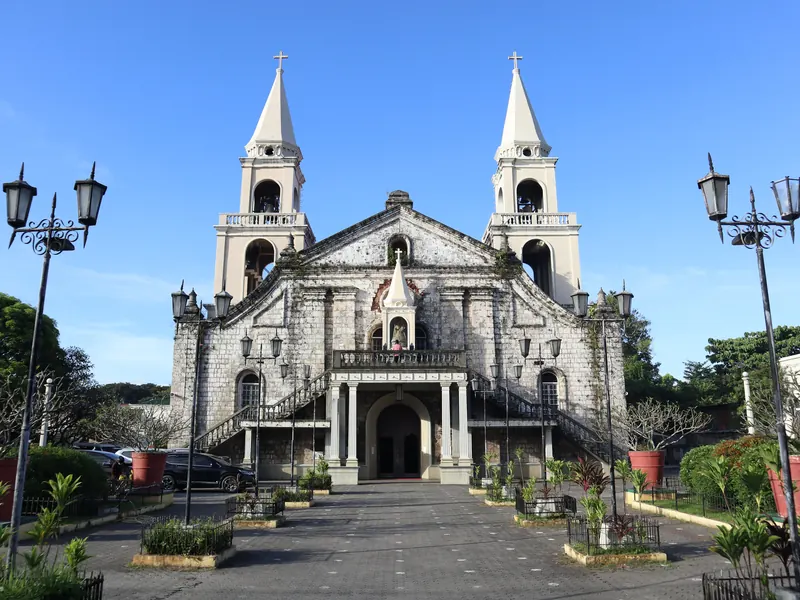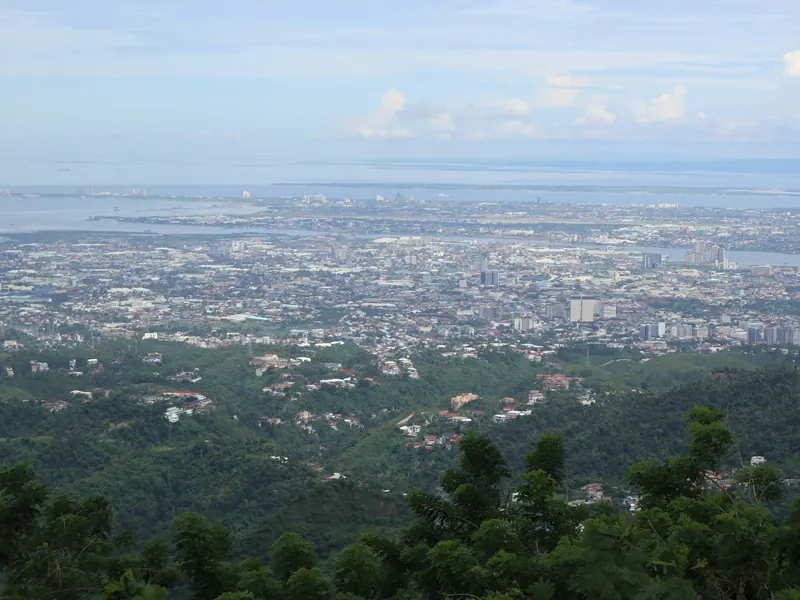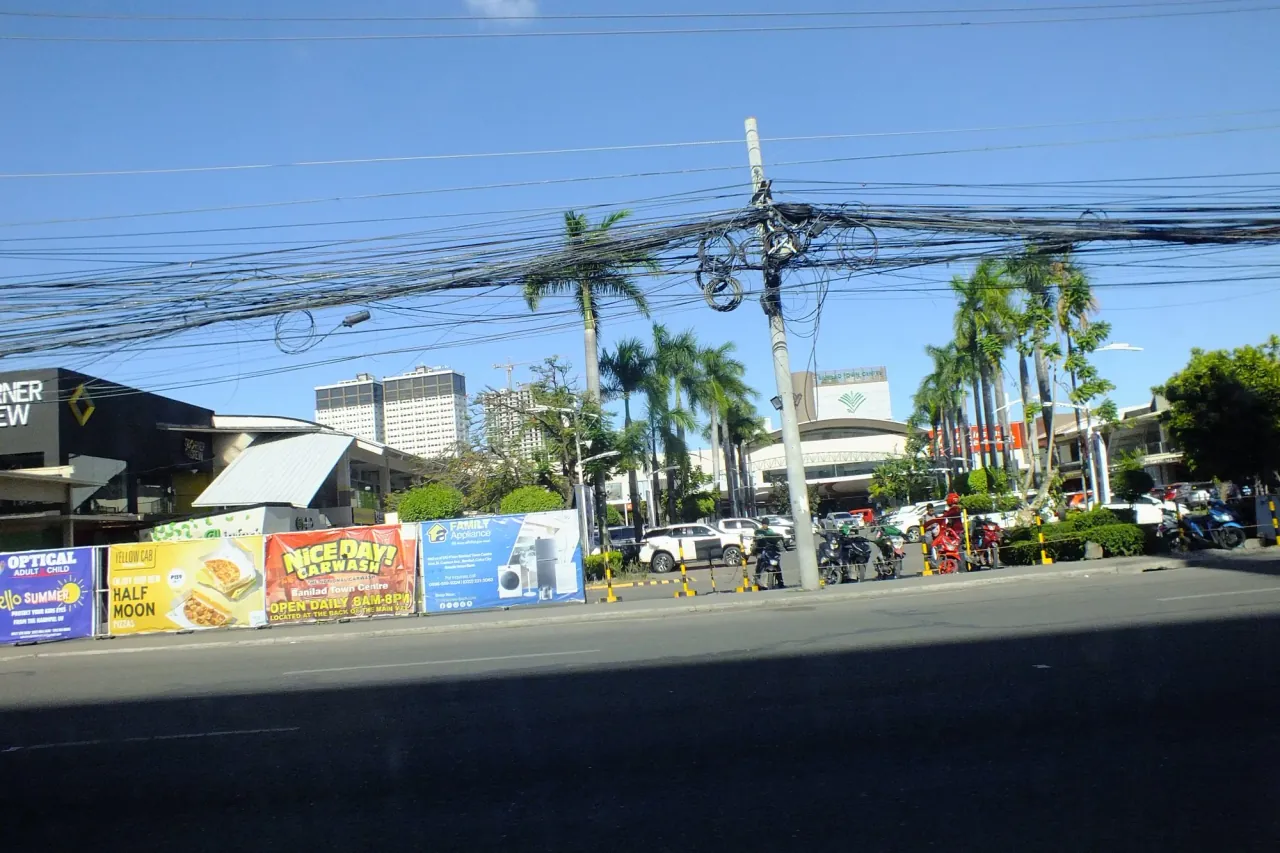
Banilad and Talamban are two connected barangays along Gov. M. Cuenco Avenue that answer two completely different questions. Banilad is the default expat family neighborhood: gated subdivisions, international schools, and family-sized houses renting for ₱50,000–₱70,000/month. Talamban is the university zone and upland suburb, with dorm rooms from ₱3,500–₱7,000/month and newer condos near the University of San Carlos Talamban Campus. And as of April 2026, Talamban sits inside MCWD’s 43,000 cubic meter daily water deficit projection, with water trucks running Tuesdays, Thursdays, and Sundays.
This guide covers rent ranges for both areas, the specific buildings and subdivisions worth knowing, international school access, the current water supply situation, and the commute math. All prices and data verified for early 2026.
What Banilad and Talamban Actually Are
Two separate barangays with almost nothing in common except the road that links them. The search term “Banilad and Talamban” hides the fact that most renters only need to look at one. Banilad and Talamban are connected by Governor M. Cuenco Avenue as it runs north from IT Park and Lahug into the hills. They share a geographic corridor but serve very different renters.
Banilad sits directly north of IT Park and Lahug, covering the flat residential corridor up to the Kinalumsan River boundary. The barangay mixes gated subdivisions (Holy Family Village, Sto. Niño Village, Crossroads area), older standalone houses, mid-rise condos along Gov. M. Cuenco Avenue, and a steady commercial strip centered on Banilad Town Centre, Crossroads, and Country Mall. Family-oriented. Long-stay expat-heavy. Quiet compared to IT Park.
Talamban sits further north and uphill. It is larger and more spread out. The barangay includes the University of San Carlos Talamban Campus (the main USC campus), newer condo developments like BE U Talamban, older boarding houses serving students, and suburban neighborhoods climbing the slopes toward Busay and Pit-os. Less expat density, more local families, and a real dependence on jeepneys, motorcycles, or Grab to reach anywhere outside the corridor.
The practical distinction: Banilad is where expat families with school-age kids land. Talamban is where students, young professionals working remotely, and budget-conscious couples go when Banilad rent’s too high. Match the question to the corridor before you run any rent searches — your answer to “which school?” or “which employer?” usually decides which of the two barangays you’re actually looking at.
Banilad Rent: Condos, Houses, and Gated Communities
The rent bands in this guide come from LiveInPH’s editorial rent baseline (asOf May 2026), published in full at /data/cebu-rent-index with its methodology. It is an editorial estimate, not a measured index: no listing sample has been collected, n is null on every Banilad and Talamban segment, and there is no median. The building-level figures below are our own estimates cross-checked against active listings, not observed transactions. Treat every band as a negotiating prior and verify the specific unit against live Lamudi or Rentpad listings before you budget.
A 3BR gated-subdivision house in Banilad runs PHP 50,000–70,000 furnished, and condos stretch from PHP 12,000 studios to PHP 65,000+ three-bedroom units. Studios and one-bedroom condos rent for ₱12,000–₱30,000/month as of early 2026. Houses in gated subdivisions range from ₱35,000–₱120,000/month depending on size, furnishing, and whether the subdivision is premium-tier. That puts Banilad among the most expensive neighborhoods in Cebu City for family-sized units.
The variation inside Banilad is driven by four factors. First, proximity to Gov. M. Cuenco Avenue and the commercial strip raises rent. Second, gated subdivision versus open street matters: units in Holy Family Village or Sto. Niño Village command a 15–25% premium for the security and community. Third, whether the unit is a condo or a standalone house changes the pricing logic entirely. And fourth, parking is priced in: most Banilad houses include a garage, while condos may charge separately for slots.
Condo breakdown:
- Studios: ₱12,000–₱20,000/month
- One-bedroom: ₱18,000–₱30,000/month
- Two-bedroom: ₱30,000–₱65,000/month
- Three-bedroom (premium, 250 sqm): ₱55,000–₱85,000/month
House breakdown:
- Three-bedroom gated subdivision, standard: ₱35,000–₱55,000/month
- Three-bedroom with maid’s room, 2-car parking: ₱55,000–₱80,000/month
- Premium houses, furnished, larger lots: ₱80,000–₱150,000/month
Banilad Buildings and Subdivisions Worth Knowing
Five names filter 80% of the Banilad rental noise: Grand Residences Cebu, The Sentinel, Holy Family Village, Sto. Niño Village, and the Crossroads / Banilad Town Centre cluster. Know them and you’ll skip the portal filler.
Grand Residences Cebu is a mid-rise condo along Gov. M. Cuenco Avenue, walking distance to IT Park and Ayala Center Cebu. Two-bedroom units run ₱35,000–₱55,000/month. The building draws long-stay expats, BPO executives, and couples who want the Banilad residential feel with a short commute to the employer corridor. Amenities include a pool, gym, and 24-hour security.
The Sentinel is an exclusive residential condominium on Gov. M. Cuenco Avenue. Fewer units than Grand Residences, higher per-unit price. It targets the high-end long-stay expat market and typically does not appear on the budget portals. One-bedroom units start around ₱30,000–₱45,000/month.
Holy Family Village is one of Banilad’s established gated subdivisions. The three-bedroom condo units in the village rent for ₱55,000–₱75,000/month furnished (editorial estimate; verify the specific unit). The gated environment is one of the draws for expat families with kids who want controlled access.
Sto. Niño Village is another gated subdivision in Banilad, with standalone houses for rent rather than condos. Two-storey houses with three bedrooms, maid’s room, and two-car parking rent for ₱60,000–₱80,000/month. These are the kinds of units that fit a family of four or five with live-in help.
Crossroads and Banilad Town Centre area isn’t a specific building — it’s a commercial-residential cluster along Gov. M. Cuenco Avenue. A mix of mid-rise condos, older apartments, and houses sits around the mall complexes. It’s the walkable part of Banilad, and where most of the day-to-day expat life happens. Rustan’s Supermarket at Crossroads is the default grocery for expat families wanting imported brands (about 15–25% above Robinsons pricing); Banilad Town Centre runs the cheaper everyday shop. Daily-life density around this cluster means you can run errands on foot in a way that’s rare outside IT Park. Rent here runs the full Banilad range.
For renters on a tighter budget, older walk-up apartments on the side streets off Gov. M. Cuenco Avenue still rent for ₱10,000–₱15,000/month for studio-style units. These are functional rather than amenity-rich and mostly serve young professionals or couples without children.
Maria Luisa Estate Park sits just north of Banilad proper and functions as the upscale houses-and-lots alternative for expat families who want a fully gated, quiet-street environment with larger lots than the Banilad core. Three-to-four bedroom houses rent in the ₱80,000–₱250,000/month range depending on furnishing and lot size, which puts it above everything else on this list. Long-stay corporate expats and retirees dominate the demographic. It’s a 10–15 minute drive to Cebu International School in Pit-os, which is the main reason CIS families target Maria Luisa over cheaper Banilad subdivisions when the school-run math is the deciding factor.
Talamban Rent: Dorms, Condos, and the University Zone
Talamban rent splits into three clean tiers: student dorms from PHP 3,500, older studios at PHP 12,000–18,000, and newer BE U Talamban or USC-adjacent condos at PHP 20,000–30,000 furnished. Dormitories and boarding houses near the University of San Carlos Talamban Campus rent for ₱3,500–₱7,000/month per room, usually with shared kitchens and common areas. Older studios in mid-rise buildings run ₱12,000–₱18,000/month. Newer condo units at BE U Talamban and similar developments reach ₱20,000–₱30,000/month fully furnished.
BE U Talamban is the newest flagship condo in the area. A 28-storey tower with 525 studio and one-bedroom units, developed by Benedict Ventures and located about 300 meters from the University of San Carlos Talamban Campus. It targets students, young professionals, families of students, and investors looking at Airbnb and long-term rental plays. Studio rent runs around ₱20,000–₱26,000/month furnished. One-bedroom units reach ₱26,000–₱34,000/month. The location can’t be beat for USC students who want a modern building instead of a dorm, though the building isn’t designed for families with young kids.
Fully furnished 55 sqm studios near USC in other buildings rent for about ₱22,000–₱28,000/month with long-term leases.
Houses and subdivisions in Talamban exist but are spread out. Two-bedroom and three-bedroom houses in middle-class subdivisions rent for ₱20,000–₱45,000/month, significantly cheaper than Banilad for similar sizes but with real tradeoffs on commute, amenities, and water supply. The farther uphill you go, the cheaper the house and the harder the access.
The Pit-os area technically borders Talamban and is its own barangay. It’s where Cebu International School relocated to its 3.2-hectare purpose-built campus in 2000. Rentals here target families specifically sending kids to CIS and tend to be houses rather than condos. Mentioning Pit-os in Talamban rent searches can sometimes surface better family options than searching Talamban alone.
International Schools Around Banilad and Talamban
Three schools drive where families rent in this corridor: Bright Academy in Banilad, Singapore School Cebu, and Cebu International School in Pit-os. Tuition runs roughly PHP 180,000 to PHP 600,000 per year per child, which is usually the anchor the rental decision gets built around. The tuition figures below are ballpark ranges: of the schools here, only Cebu International School and Singapore School Cebu publish a fee schedule, so for verified, current fees use the international schools in Cebu guide rather than these ranges.
Bright Academy sits in Banilad and runs a Montessori-integrated curriculum with international standards. The school offers elementary school (Grades 1–6) and secondary school (Years 1–4). Estimated annual tuition runs ₱180,000–₱250,000. It’s the more affordable international school option in Cebu and a practical fit for families on a budget that can’t stretch to Singapore School or Cebu International School fees.
Singapore School Cebu (SSC) offers a Singaporean-origin curriculum that culminates in IGCSE exams and the IB Diploma. It’s the first and currently only Cebu campus that operates as both an IB World School and a Cambridge International School. Annual tuition runs ₱250,000–₱600,000, depending on grade level and the specific program. SSC is the premium option for families who want a globally-recognized curriculum.
Cebu International School (CIS) moved from its old Banilad location to a 3.2-hectare purpose-built campus in Pit-os in 2000. Worth flagging: searching for “CIS in Banilad” finds outdated information. The current CIS campus is in Pit-os, which borders upper Talamban. Families prioritizing CIS will often rent in upper Banilad, Talamban, or Pit-os itself to minimize the commute.
Families with a larger shortlist should also know three other options that come up in Banilad-adjacent searches. Woodridge International School sits near the Banilad-Talamban corridor and is the CIS alternative most families cross-shop. CIE British School runs a UK-origin curriculum and is commonly listed in Banilad-area family guides. Paref Southcrest is a Catholic single-sex preparatory school popular with local and returning-OFW families. Catholic families who don’t need a full international curriculum sometimes pick Sacred Heart School – Ateneo de Cebu in Mandaue instead, which runs a Jesuit-tradition program at a fraction of the international-school fee. Each carries its own tuition band and commute pattern, so match the school to the neighborhood before the neighborhood to the school.
The Talamban Water Problem: What MCWD Is Saying Right Now
As of April 2026, MCWD is projecting a 43,000 cubic meter daily deficit for the dry season, with water trucks running to Talamban every Tuesday, Thursday, and Sunday. Talamban sits at the top of the pressure curve, which means it’s one of the first areas where the shortfall shows up and one of the last to recover.
The specific numbers from The Freeman’s April 2026 reporting tell the story: the Jaclupan facility is expected to drop from 25,000 cubic meters per day to 7,000. Buhisan Dam could fall from 5,000 cubic meters to zero. Lusaran Bulk Water is projected to decrease from 20,000 to 10,000. The Compostela Bulk Water Supply may stop production entirely from its current 10,000 cubic meters per day. Those are MCWD’s own contingency numbers.
The operational response in Talamban specifically: all 14 wells in the Talamban Wellfield are currently operational, but MCWD is still deploying water trucks to parts of Talamban every Tuesday, Thursday, and Sunday. That’s the tell. If the wells were delivering enough, the trucks wouldn’t be needed.
The structural issue is simple: upper Talamban and the adjoining Pit-os and Busay areas sit at higher elevations where MCWD’s gravity-fed pressure is weakest, and the wellfield was built to supplement supply rather than replace it. During dry-season pressure drops, the higher-elevation barangays are the first to lose supply and the last to have it restored.
For a full breakdown of the MCWD bill structure, minimum charges, and how to verify water supply reliability before moving in, see the Cebu water bill and MCWD renter guide.
Banilad is better positioned. Lower and mid Banilad along Gov. M. Cuenco Avenue sit on flatter, lower ground where MCWD pressure is more consistent. It isn’t immune to dry-season cuts, but the frequency and severity are meaningfully lower than in upper Talamban.
Flood and Landslide Risk: What Typhoon Tino Showed
Banilad’s risk is flood along the Kinalumsan River. Talamban’s risk is mixed: flood at the border, landslide on the upper slopes. The Kinalumsan runs between Lahug and Banilad, and lower-section Banilad units closest to the river are the ones that take on water during heavy rain. Upper Talamban and the slopes toward Busay trade flood risk for landslide risk during sustained rainfall.
During Typhoon Tino on November 4, 2025, Talamban was listed among the highest-displacement barangays in northern Cebu City alongside Mabolo, Lahug, and Tingub. A University of the Philippines study of the storm recorded 428 millimeters of rainfall in 24 hours over the Guadalupe and Kinalumsan river basins, an extreme record-level total. Lower Banilad along the Kinalumsan had evacuation activity. Upper Talamban avoided the worst flood damage but had power and water interruptions that lasted longer than in the city core.
The safer picks:
- Banilad: middle and upper subdivisions away from the Kinalumsan River. Holy Family Village, Sto. Niño Village, and the gated communities inland from Gov. M. Cuenco Avenue sit on safe ground.
- Talamban: condo towers on the main road corridor (like BE U Talamban near USC) rather than steep hillside houses above the main road. The corridor drains better, and construction is usually more recent.
For the broader flood geography of Cebu City (four river systems, 22 flood-susceptible barangays, and the safe vs. risky corridors), see the best neighborhoods in Cebu City for expats guide.
Commute Math From Banilad and Talamban
Banilad to IT Park is workable (20–25 minutes rush). Talamban to IT Park isn’t (35–50 minutes rush). The gap shapes who each neighborhood actually fits.
| Destination | Banilad off-peak | Banilad rush hour | Talamban off-peak | Talamban rush hour |
|---|---|---|---|---|
| IT Park | 10 min | 20-25 min | 20 min | 35-50 min |
| Ayala Center Cebu / CBP | 10 min | 20-30 min | 25 min | 40-55 min |
| SM City Cebu | 15 min | 30-40 min | 30 min | 45-60 min |
| Mactan-Cebu International Airport | 25 min | 55-70 min | 35 min | 70-90 min |
| Cebu Doctors' / Chong Hua Hospital | 10-15 min | 25-35 min | 25 min | 40-55 min |
| USC Talamban Campus | 15 min | 25-35 min | Walk / 5 min | Walk / 10 min |
The critical numbers: Banilad to IT Park at rush hour is 20–25 minutes, which is workable for BPO and office workers. Talamban to IT Park at rush hour is 35–50 minutes, which isn’t. For anyone whose daily commute is to IT Park, Ayala Center, or SM City Cebu, Banilad is the practical choice. Talamban works for people whose primary destination is USC, Pit-os, or nearby universities, or for remote workers who don’t commute daily.
Grab pricing from Banilad to IT Park runs PHP 80–PHP 150 each way. From Talamban, the same trip costs PHP 150–PHP 280 and takes noticeably longer. For a full breakdown of jeepney routes, Grab patterns, and bottleneck hours in Cebu, see the transport costs guide.
Who Banilad and Talamban Work For
Banilad works for expat families, remote-worker couples, and long-stay renters who need house space. Talamban works for USC students, CIS families, and remote workers who don’t commute daily. Neither works for IT Park commuters without a vehicle, anyone needing guaranteed water, or walkability seekers. Here’s the full breakdown.
Banilad works for: Expat families with school-age kids. Gated subdivisions, Bright Academy on-site, walking or short drive to major hospitals, and the default neighborhood for long-stay expat families. If your kids are school-age and you have the budget, Banilad is usually the starting point.
Banilad works for: Couples who want a quieter residential feel within commuting range of IT Park. Gov. M. Cuenco Avenue addresses and the buildings near Grand Residences deliver this. It’s not as walkable as IT Park or Mabolo, but it’s quieter and more residential.
Banilad works for: Long-stay remote workers who need house space. A three-bedroom house with a yard and parking is still cheaper in Banilad than in any Metro Manila neighborhood, and significantly more available than in IT Park’s condo-heavy core.
Talamban works for: USC Talamban Campus students and faculty. BE U Talamban at 300 meters from the campus is hard to beat if you want a modern building. Dorm rooms at ₱3,500–₱7,000 still serve the undergraduate budget.
Talamban works for: Families whose kids attend Cebu International School. With CIS in Pit-os, upper Banilad, Talamban, and Pit-os itself are the practical rental zones for minimizing daily school commute. House rentals in these areas match family needs better than the condo stock.
Talamban works for: Remote workers who want space, lower rent, and don’t commute to IT Park daily. The rent savings versus Banilad are real if your work’s fully remote and you’ve verified internet and water supply at the specific address.
Neither works for: IT Park workers without a car or motorcycle. The commute math doesn’t work for daily rush-hour trips. Mabolo, Lahug, or IT Park itself is a better fit.
Neither works for: Renters who need guaranteed water supply. Current MCWD conditions mean even the better buildings in Talamban are hedging with storage tanks. If uninterrupted daily water’s a hard requirement, look at IT Park, Mabolo, or Mandani Bay in Mandaue instead of Talamban.
Neither works for: Walkability seekers. Both barangays are driving neighborhoods. Sidewalks are inconsistent, distances are longer, and most daily errands assume you’ve got transport. Walkers should look at IT Park or Mabolo.
For the full renting process, deposits, and lease clauses to verify before signing, see the complete guide to renting in Cebu City. For the list of hidden costs and deposits that do not appear on the listing, see the hidden costs guide.
Total Monthly Budget
An expat family in a Banilad 3BR house runs PHP 103,000–165,000/month before tuition. A young professional or student in a Talamban studio runs PHP 26,000–52,000/month including the water-delivery buffer. The two budgets look like this.
| Category | Range | Notes |
|---|---|---|
| Rent (3BR house, gated subdivision) | ₱50,000–₱70,000 | Holy Family Village, Sto. Niño Village |
| Electricity (VECO) | ₱6,000–₱11,000 | Multiple AC units, family usage |
| Water (MCWD) | ₱500–₱1,200 | |
| Internet | ₱2,000–₱3,000 | Fiber, higher speed tier |
| Food (family of 4) | ₱25,000–₱40,000 | Groceries, dining, school lunch |
| Transport (Grab + fuel) | ₱5,000–₱10,000 | School runs, errands |
| Phone and data (family) | ₱1,500–₱3,000 | |
| Household help (yaya or maid) | ₱8,000–₱15,000 | Live-in or daily |
| Lifestyle and misc | ₱5,000–₱12,000 | |
| Total monthly (excl. tuition) | ₱103,000–₱165,200 |
| Category | Range | Notes |
|---|---|---|
| Rent (studio near USC or BE U Talamban) | ₱12,000–₱22,000 | Older studio or newer condo |
| Condo dues (if separate) | ₱0–₱2,500 | |
| Electricity (VECO) | ₱2,000–₱4,000 | AC 4–6 hrs |
| Water (MCWD + backup delivery) | ₱400–₱1,500 | Private delivery during dry season |
| Internet | ₱1,000–₱2,000 | Verify fiber availability |
| Food | ₱7,000–₱12,000 | Cooking + carinderia + some dining |
| Transport | ₱1,500–₱4,000 | Jeepney + Grab |
| Phone | ₱500–₱1,000 | |
| Misc | ₱1,500–₱3,000 | |
| Total monthly | ₱25,900–₱52,000 |
The Banilad family budget runs PHP 103,000 to PHP 165,000 per month. Add international school tuition separately at PHP 180,000 to PHP 600,000 per year per child, which works out to PHP 15,000 to PHP 50,000 per month per child. The Talamban studio budget runs PHP 26,000 to PHP 52,000 per month all-in, and the water delivery buffer is the line most people forget.
For a complete breakdown of Cebu cost of living across all budget tiers, see the cost-of-living guide.
Bottom Line
Banilad is the expat family neighborhood. If you have kids in international school, a household budget above PHP 100,000 per month, and want space, gated security, and hospital proximity, this is where you start. The tradeoff is dependence on Grab or your own vehicle and a higher all-in cost than any other Cebu City neighborhood except the premium Cebu Business Park towers.
Talamban is the university zone and the budget-conscious upland alternative. It works for USC students, for remote workers who need house space and don’t commute daily, and for families whose kids attend Cebu International School in neighboring Pit-os. The warning label is real: the current MCWD water deficit means you have to verify building water arrangements before signing and budget for backup delivery during dry season. Get the geography and the water question right and Talamban can work. Ignore them and you’ll be paying for water trucks in April while your landlord shrugs. Start with the best neighborhoods in Cebu City for expats guide for the full metro comparison, then return here once Banilad or Talamban is on your shortlist.
FAQ
Frequently asked.
How much is rent in Banilad Cebu?
Is there a water problem in Talamban Cebu?
What international schools are near Banilad and Talamban?
Is BE U Talamban a good place to rent?
Is Banilad a good neighborhood for families?
Data note. Prices, rates, and details are verified as of publication and may change. Always confirm with the listed provider or landlord before committing. This article is informational, not financial, legal, or immigration advice. Full disclaimer.