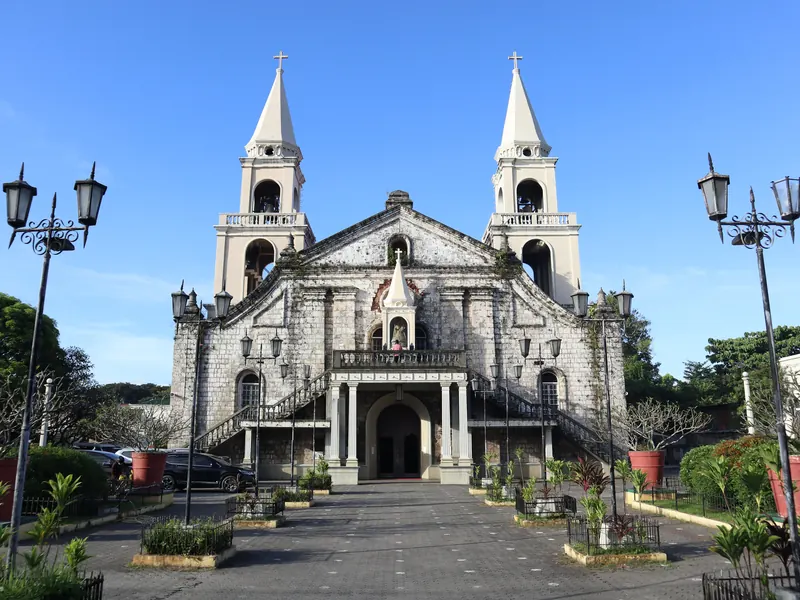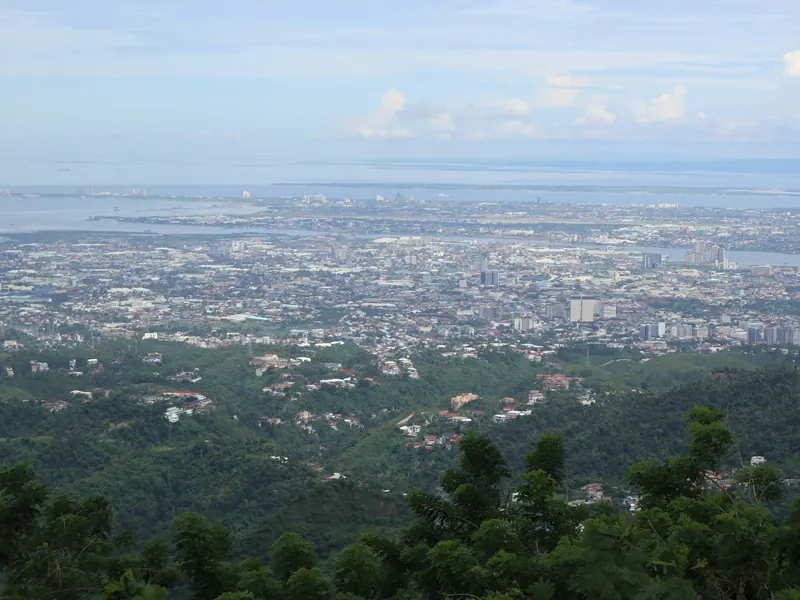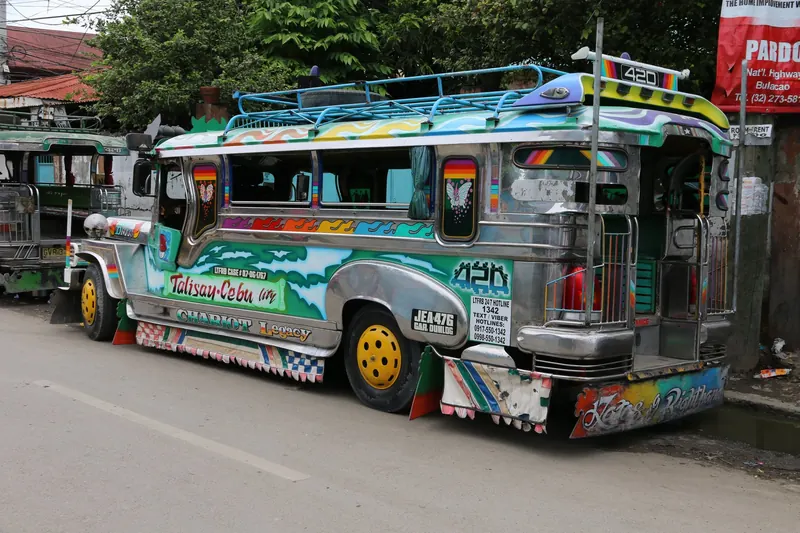
Downtown Cebu is the cheapest part of the metro to rent in, and the most misunderstood. On LiveInPH’s Cebu rent baseline, downtown rooms in shared apartments run ₱3,500–₱8,000/month and studios run ₱5,000–₱12,000/month. Named buildings advertise their own asking prices around and above that band, but those are portal figures, not a counted sample. Nothing in Cebu City beats these numbers on rent alone.
The tradeoffs are real. Colon Street gets uncomfortable after dark. Several downtown barangays are on the MGB’s 22-barangay flood-susceptible list. Parking is nonexistent in most older buildings. But for students, hospital patients and their families, short-stay workers, and anyone on a genuinely tight monthly budget, this is where the math works.
This guide covers rent ranges, the buildings worth knowing, the Carbon Market redevelopment that is reshaping the southern edge of downtown, hospital access, night safety, and flood risk. The two baseline bands read live from our rent ledger; every per-building figure is a LiveInPH editorial estimate from portal asking prices, not a measured sample.
What Capitol, Colon, and Downtown Cebu Actually Are
Downtown Cebu runs along Osmeña Boulevard from the Cebu Provincial Capitol at the north end to Plaza Independencia and Carbon Market at the south. The corridor covers several barangays and distinct sub-areas, and the search term “Capitol and Colon” actually hides four different zones with different rent and different vibes.
Capitol area sits at the north end of Osmeña Boulevard, centered on the Cebu Provincial Capitol building (constructed in 1937 and still the seat of provincial government). This is the more residential, slightly more upscale part of the corridor. Rent is higher than Colon proper. Fuente Osmeña Circle is about 10 minutes south and marks the transition from Capitol to mid-downtown.
Fuente Osmeña and the Cogon Ramos corridor sit in the middle. This is where most of the mid-rise condos targeted at renters (Ramos Tower, West Jones Residences, City Suites) cluster. The area is dense, commercial, and well-served by jeepneys. Studios here advertise mid-range for downtown, roughly PHP 15,000–25,000 (portal asking prices, above the baseline studio band).
Colon Street and the old downtown run from around Fuente Osmeña south to Plaza Independencia and Carbon Market. Colon is widely marketed as the oldest street in the Philippines, dating back to the Spanish founding under Miguel López de Legazpi in 1565 and named after Cristóbal Colón. The “oldest street” claim is historically disputed — the earliest surviving map confirming Colon’s existence is from 1873, and the designation took hold via a 1910 American Bazar postcard — but it remains the dense commercial spine of old Cebu. The corridor runs roughly 1.17 km from Osmeña Boulevard to P. Burgos Street. It’s lined with older commercial buildings, cheap apartments above shops, and walk-up boarding houses. This is where the budget floor lives: rent is lowest, density is highest, noise is loudest.
Carbon Market and the southern waterfront anchor the bottom of downtown. Currently under a multi-billion peso redevelopment (detailed below) that is changing the fabric of this zone specifically.
The corridor is bounded by Jones Avenue (also called Osmeña Boulevard in some sections) as the north-south spine, with cross streets like D. Jakosalem, F. Ramos, Gen. Maxilom Avenue (Mango Avenue), B. Rodriguez, and P. del Rosario handling east-west traffic.
Budget Rent in Capitol and Colon
On LiveInPH’s Cebu rent baseline, downtown Capitol/Colon rooms run ₱3,500–₱8,000/month and studios run ₱5,000–₱12,000/month. That baseline is an editorial estimate, not a measured sample: no listings were counted (n = null), so there is no median and no quartiles, and we do not fabricate any. The methodology documents how it is formed and what it is not.
▸ Show the data table
| Segment | Low | Midpoint | High | n |
|---|---|---|---|---|
| IT Park / Cebu Business Park · Studio | ₱18,000 | ₱26,500 | ₱35,000 | — |
| IT Park / Cebu Business Park · 1BR | ₱25,000 | ₱40,000 | ₱55,000 | — |
| IT Park / Cebu Business Park · 2BR | ₱40,000 | ₱80,000 | ₱120,000 | — |
| Lahug · Studio | ₱14,000 | ₱19,500 | ₱25,000 | — |
| Lahug · 1BR | ₱20,000 | ₱27,500 | ₱35,000 | — |
| Banilad · Studio | ₱12,000 | ₱16,000 | ₱20,000 | — |
| Banilad · 1BR | ₱18,000 | ₱24,000 | ₱30,000 | — |
| Banilad · 2BR | ₱30,000 | ₱47,500 | ₱65,000 | — |
| Banilad · 3BR | ₱50,000 | ₱60,000 | ₱70,000 | — |
| Mabolo · Studio | ₱10,000 | ₱14,000 | ₱18,000 | — |
| Mabolo · 1BR | ₱20,000 | ₱27,500 | ₱35,000 | — |
| Mabolo · 2BR | ₱28,000 | ₱37,000 | ₱46,000 | — |
| Mabolo · 3BR | ₱45,000 | ₱55,000 | ₱65,000 | — |
| Mandaue · Studio | ₱10,000 | ₱14,000 | ₱18,000 | — |
| Mandaue · 1BR | ₱17,000 | ₱26,000 | ₱35,000 | — |
| Mandaue · 2BR | ₱15,000 | ₱17,500 | ₱20,000 | — |
| Capitol / Colon · Studio | ₱5,000 | ₱8,500 | ₱12,000 | — |
| Capitol / Colon · Room | ₱3,500 | ₱5,750 | ₱8,000 | — |
| Talamban · Studio | ₱12,000 | ₱18,500 | ₱25,000 | — |
| Talamban · 1BR | ₱26,000 | ₱30,000 | ₱34,000 | — |
| Talamban · Room | ₱3,500 | ₱5,250 | ₱7,000 | — |
Every per-building figure below sits against that baseline and is a LiveInPH editorial estimate from portal asking prices — an opening position to negotiate, not an observed market rent. The downtown stock mixes old boarding houses, mid-rise modern condos, and a few premium buildings in the same few blocks, which is why the advertised spread is wider than any other Cebu neighborhood.
What drives the variation:
- Sub-area. Capitol and Fuente Osmeña ask 30–60% higher than Colon Street proper for comparable unit sizes. The gap reflects the difference in noise, safety, and surrounding amenities.
- Building age and condition. A 2018 mid-rise condo like Ramos Tower advertises around ₱18,000–₱22,000/month for a 28 sqm studio. An older walk-up of the same size a block away asks ₱7,000–₱11,000/month. The difference is elevator access, AC quality, building security, and water pressure.
- Dues inclusion. Some buildings bundle association dues into rent. Ramos Tower advertises around PHP 18,000 plus roughly PHP 2,800 dues, while West Jones Residences lists near PHP 22,000 inclusive of dues. Always clarify before comparing listings.
- Shared versus private. Room-only rentals at PHP 3,500–6,000 mean shared CR, shared kitchen, and shared common areas. Studio rentals above PHP 9,000 come with private facilities.
Budget floor, rooms and boarding houses (PHP 3,500–8,000): These are single rooms in shared apartments and older boarding houses, most commonly near Colon Street, Sanciangko, and the side streets between Osmeña Boulevard and the old downtown. Shared CR, basic fan or window AC, sometimes utilities extra. Students and seasonal workers fill most of this stock.
Entry studios (PHP 8,000–14,000): Urban Homes Tisa (about 10 minutes from Fuente Osmeña) at ₱8,300–₱12,000/month and City Clou Residences on D. Jakosalem Street at ₱9,700–₱14,000/month are the named examples. 20–25 sqm units with private CR, basic furnishing, and building security. This is the first tier where a solo renter can have a real apartment experience.
Mid-tier studios (PHP 15,000–22,000): Ramos Tower on F. Ramos Street at ₱18,000–₱22,000/month, West Jones Residences near Osmeña Boulevard at ₱20,000–₱24,000/month, and similar mid-rise condos around Fuente Osmeña. Furnished, pool access in most, elevator, 24-hour security.
Premium downtown (PHP 25,000–55,000+): Baseline Prestige near Fuente Osmeña at roughly ₱45,000–₱60,000/month for one-bedroom furnished units. Larger spaces in Capitol subdivisions and older family homes reach ₱40,000–₱120,000/month for three-bedroom rentals. These are the exception rather than the rule downtown.
Buildings and Apartments Worth Knowing
Five named options cover most of the mid-tier downtown market. Knowing them saves hours of portal scrolling. The asking bands below are LiveInPH editorial estimates from portal listings, not a counted sample; treat each as an opening position.
Ramos Tower (also listed as Cebu City Suites Ramos Tower by P&J) sits on F. Ramos Street in the Cogon Ramos area. Studios of 28 sqm with balconies rent for ₱18,000–₱22,000/month, with condo dues of ₱2,500–₱3,200/month typically charged separately. The building runs both long-term rentals and short-stay units, which means availability is usually decent year-round. Walking distance to Fuente Osmeña, jeepney routes to IT Park and Ayala, and the cluster of restaurants and cafes along Mango Avenue.
West Jones Residences is a modern mid-rise on Uytengsu Street near Osmeña Boulevard. Furnished studios of 22 sqm rent for ₱20,000–₱24,000/month with condo dues bundled in. The location is closer to the Capitol end of the corridor and quieter at night than buildings nearer Colon.
Urban Homes Tisa sits about 10 minutes from Fuente Osmeña and Colon by jeepney. Studios at 25 sqm rent from ₱8,300–₱12,000/month. This is one of the most affordable real studio options within easy reach of downtown. Targeted at students, BPO trainees, and entry-level workers.
City Clou Residences on D. Jakosalem Street is developed by Golden Topper. Units start from ₱9,700–₱14,000/month. Smaller than Ramos Tower or West Jones but priced for renters who need a real studio on a PHP 10,000 budget. Walking distance to hospitals and the Capitol area.
Baseline Prestige is the premium name near Fuente Osmeña. One-bedroom furnished units rent for around ₱45,000–₱60,000/month. Amenities, finishes, and maintenance are several tiers above the typical downtown stock. Most renters choosing this price point would also consider IT Park, so it is less common as a downtown pick than the mid-tier options.
Older walk-up apartments along Sanciangko Street, Legaspi Extension, and the streets between Colon and Carbon Market still rent for ₱5,000–₱12,000/month for studio-style units. No elevator, window-type AC, inconsistent water pressure, and building maintenance varies block by block. They work for tight budgets that need a downtown address.
Rooms in shared apartments and boarding houses are the final tier, at ₱3,500–₱8,000/month. Most listings never hit the major portals and are found through Facebook groups, university bulletin boards, and word of mouth near the University of San Jose–Recoletos and the University of Cebu main campus, both of which sit inside or near downtown.
Carbon Market Redevelopment: What PHP 1.1 Billion Is Changing
Carbon Market, at the southern edge of downtown, is in the middle of the largest market redevelopment in Cebu’s history. Megawide signed a 50-year joint venture with the City of Cebu in January 2021 through its subsidiary Cebu2World Development Inc. (C2W) to run the project, and the Block-2 component (“Warwick Barracks” site) is budgeted at roughly PHP 1.1 billion to become a mixed-use vertical structure for food, handicrafts, and retail.
As of early 2026, Block-2 is in the preparatory phase while C2W waits on land-use variance approval to reclassify the site from Institutional 2 to Commercial 2. Construction starts after the variance lands. The main market building targets completion in 2026–2027. Full redevelopment — including B3, B5, Sitio Bato, and 940 parking slots — is targeted for 2030. The broader C2W (Carbon-to-Waterfront) project relocates roughly 1,829 regular vendors and 3,948 ambulant vendors over the project lifetime, currently into an Interim Market that holds about 890 regulars and 152 ambulants. By 2025 the project was operating nine designated zones including a Tourism Zone targeting local and foreign visitors.
What has already changed on the ground:
- Clean public restrooms
- Backup power generators
- 24-hour CCTV coverage and security patrols
- Modern dining sections with designated seating
- Cleaner stalls in the redeveloped sections
- Better lighting throughout the main market blocks
- Revitalized Freedom Park night market nearby for safer evening operations
For downtown renters, the Carbon redevelopment matters for three reasons. First, it is pushing up rent in the immediate vicinity: listings within five blocks of Carbon Market have risen noticeably over the past 18 months. Second, it is lowering the nighttime safety risk in the area right around the market, which used to be the worst part of downtown after dark. Third, it will change the kinds of businesses operating in the zone: more retail, more restaurants, and eventually more office space.
If you are renting in downtown Cebu with a 2026 lease, check what Block-2 looks like in Q2 before committing to a multi-year deal. The neighborhood around Carbon is a moving target, and the rent you pay today may not match the quality of the neighborhood in six months.
Is Colon Street Safe? An Honest Answer
Colon Street is safe during the day and uncomfortable at night. That is the short version.
Long version: Colon is the oldest street in the Philippines, lined with old commercial buildings, small shops, jeepney terminals, and a density of foot traffic that is unusual for Cebu. Daytime is fine for most visitors. Walking, shopping, and eating at the small carinderia spots is no worse than any other dense Filipino downtown. After sunset, the character shifts. The foot traffic thins in some sections, the lighting gets inconsistent, and petty crime (pickpocketing, phone snatching, occasional muggings) has a documented history along Colon and the streets branching off it.
Practical precautions that work:
- Treat Colon Street like you would any dense old downtown anywhere: aware, alert, not showing valuables.
- Stick to mid-morning to late-afternoon visits for shopping and exploration.
- Use Grab for evening trips home rather than walking.
- Keep your phone in your front pocket or a zipped bag, not your back pocket.
- Avoid walking alone late at night, especially for foreigners and visible expats.
- Stay on Osmeña Boulevard and the main commercial roads after dark rather than using side streets as shortcuts.
The Capitol and Fuente Osmeña sub-areas are noticeably safer than Colon at night. If safety is a high priority and budget flexibility exists, choosing a building near Fuente Osmeña instead of one closer to Colon is worth the PHP 3,000–6,000 rent premium.
Hospital Access From Capitol and Downtown
Downtown Cebu has the densest hospital access in the metro. Four major hospitals sit within the Capitol and Osmeña Boulevard corridor or a short drive from it.
Vicente Sotto Memorial Medical Center (VSMMC) is the main government hospital, located on B. Rodriguez Street inside the downtown corridor. It is the Department of Health’s designated tertiary hospital for the region and handles the largest charity caseload. For patients using PhilHealth without an HMO, VSMMC is usually the first stop.
Chong Hua Hospital has its main campus along Don Mariano Cui Street, a short drive or walk from the Capitol area. It is one of the top-tier private hospitals in Cebu for complex cases, with extensive specialty departments.
Cebu Doctors’ University Hospital sits on Osmeña Boulevard itself, directly inside the downtown corridor. Private, well-regarded, and the default choice for many expat emergencies and long-term care.
Perpetual Succour Hospital is further north but still within an easy commute from the Capitol area. It is the go-to for maternity cases and family medicine for many long-stay Cebu residents.
For the full breakdown of hospital costs, HMO options, and what to budget for emergency care in Cebu, see the healthcare cost guide.
Flood Risk: The Downtown Barangays on the MGB List
Downtown Cebu is well-represented on the MGB’s list of 22 flood-susceptible barangays. The corridor from Carbon Market up through the old downtown includes several barangays that the DOST-MGB flagged specifically: Kamagayan, T. Padilla, Tinago, Day-as, San Roque, Hipodromo, Kalubihan, and Cogon Ramos.
The structural reason is simple. Most of downtown is on low ground, close to sea level, and drains through older culverts that were not designed for modern rainfall volumes. The land south of Colon Street, toward the old Carbon Market and the waterfront, is partially reclaimed. Typhoon Tino (Kalmaegi) made landfall in Cebu in the early hours of November 4, 2025; PAGASA’s preliminary report logged a 24-hour maximum of 183.0 millimeters of rain over land at the Lapu-Lapu City station, the nearest official synoptic gauge to Cebu City, with 205.7 millimeters accumulated from November 2 to 6. Downtown’s low-lying, partly reclaimed ground and older drainage put the corridor among the areas that flooded. No PAGASA table records a 400-millimeter-plus Cebu City figure and no official barangay-by-barangay flood count was published, so we do not cite one.
The downtown flood rule is the same as the rest of the metro: upper floors of modern buildings are safe, ground floors and second floors in older walk-ups are the gamble. The rent discount on ground-floor units near Carbon Market or along the side streets off Colon is not a bargain once you factor in the replacement cost of furniture, documents, and electronics during flood events that now happen more than once per year.
Commute Math From Downtown
Downtown Cebu has the best jeepney access in the metro. Every major jeepney route either originates downtown or passes through it. For renters who are comfortable with public transport, the commute math is surprisingly good.
| Destination | Off-peak | Rush hour | Typical Grab cost |
|---|---|---|---|
| IT Park | 15 min | 25-35 min | PHP 130-220 |
| Ayala Center Cebu / Cebu Business Park | 10-15 min | 25-35 min | PHP 120-200 |
| SM City Cebu | 15 min | 30-45 min | PHP 150-250 |
| Mactan-Cebu International Airport | 25 min | 55-75 min | PHP 280-400 |
| Mandaue (A.S. Fortuna) | 20 min | 40-55 min | PHP 180-300 |
| VSMMC / Chong Hua / Cebu Doctors' | Walking to 10 min | 10-20 min | PHP 60-150 |
Jeepney fares from downtown to IT Park or Ayala run PHP 13–PHP 25 one way, making the monthly transport budget for a downtown renter using public transport as low as PHP 500–₱1,500/month. For comparison, a Mandaue resident commuting to IT Park by Grab spends ₱3,000–₱6,000/month.
For the full breakdown of jeepney routes, Grab pricing patterns, and the worst rush-hour bottlenecks in Cebu, see the transport costs guide.
Who Capitol and Colon Work For (and Who Should Skip Them)
Four situations where downtown works, three where it does not.
Works for: Students at downtown-adjacent universities. University of San Jose–Recoletos (USJR), University of Cebu main campus, University of the Visayas, and several medical schools are all inside or immediately next to downtown. Students renting rooms or small studios here avoid the commute cost and hassle of living farther out.
Works for: Tight-budget solo renters. If your total monthly budget is under PHP 20,000 and you need to live somewhere in Cebu City, the downtown budget tier is where the math works. Rooms at PHP 3,500–8,000 or studios at PHP 8,000–12,000 leave room in the budget for food, utilities, and transport.
Works for: Hospital patients and their families. Extended medical stays at VSMMC, Chong Hua, or Cebu Doctors’ are cheaper and more convenient when you rent a room in the downtown corridor rather than traveling daily from outside the metro.
Works for: Short-stay workers and visiting professionals. Weekly and monthly room rentals at PHP 4,000–8,000 are common. Much cheaper than hotels for stays over a week.
Does not work for: Families with young children. Density, noise, limited green space, safety concerns around Colon, and the lack of quality family amenities make downtown a poor match for families. Mabolo, Banilad, or a gated subdivision farther out is a much better fit.
Does not work for: Parking-dependent renters. Most older downtown buildings have no parking at all. Even mid-tier condos often charge separately for slots, and street parking is a running negotiation with local enforcement. If you have a car, Mandaue or Mabolo makes more sense.
Does not work for: Safety-sensitive renters. If petty crime risk bothers you significantly, or if you expect to walk home late at night regularly, the Capitol end of the corridor is the better choice than Colon proper, and neighborhoods outside downtown are better still. Mabolo or IT Park area rents 30–50% higher, but the safety profile is different.
For the complete renting process, deposits, and contract clauses to verify before signing, see the complete guide to renting in Cebu City. For the list of hidden costs and deposits that do not show up on listings, see the hidden costs guide.
Total Monthly Budget for Downtown Living
Two realistic budgets for downtown Cebu. The first is a tight-budget solo renter in an older walk-up near Colon. The second is a student or short-stay professional in a mid-tier studio at Ramos Tower or City Clou.
| Category | Range | Notes |
|---|---|---|
| Rent (room or small studio, walk-up) | ₱5,000–₱9,000 | Sanciangko, Legaspi Ext., older blocks |
| Electricity (VECO) | ₱1,500–₱2,800 | Fan or window AC only |
| Water (MCWD) | ₱260–₱450 | |
| Internet | ₱900–₱1,500 | PLDT or Converge entry tier |
| Food | ₱5,000–₱8,000 | Carbon Market + carinderia heavy |
| Transport (jeepney) | ₱500–₱1,000 | Mostly jeepney, some walking |
| Phone | ₱300–₱600 | |
| Misc | ₱800–₱1,500 | |
| Total monthly | ₱14,260–₱24,850 |
| Category | Range | Notes |
|---|---|---|
| Rent (mid-tier studio, Cogon Ramos / F. Ramos) | ₱15,000–₱20,000 | Ramos Tower, West Jones, City Clou |
| Condo dues (if separate) | ₱0–₱3,200 | Ramos Tower charges separately |
| Electricity (VECO) | ₱2,000–₱4,000 | AC 4-6 hrs |
| Water (MCWD) | ₱260–₱500 | |
| Internet | ₱1,000–₱2,000 | Converge or PLDT fiber |
| Food | ₱7,000–₱11,000 | Mix of cooking, carinderia, occasional dining |
| Transport | ₱500–₱1,500 | Jeepney + occasional Grab |
| Phone | ₱500–₱1,000 | |
| Misc | ₱1,000–₱2,500 | |
| Total monthly | ₱27,260–₱45,700 |
The tight budget runs around PHP 14,000–25,000 per month all-in — the lowest sustainable budget anywhere in Cebu City. To convert to your home currency, use the live BSP reference rate (currently ₱62.49/USD (BSP RERB, 10 Sep 2026)) rather than an airport counter. The mid-tier student budget runs PHP 26,000–45,000, which is competitive with Mandaue and about 10–15% below Mabolo for comparable quality.
For a complete breakdown of Cebu cost of living across all budget tiers, see the cost-of-living guide.
Bottom Line
Downtown Cebu is the budget floor of the metro. Rent starts lower here than anywhere else, jeepney access is unmatched, and the hospital cluster makes the corridor the natural choice for medical stays. The Carbon Market redevelopment is visibly changing the southern edge of downtown, and early-stage improvements to safety and retail are already showing up. For students, tight-budget solo renters, and short-stay workers, the downtown math works in a way no other Cebu City neighborhood matches.
Skip downtown if you have young kids, need guaranteed parking, or plan to walk home late at night regularly. Lean toward the Capitol and Fuente Osmeña end of the corridor rather than Colon proper if safety is a concern. Verify any address in Kamagayan, T. Padilla, Tinago, Day-as, San Roque, Hipodromo, Kalubihan, or Cogon Ramos against the MGB hazard map before signing. And if your budget can absorb an extra PHP 5,000–8,000 per month, consider whether Mabolo or the outer edges of IT Park and Lahug might fit you better for the full picture. For the metro-wide comparison that frames all of these choices, start with the best neighborhoods in Cebu City for expats guide.
FAQ
Frequently asked.
How much is rent in Colon Street Cebu?
Is Colon Street Cebu safe at night?
What is the Carbon Market redevelopment?
Which hospitals are near Capitol Cebu?
Is Capitol Cebu a good place for budget living?
Data note. Prices, rates, and details are verified as of publication and may change. Always confirm with the listed provider or landlord before committing. This article is informational, not financial, legal, or immigration advice. Full disclaimer.