Cash pickup is the right rail when the recipient is unbanked, off-grid, or you need a same-day pickup with no app friction. M Lhuillier dominates Cebu metro density and runs 100+ 24/7 branches. Cebuana wins on rural reach with 2,500+ outlets nationwide. Three failure modes ruin real pickups: name-match (middle name, Jr., hyphens), ID failure at the counter, and the PHP 50,000 single-transaction cap that every domestic network shares. Above PHP 500,000 in one banking day the AMLC Covered Transaction Report rule fires automatically. Splitting to avoid it is structuring under the Anti-Money Laundering Act, prosecutable on its own.
This guide is for OFW recipients with elderly parents in Bogo or Daanbantayan, unbanked helpers in Lapu-Lapu, off-grid family in interior barangays, and foreigners sending themselves cash before arrival or when a bank rail fails. For app-to-wallet sends through GCash see GCash for foreigners. For pension routing through a Philippine bank see receiving a pension in Cebu. For the cheaper bank-rail alternative see sending money to the Philippines with Wise, Remitly, and GCash.
The 2026 verdict: when cash pickup wins, when bank rail wins
Cash pickup costs more in fees and FX margin than every digital alternative. The reason to use it is structural, not financial.
Use cash pickup when the recipient has no bank account and no GCash; when they’re off-grid in an interior Cebu barangay where the nearest ATM is an hour by jeepney but a Cebuana sits beside the church; when a digital rail just failed; when the recipient is elderly or the use case is one-off (medical emergency, funeral, school fee); or when you’re a pre-arrival foreigner sending yourself cash to pick up at Mactan or SM City Cebu.
Use a bank rail instead when the recipient has a verified GCash or bank account; when the send is over PHP 10,000 and you have any digital option; when it’s recurring (monthly pension or allowance) where compounding fee and FX margin will eat thousands over a year; or when the recipient is fully banked and defaults to the counter out of habit.
A worked example. USD 500 to a sister in Bogo, priced against the BSP reference rate of ₱62.49/USD (BSP RERB, 10 Sep 2026). Our PHP FX dataset reads that rate straight from the BSP bulletin, and our methodology covers how it is checked. Via Wise into a BPI account the cost is about 0.83% plus a PHP 35 InstaPay fee on the last leg into the account (Wise’s own USD-to-PHP page and the BSP fee-disclosure sheet, July 2026). Via Western Union for a Cebuana Bogo pickup, the WU fee is layered on top of an agent FX margin that neither WU nor the agent publishes, so the all-in cost cannot be quoted from a primary source. What is certain is direction, not a peso figure: cash pickup carries an undisclosed FX spread that a Wise bank transfer does not, which is why it costs more whenever the recipient can be paid into an account.
For the digital corridors we can price, the live comparison below reads from our remittance-corridor ledger rather than a hand-typed table. Where a provider does not publish its FX margin (Western Union among them, because its site will not render to us), the table says so instead of guessing a number.
| Rail | FX margin | Explicit fee | All-in on USD 1,000 |
|---|---|---|---|
| WiseUSD balance → PHP, then InstaPay to PH bank | — | 0.45–0.83% | ₱519 (0.83%) |
| PayoneerInternal currency conversion (e.g. USD→EUR), holding to holding | 0.5% | — | ₱312 (0.5%) |
| PayoneerWithdraw to PH bank in PHP (cross-currency) | 1.2–4% | — | ₱2,499 (4%) |
| RemitlySend USD → PHP bank deposit, mobile wallet (GCash/Maya), or debit-card deposit | not published | — + $0 | unpriceable — FX margin not published |
| PayPalReceive USD → convert → withdraw to PH bank (PH-side cash-out) | 3% | — | ₱1,875 (3%) |
| USD wire to PH bank FCDUSWIFT wire into a foreign-currency deposit account, then convert (unverified band) | 2–4% | — | ₱2,499 (4%) |
| Western UnionOnline send to GCash or PH bank deposit (bank-funded) (unverified band) | 1.5–2.5% | — + $0 | ₱1,562 (2.5%) |
Cash pickup is paying for a structural fix to a missing bank account, not for the transaction. If the recipient has a bank account or GCash, the math always points to Wise or Remitly. The Bangko Sentral ng Pilipinas reported USD 35.63 billion in OFW cash remittances in 2025, a record high, and the share going through digital rails grows every quarter. Cash pickup is a shrinking slice for a reason.
The four networks compared
Four networks own the overwhelming majority of Cebu cash pickup. Western Union runs as a wholesale brand on top of the others. Almost every Cebuana, M Lhuillier, Palawan, BDO, and Metrobank branch is also a WU agent. The competing local domestic brands are Cebuana Pera Padala, ML Kwarta Padala, and Palawan Express Padala.
| Cebuana Lhuillier | M Lhuillier | Palawan Pawnshop | WU via Metrobank | |
|---|---|---|---|---|
| PH branches (provider-stated) | ~2,500 | ~3,000 (100+ 24/7) | ~3,500 | ~700 Metrobank branches |
| Single-transaction cap | PHP 50,000 | PHP 50,000 | PHP 50,000 | Higher (bank-set, confirm at branch) |
| Per-tier send fee | Published by region, no effective date | Not published online, quoted in-branch | Not published online | WU rate, not readable at source |
| 24/7 availability | 5 nationwide (none in Cebu) | 100+ branches 24/7 | No | No (bank hours) |
| Best use | Rural reach, small sends | Metro Cebu, after-hours, mid-size sends | Provincial spread, slightly bigger network | Larger amounts above PHP 50k cap |
Cebuana Lhuillier (founded 1987) is the long-tail rural network. If the recipient lives in a fourth-class municipality or a barangay an hour off the national highway, Cebuana usually has the closest counter. The Cebuana Pera Padala schedule is the one primary fee source among the pawnshop networks that actually renders: it is published by region and tops out around a PHP 500 service charge in NCR, and about PHP 510 in the regions, at the PHP 40,001–50,000 ceiling (checked July 2026). The page carries no effective date, so confirm the current charge on it before sending a top-bracket transfer.
M Lhuillier (ML Kwarta Padala, a separate company from Cebuana despite the surname) is the metro and after-hours network. The 24/7 branches are the unique feature: 100+ across the country, several in Cebu City and Mandaue. M Lhuillier does not publish a Kwarta Padala fee ladder on its own site; the ML Kwarta Padala page describes the send/receive service but lists no per-tier schedule (checked July 2026), so the charge is quoted only at the counter. Kwarta Padala is peso-in, peso-out at the same PHP 50,000 single-transaction ceiling as the others.
Palawan Pawnshop / Palawan Express has the largest self-reported branch count (about 3,500 outlets) and the same PHP 50,000 single-transaction cap. It publishes no fee ladder we can read at source either. Useful when the recipient lives near a Palawan but not a Cebuana or M Lhuillier.
Western Union is the international wholesale brand. WU does not run its own retail counters in the Philippines. Every WU pickup in Cebu happens at a Cebuana, M Lhuillier, Palawan, BDO, USSC, Metrobank, or Tambunting counter acting as agent. The pickup cap is set by the agent: PHP 50,000 at Cebuana/ML/Palawan, higher at Metrobank and BDO (bank-set, confirm at the branch). WU also runs a separate mobile-wallet receive into GCash or Maya with its own per-transaction cap, but westernunion.com is bot-protected and will not render to us, so we do not reproduce a wallet-cap figure we cannot read at source; confirm the current cap in the WU app or with the receiving wallet.
Why we don’t reprint an ML or Cebuana fee ladder
Cash-pickup service charges reprice without notice, and the primary sources are thin. M Lhuillier publishes no Kwarta Padala fee ladder on its own site at all (mlhuillier.com, checked July 2026); the charge is quoted in-branch. Palawan is the same. Cebuana does publish a regional Pera Padala table, but it carries no effective date and moves without announcement.
Rather than reproduce a per-tier ladder that is either unpublished or undated, we anchor to the two figures the primary sources actually support and tell you to confirm the rest on the day. The single-transaction ceiling is PHP 50,000. Cebuana’s top-bracket service charge runs about PHP 500 in NCR to PHP 510 in the regions (cebuanalhuillier.com, checked July 2026), from PHP 1 on the smallest sends. Everything between PHP 1 and PHP 50,000 you read off the network’s own rate page before sending.
This is the same discipline we use on the /davao water tariff, where the implemented peso figures are not published and we say so rather than invent them. Under PHP 1,000 the fee dominates the math; over PHP 5,000 the fee fades and the undisclosed FX margin on the sending side (for international transfers) becomes the larger cost.
Per-transaction caps and the AMLC PHP 500,000 trap
The most expensive misunderstanding in cash-pickup remittance is treating a PHP 600,000 pickup as a “let’s split it into three PHP 200,000 sends” problem. It isn’t. It’s an AMLA structuring problem.
The Anti-Money Laundering Council (AMLC) requires every covered institution (banks, e-wallets, every money-transfer agent including Cebuana, M Lhuillier, Palawan, and Western Union) to file a Covered Transaction Report for any single transaction above PHP 500,000, or aggregate same-day activity that crosses that threshold per person. The report is filed within five working days, automatically, and is not a problem for legitimate transfers. The trap is structuring: deliberately splitting a transaction to stay under the threshold. Structuring is a separate offence under the Anti-Money Laundering Act (RA 9160 as amended), prosecutable on its own.
A worked example. A foreigner sells a motorbike for PHP 600,000 and wants to move the cash via Western Union pickups. Twelve PHP 50,000 pickups in one banking day reads to a compliance system as classic structuring: same beneficiary, same channel, same day, total above PHP 500,000, each leg under each agent’s cap. The pickups may complete, but the agents file a Suspicious Transaction Report on top of the CTR, and the recipient explains the motorbike sale to a BIR audit a year later.
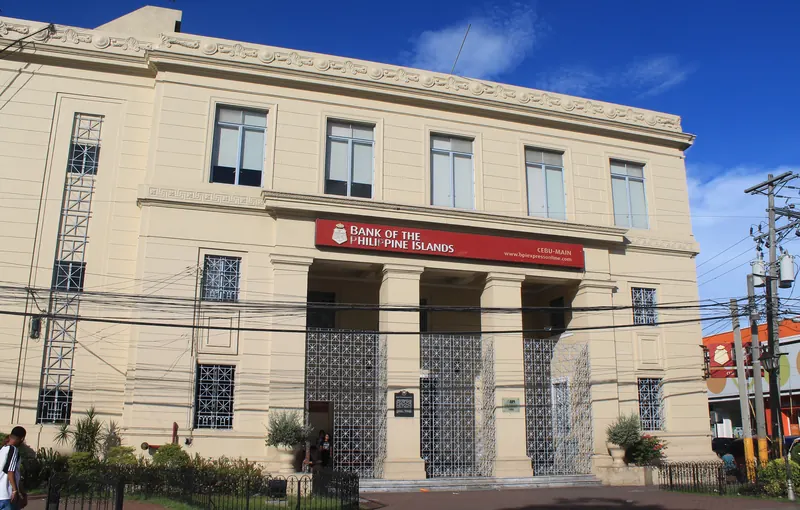
The legal way to move PHP 600,000 from Manila to Cebu is a single PESONet transfer to a Cebu BPI or BDO account, supported by the bill of sale or contract that explains the source of funds. Cash pickup is the wrong rail for that amount in 2026 regardless of how many counters are open.
Name-match failure: the single most common pickup denial
The single most common pickup denial in Cebu is name mismatch. Reddit’s r/Philippines and r/phinvest threads carry the same story repeatedly: WU flagged the name, the lady at SM City Cebu told the recipient to call the sender, the sender was asleep in California, a day was lost.
The exact-match rule covers: first name (initials don’t count, so “M. Cruz” fails against “Maria Cruz”); middle name (required if the ID shows one; Filipinos almost always carry a mother’s-maiden-surname middle name and foreign senders routinely skip the field); last name including hyphens (“Garcia-Reyes” doesn’t match “Garcia Reyes”); suffix (“Jr.”, “Sr.”, “III”); and accented characters (“José” vs “Jose”; some networks normalise, some don’t).
When the mismatch is flagged, the receiving agent cannot edit the recipient name. The sender opens the WU or Cebuana app, corrects it, the transfer regenerates a new Money Transfer Control Number (MTCN), and the recipient returns. Lost time: hours if the sender is awake, a full day if they’re 12+ hours ahead.
The fix is purely sender-side, pre-send. Get the recipient to read out their full legal name as printed on the ID. Screenshot the entry form before submitting. Recipient confirms the screenshot matches. Then send. This three-step routine eliminates the large majority of pickup failures.
Cebu pickup-point map
The Cebu pickup density is concentrated around the three mall corridors (Ayala–Cebu Business Park, SM North Reclamation, Robinsons Galleria) and around Carbon–Colon for the older branches. After-hours and weekend pickups concentrate at the M Lhuillier 24/7 sites.
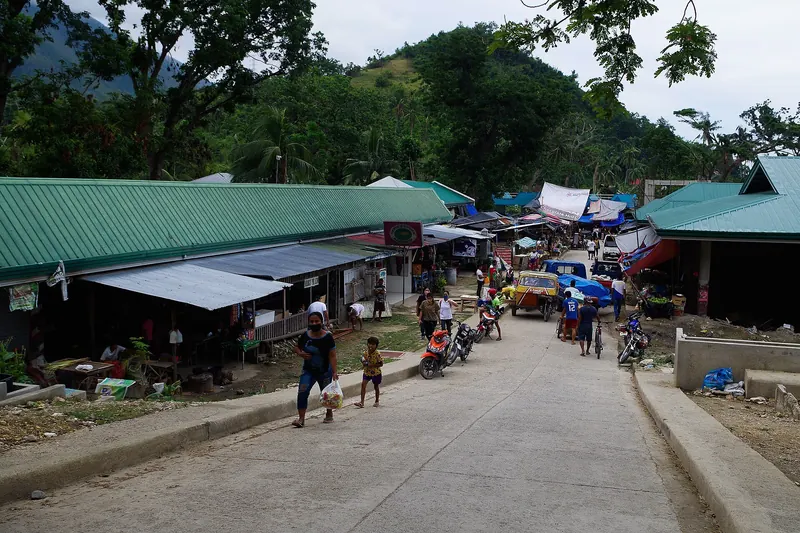
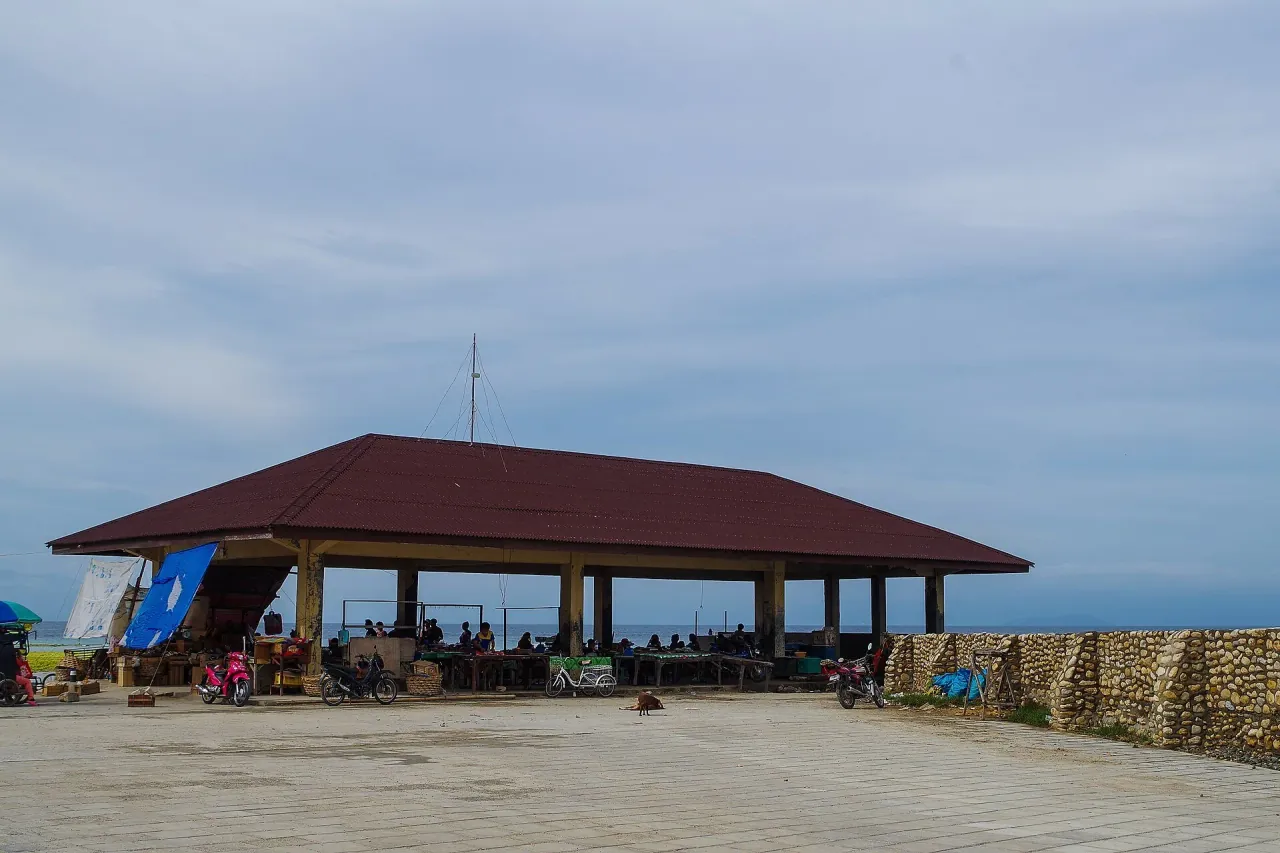
For smaller Cebu municipalities (Bogo, Toledo, Argao, Bantayan, Daanbantayan, Carcar), Cebuana and M Lhuillier both run small branches inside the town centre, usually within walking distance of the public market. Cash-on-hand is the operational constraint, not security. A remote branch may not hold PHP 50,000 in pesos in the till; the recipient comes back the next morning or splits across two towns. For any single pickup at the cap outside Metro Cebu, call the branch ahead.
ID rules and the foreigner-recipient case
The pickup ID rule is consistent across networks: one valid, government-issued, photo-bearing ID, captured by webcam at the counter (not photocopied; the post-2024 BSP Manual of Regulations for Non-Bank Financial Institutions update). Cebuana’s accepted list runs 20+ IDs: Philippine passport (any nationality at mall-tier branches), driver’s licence, UMID, PhilSys / National ID, biometric postal ID, voter’s ID or COMELEC certification, PRC ID, senior citizen ID, PWD ID.
The foreign-passport case has one wrinkle. The sender must flag the recipient as a foreigner during WU app entry, or note “foreign passport” on the Cebuana form. This tells the receiving compliance system to expect a non-PH ID. Without the flag, mall-tier branches still accept the passport, but small-barangay ML branches occasionally refuse. Workaround: pick up at SM City Cebu, Ayala Center Cebu, Robinsons Galleria Cebu, or the MCIA WU desk.
Second wrinkle: Filipino IDs may show a maiden versus married name. Sender and recipient agree which one the ID will show, and the sender enters that once, consistently.
Failure modes: lost MTCN, cash-on-hand, FX deconversion
Three less obvious failures end real pickups.
Lost MTCN. Western Union sends generate a Money Transfer Control Number, a 10-digit code the recipient quotes at the counter. Lose it and pickup is denied until the sender pulls it again from their WU history. Workaround: forward through two channels (Messenger and SMS). Cebuana and ML domestic Padala use a control number on the sender’s physical receipt instead, which is better-tracked because the paper exists.
Branch cash-on-hand cap. A small Cebuana branch in a Cebu municipality may not hold enough pesos in the till to clear a PHP 50,000 pickup on a Sunday afternoon, because the cash simply isn’t there. For pickups at the cap outside Cebu City, call the branch the day before.
Deconversion / FX margin. A USD-funded WU send converts USD to PHP at the agent’s rate, set below the BSP Reference Exchange Rate by a spread the agent does not disclose. The advertised “fee” is the smaller line; that undisclosed FX margin is where the cost lives. A Wise transfer into a bank account converts at the reference rate itself with a small stated fee. The cash-pickup premium pays for physical pesos in a town with no bank, and because it is undisclosed you should treat cash pickup as the more expensive rail whenever a bank account is an option.
At the pickup counter: the Bisaya phrase that shortens the wait
One phrase handles most of the counter friction at Cebuana, ML, and Palawan branches in Cebu. “Naa pa bay kuwarta sa branch karon?” (Is there cash on hand at the branch right now?) is the call-ahead question for pickups at the PHP 50k cap outside Cebu City, where a remote branch may not hold enough pesos in the till. It works at mall-tier and barangay counters alike, and it materially shortens the wait.
When to skip cash pickup entirely
Three scenarios where a digital rail is cleaner and cheaper.
Recurring monthly allowance to a banked family member. A bank rail (Wise → BPI/BDO/Metrobank or Wise → GCash) costs a fraction of cash pickup over a year. On a recurring PHP 20,000/month allowance the annual saving runs into the thousands of pesos, driven mostly by the FX spread you avoid rather than the headline fee. If the recipient has KYC-verified GCash and a bank account, set the rail once and never touch pickup again. See GCash for foreigners and opening a Cebu bank account as a foreigner.
Foreigner topping up their own GCash or Cebu bank. With a Cebu bank account, Wise to that account is faster, cheaper, and ID-friction-free. Self-pickup only makes sense pre-arrival or when both the home bank and the PH bank are down.
Sends over PHP 500,000 in a single banking day. AMLC reporting kicks in regardless of channel. Banks handle the report routinely with source-of-funds documentation; cash pickup networks file the same CTR but draw more compliance scrutiny. Use bank-to-bank PESONet with the paper trail (sale receipt, employment contract, pension statement). Slower by a day or two, materially cheaper, and the documentation protects the recipient.
For tourists, off-grid families in interior barangays, unbanked helpers in Lapu-Lapu, and emergency same-day sends, cash pickup remains the right rail. M Lhuillier for metro density and after-hours, Cebuana for rural reach, Metrobank-WU or BDO-WU when the amount approaches PHP 50,000 and the recipient can reach a bank branch in mall hours. Avoid Carbon-Colon after dark; see Cebu scams guide. Match names exactly, carry the right ID, don’t outrun the AMLC threshold by splitting.
FAQ
Frequently asked.
Where is the closest Western Union pickup in Cebu IT Park?
Is Cebuana Lhuillier cheaper than Western Union in 2026?
Can I pick up USD cash directly or only PHP at Cebu remittance counters?
What ID do I need for pickup as a foreigner in Cebu?
Is there a daily or yearly pickup limit at Cebuana and M Lhuillier?
Does Wise send to Cebuana Lhuillier cash pickup in 2026?
Data note. Prices, rates, and details are verified as of publication and may change. Always confirm with the listed provider or landlord before committing. This article is informational, not financial, legal, or immigration advice. Full disclaimer.