The one exchange rate that is actually published in the Philippines is the BSP mid-rate, and today it sits at ₱62.49/USD (BSP RERB, 10 Sep 2026). Everything else in the Cebu cash market is a board on a wall. No metro Cebu money changer publishes a rate sheet, no regulator publishes counter spreads, and LiveInPH has not collected a dated sample of Cebu boards, so this page will not tell you that any named counter beats any other by any number of points. What it will do is give you the anchor, the arithmetic, and the two legal lines that actually constrain you: the AMLC’s PHP 500,000-per-banking-day reporting threshold and the Bureau of Customs USD 10,000 declaration.
The anchor: what the BSP reference rate actually is
The Bangko Sentral ng Pilipinas publishes a Reference Exchange Rate Bulletin on every business day, built from the trading-day weighted average in the USD/PHP market and, for other currencies, from cross-rates at the New York close. The current print is ₱62.49/USD (BSP RERB, 10 Sep 2026). Euro and sterling sit on the same bulletin: ₱72.72/EUR and ₱84.69/GBP.
That is a mid-rate. It is not a price anyone offers you. No bank, no changer and no app pays a cash customer the mid, and any counter claiming to is quoting you something else. The mid exists so you can measure the people who do quote you, and it is the only number in this article that is machine-read from a primary source rather than typed by hand. We track it in our FX dataset, which carries every historical point with its bulletin URL, and the methodology page explains how a ledger value gets in.
The spread: a published gap, not an estimate
Here is what we cannot tell you, and why.
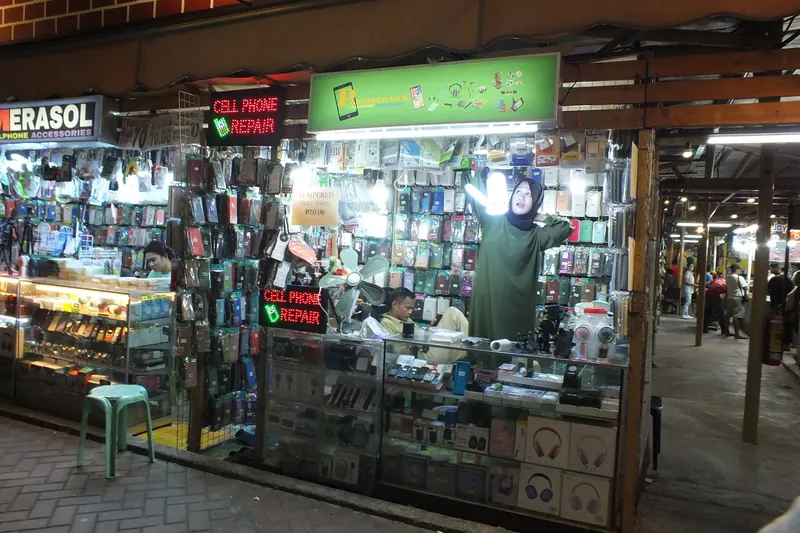
A Cebu money changer’s rate exists in exactly one place: chalk or LED on a board above the window, replaced when the market moves. Operators do not publish rate sheets. The BSP does not publish counter spreads. No regulator collects them. The figures that circulate online (an Ayala counter is 0.3% below mid, the airport is 5–6% below mid) trace back to undated traveller posts and content-farm pages that recycle each other, and an earlier version of this very article shipped exactly those numbers. They were not measured. They are withdrawn.
So the honest state is:
- UNVERIFIED — every Cebu counter’s USD spread. No dated observation of any Cebu board exists in our data. We are not publishing a percentage, a peso figure or a ranking of operators, and we will not swap one unsourced number for another.
- VERIFIED — the mid-rate the spread is measured against. BSP RERB, live in the ledger, dated on the page.
- What closes the gap: a dated sample of posted boards, photographed at the same hour at each cluster, repeated monthly. That is a data-collection job, not a research job, and it is not done. When it is, this section becomes a chart and the ranking becomes a measurement.
That refusal is not a shrug. It is the difference between a page you can cite and a page that recycles.
Do the arithmetic yourself, at the window
One division tells you what a counter is charging, and it works whether the board is at a mall, a pier or an arrival hall.
Take the buy rate posted for USD, divide by the day’s BSP mid, subtract from 1. If a board buys your dollars at ₱58 while the BSP mid is ₱62.49/USD, that counter is keeping roughly 7% of your money. At ₱62 it is keeping under 1%. (Those board figures are arithmetic inputs, not observed Cebu rates. We have not seen your board; you have.)
Three practical consequences follow from that single number:
- Under about 1%, take it. You will not do materially better by walking, and an hour of your time is worth more than the difference on a small exchange.
- Around 2–3%, price two more counters in the same cluster before you settle. Changers within sight of each other watch each other.
- Above 5%, change only what you need right now. That is convenience pricing, and it is a decision you make consciously rather than one made for you by a board you did not check.
The same test applies at the airport. We make no claim about how Mactan counters price, because we have not measured them. You will be standing in front of the board with a phone in your hand: check the mid, do the division, and decide with a number rather than a rumour.
Where changers cluster in metro Cebu
Location is observable and stable, so we will name the clusters. Rates are not, so we will not attach a number to any of them.
| Cluster | What it is | Why go |
|---|---|---|
| Ayala Center Cebu, upper-level service hub | Several changers within a short walk of each other | Density. Price-checking three boards costs five minutes, which is the whole game |
| SM City Cebu | In-mall counters | Convenience if you are already in the North Reclamation corridor |
| Robinsons Galleria Cebu | In-mall counters | Same logic; fewer boards to compare |
| Colon and the older downtown blocks | Long-established standalone shops | Daylight hours only, and count your cash at the window |
| Mactan-Cebu International Airport (T1, T2) | Arrival- and departure-hall counters | First-night cash. Check the board against the mid before deciding how much |
| Bank teller windows | Cash FX at a branch counter | A receipt with a bank's name on it, which is what some transactions need |
The Ayala cluster earns its place on this list for one reason, and it is not a rate we have measured: it is the cluster where you can compare the most boards in the least time. Density is the mechanism. Everything else is a claim someone would have to prove.
The AMLC line: PHP 500,000 in one banking day
This part is published, and it is not vague.
Money changers and foreign exchange dealers operate as BSP-registered money service businesses under the Manual of Regulations for Non-Bank Financial Institutions, and they are covered persons under the Anti-Money Laundering Act (RA 9160, as amended). Two thresholds matter to you:
The covered transaction. RA 9160 as amended by RA 9194 defines a covered transaction as “a transaction in cash or other equivalent monetary instrument involving a total amount in excess of Five hundred thousand pesos (PhP 500,000.00) within one (1) banking day.” Cross that in a day with one operator and it files a Covered Transaction Report with the AMLC. That is a filing, not an accusation, and it is not something you can talk your way out of or should want to.
Structuring. The same law lists, among the circumstances that make a transaction suspicious, that it “is structured in order to avoid being the subject of reporting requirements under the Act”. Splitting one large exchange into sub-threshold visits, across counters or across days, is that circumstance in plain sight. It does not avoid a report; it converts a routine Covered Transaction Report into a Suspicious Transaction Report, which is filed at any amount and is a materially worse document to have your name on. If you are moving PHP 800,000, move it once.
ID at the counter is a published gap. We could not confirm any peso figure at which a money changer is legally obliged to demand identification. What we found instead is that operators run their own KYC policy, and it is frequently stricter than any floor. Rather than publish a plausible-looking threshold, we publish the gap: assume ID is required at any amount, carry your passport, and treat a counter that does not ask as an outlier rather than a win.
Bureau of Customs: the USD 10,000 declaration
Carrying cash across the border is governed separately from the AMLC threshold, and this one is clean.
Per the Bureau of Customs, a traveller may bring in or take out foreign currency up to USD 10,000 (or the equivalent) without declaring it. There is no cap on the amount you may carry, only a duty to declare above that line, in writing, on a Foreign Currency Declaration Form obtained at the customs desk. The threshold is per person, not per family.
Philippine pesos are the tighter rule and the one people miss: no more than PHP 50,000 in or out without prior written authorisation from the BSP. If you are flying out with pesos you did not manage to spend, that is the number to watch, not the dollar one.
Money changer versus the alternatives
Here the data situation inverts. Digital rails do publish their pricing, so we track them in a ledger and can rank them; cash counters do not, so they cannot be ranked against these rows.
| Rail | FX margin | Explicit fee | All-in on USD 1,000 |
|---|---|---|---|
| WiseUSD balance → PHP, then InstaPay to PH bank | — | 0.45–0.83% | ₱519 (0.83%) |
| PayoneerInternal currency conversion (e.g. USD→EUR), holding to holding | 0.5% | — | ₱312 (0.5%) |
| PayoneerWithdraw to PH bank in PHP (cross-currency) | 1.2–4% | — | ₱2,499 (4%) |
| RemitlySend USD → PHP bank deposit, mobile wallet (GCash/Maya), or debit-card deposit | not published | — + $0 | unpriceable — FX margin not published |
| PayPalReceive USD → convert → withdraw to PH bank (PH-side cash-out) | 3% | — | ₱1,875 (3%) |
| USD wire to PH bank FCDUSWIFT wire into a foreign-currency deposit account, then convert (unverified band) | 2–4% | — | ₱2,499 (4%) |
| Western UnionOnline send to GCash or PH bank deposit (bank-funded) (unverified band) | 1.5–2.5% | — + $0 | ₱1,562 (2.5%) |
For a resident with a Philippine bank account or GCash, the digital rail is a solved problem and the cash question mostly disappears. The Wise USD-to-PHP route has a published, itemised cost, which is the whole argument for it: you know the number before you commit. A foreign-card ATM withdrawal is the other common path, and it is priced by your home bank plus the local terminal fee rather than by a board (see Wise card vs local ATMs and the Cebu ATM fee guide). Cash pickup through the big agent networks earns its place when the recipient has no account at all, which is covered in the Cebu cash pickup guide.
The money changer’s real advantage is narrow and unpriceable from here: you arrived with physical dollars, and you want pesos in your hand today, with no account on either end. That is a genuine use case. It is simply not one anyone publishes a price for.
Asking, in Bisaya
Most Ayala-cluster counters switch to English the moment a foreign passport appears, and the exchange works fine in English. One phrase still earns its keep. “Palihug, kuwentahon ta usab” (please, let’s count it again) gets the cashier to recount with you, at the window, without anyone losing face. Use it every time.
When the bank window still wins
Three cases, none of which turn on the spread.
Above the CTR threshold. If you are crossing PHP 500,000 in a day, the bank’s paper trail is the cleaner artefact for whatever comes next: a condo deposit, a BIR assessment, a transfer into a joint account. See opening a bank account in Cebu for which branches handle foreign cash without escalating it.
Anything that will meet the BIR. If the exchange feeds a tax computation, the bank receipt is the document that gets accepted without a follow-up question. See tax for foreigners in Cebu.
Funding your own account. If the dollars are going into a USD account you already hold and will be converted internally, there is no separate exchange transaction to shop for. The changer-versus-bank question only exists when you are doing cash-to-cash with no account on either side.
For everything else, the decision is not which counter is best; it is whether you checked the board against the mid before you handed over your money. That is the only step in this entire article that reliably saves you money, and it is the one nobody does.
External references, checked July 2026: the BSP Reference Exchange Rate Bulletin (mid-rate, read live into our FX dataset); RA 9160 as amended by RA 9194 for the PHP 500,000 covered-transaction definition and the structuring circumstance; the BSP’s registration framework for money service businesses under the MORNBFI; and the Bureau of Customs foreign currency rule for the USD 10,000 declaration and the PHP 50,000 peso limit. No source publishes Cebu counter spreads, which is why this page does not either.
FAQ
Frequently asked.
What USD/PHP rate should I expect from a Cebu money changer in 2026?
How do I work out a money changer's spread in Cebu?
How much can I change at a Cebu money changer without showing ID?
Is it legal to exchange USD 5,000 at a Cebu money changer?
How much USD cash can I bring into the Philippines without declaring it?
Is the airport money changer at Mactan worse than the city?
Data note. Prices, rates, and details are verified as of publication and may change. Always confirm with the listed provider or landlord before committing. This article is informational, not financial, legal, or immigration advice. Full disclaimer.