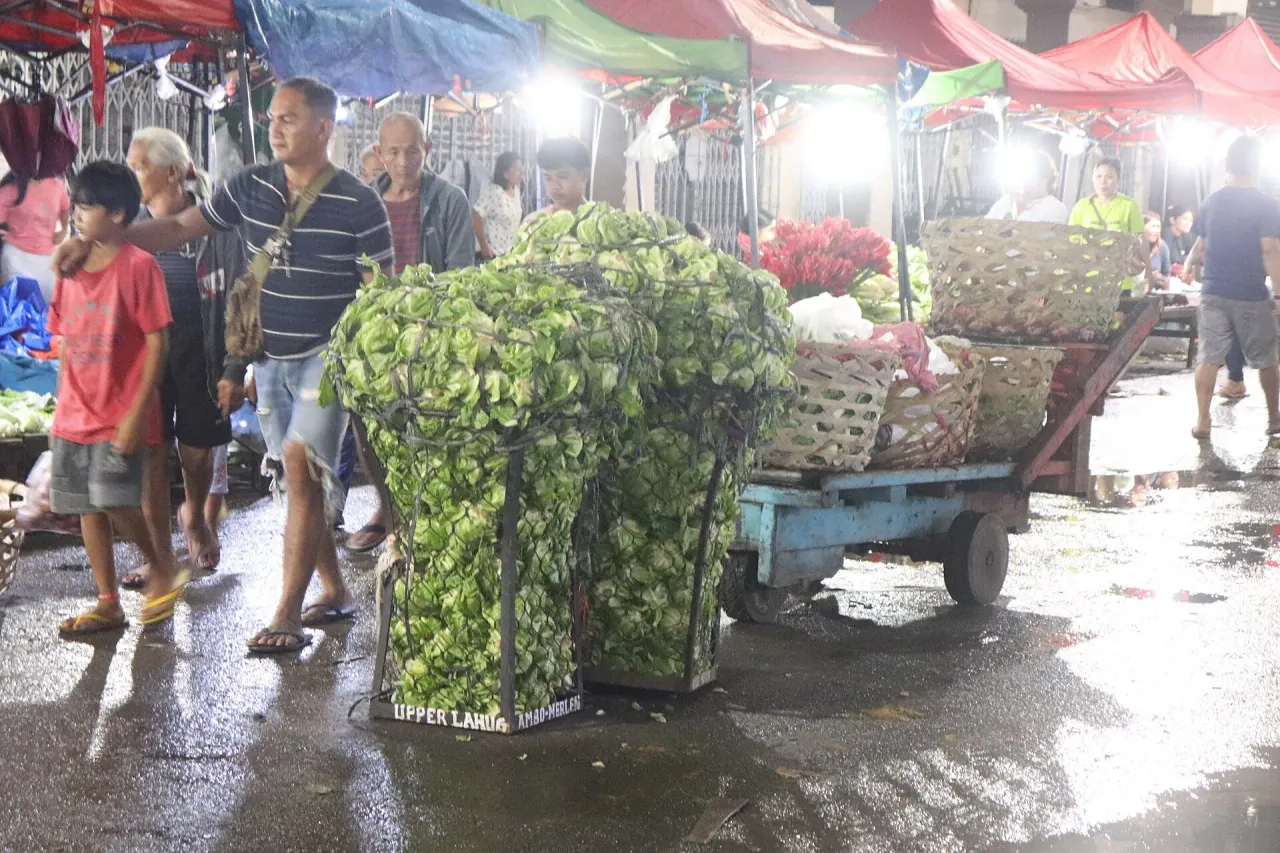
A solo renter in Cebu City spends ₱6,000–₱12,000/month on groceries. The 2x spread comes down to two decisions: where you shop and how much of your diet is imported. Convert to your home currency at the BSP reference rate, which we read live from the ledger (₱62.49/USD (BSP RERB, 10 Sep 2026)) rather than printing a number that goes stale — the peso has moved enough this year to make any hardcoded conversion wrong within weeks.
Rice is the line item that changed most since this guide first ran. In 2026 it is not cheap and it is not falling. DA Bantay Presyo monitoring, reported by GMA News on 8 July 2026, puts imported rice at PHP 45 to PHP 50 per kilo and local rice at about PHP 58. PSA data reported on 4 September 2026 put rice inflation at 19.4 percent year-on-year in August 2026, its highest since July 2024 and the single largest contributor to a 6.1 percent headline rate (down from 6.2 percent in July). Vegetables swung to a 3.4 percent decline and fish eased to 6.6 percent.
Where to Shop in Cebu: Supermarkets and Palengkes
Cebu’s grocery landscape breaks into two layers: modern supermarket chains for packaged goods and imports, and traditional palengkes for fresh produce, fish, and local meat. Most Cebu residents use both. The ones who don’t either pay more (supermarket-only) or spend more time shopping (palengke-only).
Metro Supermarket has branches at Ayala Center Cebu, Colon Street, and Gaisano Country Mall. The Country Mall branch is the most expat-visited because it carries the largest imported inventory and sits near the Banilad residential corridor. Metro sits in the middle of the price and quality spectrum.
Rustans Supermarket at Ayala Center Cebu is the premium option. The imported aisle includes Kikkoman soy sauce, miso paste, soba noodles, European cheeses, and US-brand pantry items that nowhere else in Cebu reliably stocks. Expect a meaningful premium over Metro for the same common items.
Robinsons Supermarket has branches in Talisay, Talamban (near the University of San Carlos), and Casa Mira Towers in Cebu City. Mainstream pricing, standard Robinsons stock, convenient for renters in those specific corridors.
Gaisano is the largest local supermarket chain with branches across every Cebu City and Mandaue neighborhood. Pricing is usually the cheapest among the mainstream chains. The imported selection is limited compared to Metro or Rustans, but local-brand pricing on rice, oil, canned goods, and household basics is generally the best in the metro.
Landers Superstore is a membership-based warehouse club. Bulk sizes, imported items, an in-house cafe, and occasional imports that Metro and Rustans do not carry. S&R Membership Shopping is the other membership warehouse, with US-imported bulk items: frozen US beef, Kirkland-brand goods, cereal, cheese. Both charge an annual membership; check the current fee at the counter, because both have repriced since 2024 and neither publishes a rate card we can cite.
Carbon Market in downtown Cebu City is the largest public market (palengke) in the Visayas, with fruit, wet-and-dry, and handicraft sections. This is where fresh produce, fish, and local meat are cheapest. For the area’s redevelopment and visiting hours, see the Capitol and Colon neighborhood guide.
Mandaue Public Market serves the Mandaue side of the metro and is the practical option for renters in Mandaue, Mactan, and the north corridor. Taboan Market is where most Cebuanos buy dried fish (danggit, pusit, lamayo).
Rice Prices in Cebu
Rice is the largest single grocery line for most Cebu households, and 2026 has been an ugly year for it. Rice inflation was 19.4 percent year-on-year in August 2026 (PSA, via SunStar), its highest reading since July 2024 and the top contributor to national inflation.
What the published monitoring says. DA Bantay Presyo figures reported by GMA News on 8 July 2026: imported rice PHP 45 to PHP 50 per kilo, local rice about PHP 58 per kilo. The Daily Tribune’s 12 June 2026 read of the same monitoring gives a wider spread by class: imported well-milled PHP 46 to PHP 62, local premium PHP 48 to PHP 62. Both are national monitoring, not Cebu-specific. Cebu retail sits inside those bands, but nobody publishes a Cebu-only series, so we are not going to invent one.
The price cap is the thing to watch. A PHP 50 per kilo maximum suggested retail price applies to imported 5 percent broken rice. It was due to lapse on 30 June 2026; the National Price Coordinating Council recommended a 60-day extension, which was awaiting the President’s approval as of early July, and the Agriculture Secretary said that extension would be the last. Rice fell to roughly PHP 47 to PHP 48 per kilo on average once the cap took effect. If it lapses before the August-to-September harvest lands, the cap is what is currently holding the imported band under PHP 50.
The tariff floor moved too. EO 105, signed 7 November 2025, replaced the flat 15 percent rice tariff with a sliding band of 15 to 35 percent from 1 January 2026, adjusting 5 points for every 5 percent move in world prices. The cheap-rice window of late 2025 did not narrow; it closed and reversed.
What this costs you. A solo renter cooking rice daily goes through roughly 6 to 12 kg a month, which at the published bands is PHP 270–PHP 700/month on rice alone. A family of four running 25 to 40 kg a month is at ₱1,125–₱2,320/month. Premium named brands (Ganador, Lion Ivory, Sinandomeng) sit above the local band; Cebu Daily News’s Presyo Merkado feature tracks named-brand Metro Cebu prices day to day and is the closest thing to a local rice series that exists.
The palengke does not meaningfully beat the supermarket on rice. That is one of the few categories where supermarket pricing is competitive, because the supply chain consolidates at the wholesaler, not at retail. Buy rice wherever is convenient; save your palengke trips for fresh.
Meat Prices: Chicken, Pork, and Beef
The pork price-control story is the one that moves the basket most, so start there.
There IS an active pork MSRP, and it does not cover Cebu. The DA scrapped its pork maximum suggested retail price in May 2025, then reimposed one: a circular effective 5 December 2025 caps liempo at PHP 370 per kilo and kasim and pigue at PHP 330, and “remains in force until revoked.” Two things matter for a Cebu reader. First, it applies to public and private wet markets in the National Capital Region — Cebu markets are outside its scope, so no legal ceiling protects you at Carbon. Second, it is a useful benchmark: if Metro Manila’s regulated liempo ceiling is PHP 370, a Cebu supermarket asking well above that is charging a convenience premium, not tracking a national shortage.
Meat prices in Cebu are otherwise unpublished. PSA reports meat inflation nationally but not Cebu retail cuts. The figures below are LiveInPH editorial ranges: what a Cebu shopper should expect to be quoted, not a measured sample.
- Pork: kasim around PHP 350–PHP 420/kg, liempo around PHP 370–PHP 480/kg, with the top of the band during lechon-heavy holiday demand.
- Chicken: fresh whole chicken at supermarkets around PHP 180–PHP 220/kg, dressed chicken at Carbon lower, chicken pieces higher by cut.
- Beef, the expensive outlier. Local beef around PHP 450–PHP 600/kg; imported US or Australian beef at Metro, Rustans, or S&R runs multiples of that. For most Cebu households, beef is occasional rather than staple.
- Processed meats (tocino, longganisa, hotdogs) around PHP 180–PHP 320/kg at supermarkets, cheaper unlabelled at palengkes, with the usual caveat that quality varies by stall.
Fish and Seafood at Carbon Market
Carbon is where Cebu eats fish, and prices track the day’s catch. It is also the clearest gap on this page, so here it is plainly.
The most recent published Carbon Market fish price is a year old. SunStar Cebu reported on 2 July 2025 that Anduhaw had climbed from PHP 150 to PHP 175 per kilo and Mamsa from PHP 240 to PHP 260, as fuel costs rippled through transport. That is the last figure anyone published, and under our own freshness rule it is stale: national fish inflation was still running at 6.6 percent year-on-year as of August 2026. We are not going to reprint a 2025 number as a 2026 price, and we are not going to inflate it by a percentage and call the result an observation. It is history, and it is where a 2026 price starts from.
The table below is therefore what it says it is: our editorial estimates of what a Carbon stall will quote you, with no measured sample behind them.
| Fish | Expected at Carbon | Basis |
|---|---|---|
| Bangus (milkfish) | PHP 210-240/kg | Editorial estimate. Farm-raised, most consistent |
| Budboron (round scad) | PHP 160-200/kg | Editorial estimate. Seasonal swings |
| Bariles (yellowfin tuna) | PHP 180-220/kg | Editorial estimate. Volatile; depends on catch |
| Anduhaw (hardtail scad) | No current figure | Last published: PHP 175/kg, SunStar Cebu, 2 Jul 2025. Stale. |
| Mamsa (trevally) | No current figure | Last published: PHP 260/kg, SunStar Cebu, 2 Jul 2025. Stale. |
Supermarket fish is dearer than Carbon for the same species and the selection is narrower. Metro and Rustans stock bangus, tilapia, and a limited range of reef fish. Carbon carries whatever the local boats brought in that morning, which is the point.
Taboan Market is the place for dried fish. Danggit (salted, sun-dried rabbitfish) and dried pusit are priced as pasalubong rather than as staples, which puts them well above fresh seafood per gram. For more on the Carbon Market neighborhood and its redevelopment, see the Capitol and Colon neighborhood guide.
Vegetable Prices
Vegetables are where the palengke advantage is largest, and the category swung hard through 2026: PSA vegetable inflation turned negative in August 2026, falling 3.4 percent year-on-year after an 8.4 percent rise in July. The category moving the wrong way now is rice, not vegetables.
There is no published Cebu vegetable price series. The ranges below are LiveInPH editorial estimates for a Carbon or Mandaue stall, and supermarket pricing sits meaningfully above them:
- Pechay (bok choy): PHP 20–PHP 40 per tali (bundle)
- Kangkong (water spinach): PHP 15–PHP 30 per bundle
- Malunggay (moringa): PHP 10–PHP 25 per bundle
- Tomato: PHP 60–PHP 120/kg
- Red onions: PHP 140–PHP 220/kg
- Local garlic: PHP 280–PHP 380/kg
- Eggplant: PHP 50–PHP 90/kg
- Squash (kalabasa): PHP 40–PHP 80/kg
- Potato: PHP 80–PHP 140/kg
- Carrot: PHP 80–PHP 130/kg
- Cabbage: PHP 60–PHP 110/kg
Imported Chinese garlic at a supermarket is usually cheaper than local garlic at a palengke. That is the one counterintuitive case, and it holds: local garlic commands a premium because Cebu cooks prefer its flavour for traditional dishes.
Imported and Specialty Groceries
Imported goods carry a large multiplier over local equivalents in Cebu. For some items the quality difference justifies it. For others it is a convenience tax.
Worth paying imported for: olive oil (no meaningful local substitute), Parmesan and specialty cheeses, quality coffee beans, and specific Japanese or Korean sauces (Kikkoman, gochujang, miso). Prices vary too widely by store and pack size to publish a band we can defend.
Usually not worth it: pasta sauce (local tomatoes, garlic, onion, and basil make four servings for well under PHP 100), bread (local bakeries and panaderias beat the imported aisle on both price and freshness), frozen vegetables (fresh palengke produce is cheaper and better), and bottled water (Cebu tap is not potable, but local mineral brands cost a fraction of imported).
Where to look:
- Rustans Ayala Center for Kikkoman, miso, soba, Western European brands
- Metro Country Mall for the largest Asian grocery aisle at a mainstream price point
- Landers and S&R for bulk US and Australian brands
- Healthy Options (Ayala Center Cebu and SM Seaside) for gluten-free, vegan, and organic lines, non-dairy milks, and supplements — the default stop if a dietary restriction is what is pushing you to the imported aisle
- Korean groceries on F. Cabahug Street in Mabolo (see the Mabolo neighborhood guide)
Palengke vs. Supermarket: Which Saves More
Here is a realistic weekly basket priced at both a palengke (Carbon or Mandaue) and a supermarket (Metro Ayala). Rice is the only row with a published source behind it. The rest is our own editorial pricing, and we publish it so you can check our arithmetic, not because a survey backs it.
| Item | Palengke | Supermarket | Basis |
|---|---|---|---|
| Rice (5 kg, local) | PHP 225-250 | PHP 240-290 | SOURCED: DA Bantay Presyo, ~PHP 45-58/kg (Jul 2026) |
| Pork belly (1 kg) | PHP 380-420 | PHP 420-480 | Editorial. NCR MSRP ceiling is PHP 370 and does not apply in Cebu |
| Chicken (whole, 1.5 kg) | PHP 230-280 | PHP 280-330 | Editorial estimate |
| Bangus (2 kg) | PHP 420-480 | PHP 540-620 | Editorial estimate |
| Mixed vegetables | PHP 150-220 | PHP 280-380 | Editorial estimate |
| Eggs (1 tray of 30) | PHP 200-240 | PHP 230-270 | Editorial estimate |
| Cooking oil (1L, local) | PHP 110-140 | PHP 120-150 | Editorial estimate |
| Canned sardines (4 cans) | PHP 90-120 | PHP 90-130 | Editorial estimate, roughly equal |
The palengke wins the fresh rows and loses the packaged ones. The supermarket wins on three categories specifically: packaged goods, personal care and household basics, and sale promotions where a bulk pack beats a stall. That split, not a headline percentage, is the actual decision.
Monthly Grocery Budgets by Profile
The two tables below are LiveInPH editorial budgets built from the ranges above. They are planning figures, not survey results.
| Category | Range | Notes |
|---|---|---|
| Rice (8 kg) | ₱360–₱464 | At the published PHP 45–58/kg band |
| Meat (pork, chicken, occasional beef) | ₱1,500–₱3,000 | Mostly palengke |
| Fish and seafood | ₱800–₱1,800 | Carbon Market 1–2x/week |
| Vegetables and fruit | ₱900–₱1,800 | Palengke-heavy |
| Eggs (1–2 trays) | ₱200–₱450 | |
| Cooking oil, sauces, basics | ₱400–₱800 | Supermarket |
| Dairy (milk, cheese) | ₱400–₱1,200 | Local brands |
| Bread and breakfast items | ₱400–₱900 | |
| Snacks, drinks, misc | ₱800–₱1,800 | |
| Solo monthly total | ₱5,760–₱12,214 |
| Category | Range | Notes |
|---|---|---|
| Rice (30 kg) | ₱1,350–₱1,740 | At the published PHP 45–58/kg band |
| Meat (pork, chicken, beef) | ₱4,000–₱7,000 | Mix of palengke and supermarket |
| Fish and seafood | ₱2,000–₱4,000 | Carbon or Mandaue 2x/week |
| Vegetables and fruit | ₱2,500–₱4,500 | Palengke-heavy |
| Eggs (3–5 trays) | ₱600–₱1,200 | |
| Cooking oil, sauces, condiments | ₱600–₱1,200 | |
| Dairy and imported items | ₱1,200–₱3,000 | Milk, cheese, butter |
| Bread, cereal, breakfast | ₱800–₱1,800 | |
| Household basics (cleaning, paper) | ₱800–₱1,600 | |
| Snacks, drinks, misc | ₱1,500–₱3,500 | |
| Family of 4 monthly total | ₱15,350–₱29,540 |
The solo budget lands at ₱5,760–₱12,214/month, which is where the PHP 6,000 to 12,000 rule of thumb in the cost of living pillar comes from. The family-of-four budget lands at ₱15,350–₱29,540/month. Both tables are the sum of the rows above them and nothing more; if you disagree with a row, change it and the total moves.
Delivery Apps and Online Grocery
Four apps cover most Cebu addresses. None of them publishes a fee schedule we can cite, and all four price delivery dynamically by distance, basket size, and time of day, so any fee figure printed here would be fiction.
Foodpanda Shops carries the widest selection of local supermarkets and convenience stores; good for emergency runs. GrabMart partners with Metro Supermarket, Rustans, and local convenience stores, and is often faster in the IT Park and Mabolo corridors. ShopMetro (shopmetro.ph) is Metro Supermarket’s own platform, priced the same as in-store with a minimum order and scheduled delivery windows — the best option for a large weekly run, where the fee is absorbed into basket size. ShopGaisano (shopgaisano.com) is Gaisano’s platform and carries the Gaisano price advantage on basics.
The rule of thumb that survives: delivery is worth it when the fee is small relative to the basket, which means big scheduled runs, not small emergency ones. If you are on a tight budget, a weekly Carbon trip plus a monthly supermarket run is still the cheapest approach. For the full first-month Cebu setup checklist, including app setup and payment methods, see the checklist guide.
Grocery Budget and the Bigger Picture
Groceries are the third-largest monthly expense for most Cebu renters, behind rent and utilities. The difference between a PHP 6,000 solo grocery budget and a PHP 12,000 one is driven almost entirely by two variables: imported share of diet, and palengke share of shopping.
Palengke-heavy solo eater: PHP 6,000 to 8,000 a month. Cooks most meals, buys fresh at Carbon or Mandaue, supermarket for basics only.
Mixed solo eater: PHP 8,000 to 12,000. Supermarket for convenience, palengke for fresh on weekends, some imported items, eats out two or three times a week.
Imported-heavy solo eater: PHP 12,000 to 18,000. Mostly Rustans and Landers, Western pantry, bread and dairy from the imported aisle, minimal palengke use.
For the full Cebu cost of living pillar covering rent, utilities, transport, and lifestyle, see the cost pillar. For hidden costs and deposits when moving in, see the hidden costs guide. For how VECO electricity bills intersect with cooking habits, see the electricity guide. The FX rate behind every foreign-currency figure on this site is published as a dataset at /data/php-fx-rates.
Bottom Line
Cebu grocery prices in mid-2026 are workable, but they are rising, and the direction is now the story. Rice inflation was 19.4 percent year-on-year in August 2026, its highest since July 2024, while vegetables swung to a 3.4 percent decline. There is a PHP 50 per kilo cap holding imported rice down and it is on a 60-day clock. Carbon Market is still the cheapest fresh shopping in the metro, but its vendors are carrying stall costs the Cebu City Government is now investigating, and that pressure lands on shelf prices.
Start with PHP 6,000 to 12,000 for a solo renter and PHP 15,000 to 28,000 for a family of four, then price your own basket for a fortnight. That fortnight will give you better Cebu grocery data than anything published — including this page, which is exactly why we mark every figure with its basis. For the neighborhood decision that determines which supermarket and palengke you can actually reach, see the best neighborhoods in Cebu City guide.
FAQ
Frequently asked.
How much is a monthly grocery budget in Cebu?
Is it cheaper to shop at palengke or supermarket in Cebu?
How much is rice per kilo in Cebu in 2026?
Where can I find imported groceries in Cebu?
What are the best palengkes in Cebu?
Data note. Prices, rates, and details are verified as of publication and may change. Always confirm with the listed provider or landlord before committing. This article is informational, not financial, legal, or immigration advice. Full disclaimer.