Your first month in Cebu City costs two to three times a normal month, and the reason is almost entirely the lease: two months deposit plus one month advance rent, paid before you have bought a single plate. A monthly budget will not tell you what Month One looks like, when the deposit, the utility setup, the SIM, the fiber and the Bureau of Immigration all arrive in the same fortnight.
This is the week-by-week sequence. Every step has a place to go, a document to bring, and (where anyone actually publishes one) a price. Where nobody publishes a price, this page says so instead of inventing one.
Before You Arrive: What to Handle Remotely
Start your neighborhood research before you land. Know which area fits your budget and your commute. Join the Cebu rental groups on Facebook and watch listings for two to four weeks before arrival, so you can tell a normal asking price from an expat price.
Check ISP coverage at your target address. Run the Converge serviceability checker and the PLDT availability checker on the specific building. If fiber is not there, you want to know before you sign, not after. The internet guide has the speed data and the provider-by-provider detail.
Bring with you:
- Passport with at least 6 months validity
- Multiple printed copies of your passport data page
- 2x2 and passport-size ID photos (at least 6 copies)
- Prescription medications (2-3 month supply plus a copy of the prescription)
- An unlocked phone that supports Philippine LTE/5G bands
- A debit or credit card with no foreign transaction fees (Wise, Revolut, or a similar multi-currency card). Bring one from home: getting a Philippine credit card as a foreigner is a months-long project, not a first-month task
For everything that will not fit in two suitcases, the cheapest legal route in is a balikbayan box. Note that the PHP 150,000 duty-free box allowance is a privilege of Filipino nationals under the Customs Modernization and Tariff Act, not a foreigner’s allowance; what a foreigner brings in is judged on personal-use character and quantity instead. The rules, and what that distinction costs you, are in balikbayan box to Cebu: customs duty rules for foreigners.
Week 1: Housing and Utilities
This is the highest-cost week. Housing and utilities happen at the same time, and the deposit burden lands all at once.
Sign your lease
The standard structure is two months deposit plus one month advance rent. Three months of rent, up front.
▸ Show the data table
| Segment | Low | Midpoint | High | n |
|---|---|---|---|---|
| IT Park / Cebu Business Park · Studio | ₱18,000 | ₱26,500 | ₱35,000 | — |
| IT Park / Cebu Business Park · 1BR | ₱25,000 | ₱40,000 | ₱55,000 | — |
| IT Park / Cebu Business Park · 2BR | ₱40,000 | ₱80,000 | ₱120,000 | — |
| Lahug · Studio | ₱14,000 | ₱19,500 | ₱25,000 | — |
| Lahug · 1BR | ₱20,000 | ₱27,500 | ₱35,000 | — |
| Banilad · Studio | ₱12,000 | ₱16,000 | ₱20,000 | — |
| Banilad · 1BR | ₱18,000 | ₱24,000 | ₱30,000 | — |
| Banilad · 2BR | ₱30,000 | ₱47,500 | ₱65,000 | — |
| Banilad · 3BR | ₱50,000 | ₱60,000 | ₱70,000 | — |
| Mabolo · Studio | ₱10,000 | ₱14,000 | ₱18,000 | — |
| Mabolo · 1BR | ₱20,000 | ₱27,500 | ₱35,000 | — |
| Mabolo · 2BR | ₱28,000 | ₱37,000 | ₱46,000 | — |
| Mabolo · 3BR | ₱45,000 | ₱55,000 | ₱65,000 | — |
| Mandaue · Studio | ₱10,000 | ₱14,000 | ₱18,000 | — |
| Mandaue · 1BR | ₱17,000 | ₱26,000 | ₱35,000 | — |
| Mandaue · 2BR | ₱15,000 | ₱17,500 | ₱20,000 | — |
| Capitol / Colon · Studio | ₱5,000 | ₱8,500 | ₱12,000 | — |
| Capitol / Colon · Room | ₱3,500 | ₱5,750 | ₱8,000 | — |
| Talamban · Studio | ₱12,000 | ₱18,500 | ₱25,000 | — |
| Talamban · 1BR | ₱26,000 | ₱30,000 | ₱34,000 | — |
| Talamban · Room | ₱3,500 | ₱5,250 | ₱7,000 | — |
Take the Lahug studio band above: PHP 14,000 to PHP 25,000 a month means PHP 42,000 to PHP 75,000 on the table before you own a fork. Some landlords add a broker fee of one month on top. Read the band for what it is: a LiveInPH editorial baseline, not a measured sample, which is why the chart carries its own basis note and no median. Deposits, lease clauses and scam avoidance are in the renting guide.
Apply for Visayan Electric (VECO)
Condo first. In an Avida Tower, Solinea, Mabolo Garden Flats, Amaia Steps Mandaue, Calyx Residences, or most other developer-built stock, the meter is already live and the account already exists. All you need is a change-of-name transfer through the condo admin office: usually one form, a photocopy of the lease, a photocopy of your passport. Admin forwards it and your name lands on the next bill. Ask the condo admin for the current procedure before you assume you need to go downtown.
Standalone houses and older apartments are the case where you actually apply at a Visayan Electric service centre. Bring the lease and a valid ID (a passport works). You will pay a bill deposit and, for a new connection, you will need an electrical permit and a licensed electrician’s certification before the utility energises the service.
For what a Cebu power bill actually comes to once the aircon is running, see the electricity guide.
Apply for MCWD water
Water is simpler than power. If the unit already has an active MCWD connection (most urban units do), you need a change-of-name transfer. MCWD’s main office is at Magallanes corner Lapulapu Street, Cebu City, and new connections are applied for through its online services portal.
MCWD publishes no connection-fee schedule, no change-of-name fee, and no residential tariff table on its own site. We checked the homepage and the ORDS services module on 12 July 2026. Our water tariff figures are attributed to MCWD via named secondaries (Cebu Daily News, Philstar/The Freeman), and the component says so every time it renders:
The minimum charge for the first 10 cu.m. is ₱259.16 (first 10 cu.m.) (MCWD via Philstar / The Freeman — final 10% tranche, effective 2026-04-01, Apr 2026) [Sourcing note: MCWD publishes NO residential tariff schedule on its own website. Every peso figure in this ledger (minimum ₱259.16 / 10 cu.m.; tiers ₱28.64, ₱33.71, ₱82.52) is attributed to MCWD via NAMED SECONDARIES — Philstar / The Freeman (2026-03-28) and Cebu Daily News — not via a primary MCWD publication.], and consumption from 11 to 20 cu.m. is billed at ₱28.64/cu.m. (11–20 cu.m.) (MCWD via Philstar / The Freeman — final 10% tranche, effective 2026-04-01, Apr 2026) [Sourcing note: MCWD publishes NO residential tariff schedule on its own website. Every peso figure in this ledger (minimum ₱259.16 / 10 cu.m.; tiers ₱28.64, ₱33.71, ₱82.52) is attributed to MCWD via NAMED SECONDARIES — Philstar / The Freeman (2026-03-28) and Cebu Daily News — not via a primary MCWD publication.]. A solo renter typically lands in the 12 to 18 cu.m. range, which is the PHP 316 to PHP 488 band. The full schedule, the tranche history and the upland-barangay problem are in the MCWD water bill guide and the Cebu water tariff dataset.
Apply for internet
Apply the day you sign the lease. Not because we can promise you a date, but because neither Converge nor PLDT publishes an installation lead time or an installation fee on its own plans page (both read 12 July 2026), and the queue is the only variable you can influence. Ask your landlord whether the previous tenant had fiber: reactivating an existing line is faster than pulling a new one.
| Converge | PLDT Home | Globe | |
|---|---|---|---|
| Entry plan / month | PHP 1,349 (Play, up to 200 Mbps) | PHP 1,299 (Fiber Unli 1299, up to 100 Mbps) | Not published here (globe.com.ph blocks automated reads) |
| Top residential plan | PHP 2,599 (Ultra, up to 1 Gbps) | PHP 2,699 (up to 1 Gbps) | Not published here |
| Installation fee | Not published | Not published | Not published |
| Installation lead time | Not published | Not published | Not published |
| Apply | convergeict.com | pldthome.com | globe.com.ph |
Speed rankings, the Cebu-specific outage record and the dual-ISP argument are in the internet guide.
Week 1-2: SIM Card, Mobile Data, and GCash
Get a Philippine SIM card
Buy a prepaid SIM at the airport or at any mall. Registration is compulsory under the SIM Registration Act (RA 11934) and takes minutes, but read the statute’s fine print: a SIM registered on a tourist visa is valid for 30 days and auto-deactivates on expiry. If you are staying, that is a re-registration you have to plan for, not a surprise.
| Smart | Globe | DITO | |
|---|---|---|---|
| Cebu City coverage | Strongest 5G footprint | Comparable to Smart | Thinner; improving |
| Entry data promo | Not published here | Not published here | From PHP 99 (dito.ph/prepaid) |
| Tourist / traveller SIM | Not published here | Not published here | From PHP 300 (dito.ph/traveler-sim) |
| Postpaid for foreigners | ACR I-Card required | ACR I-Card required | Prepaid is the practical route |
Set up GCash
GCash is the payment rail: carinderias, market stalls, utilities, person-to-person. Set it up on day one.
To register: download the app, enter your Philippine mobile number, verify by SMS code, and use your passport as the ID. That gets you the basic tier, which is a deliberately small wallet.
Full verification requires an ACR I-Card (or an SRRV ID), which you cannot hold until you are past day 59 on a qualifying visa. Until then, basic covers the daily surface: VECO, MCWD, Converge and PLDT are all Bayad-integrated, and Grab, food delivery and most retail take GCash directly.
We do not print GCash’s tier caps here. GCash publishes them only in its Help Center, which returns HTTP 403 to any automated read, so the app is the only authoritative source, and our own money cluster has carried two different figures for the basic wallet cap, which is exactly the kind of drift a number with no readable source produces. Read the limits in the app. The GCash for foreigners guide sets out the tiers and the ACR gate in full.
One number we can bind: sending from GCash over InstaPay costs ₱10 (GCash, individual send) (from 04 Jul 2026; BSP fee disclosure, 10 Jul 2026). InstaPay is not price-capped by the BSP, so that fee is set by the sending institution and moves on its schedule; it reads from our InstaPay fee ledger, not from this sentence.
Week 2-3: Immigration, Banking, and Healthcare
The 59-day gate and the ACR I-Card
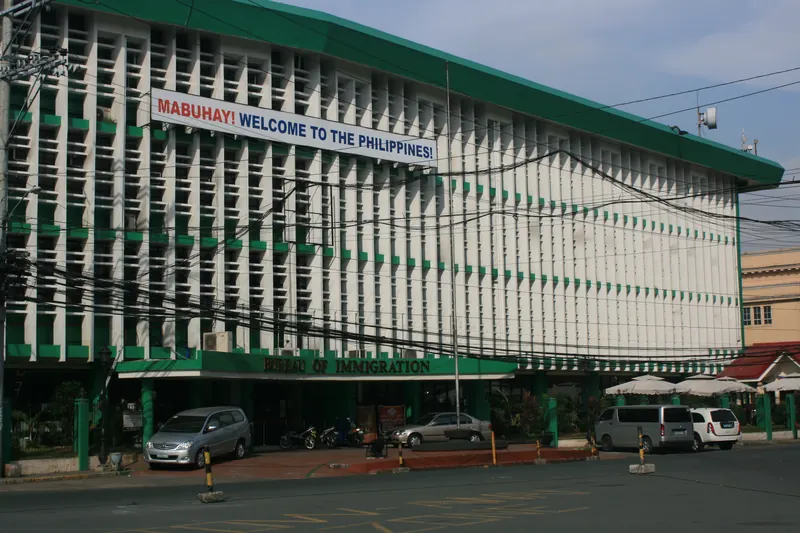
The ACR I-Card is the document that unlocks the rest of your bureaucratic life here: bank accounts, full GCash verification, some HMO enrolments. The Bureau of Immigration requires it of foreign nationals whose stay passes 59 days, including tourists.
Bureau of Immigration, Cebu District Office: 4th Floor, GMall of Cebu, A. Soriano Avenue, Cebu City 6000. (032) 345-6441 / (032) 345-6442. Published hours 09:00 to 19:30. That is what BI’s own contacts page says as of July 2026, and it is worth being blunt: guides that put this office on the 2nd Floor, or still at J Centre Mall in Mandaue, are wrong. The Mactan-Cebu Satellite Office at Gaisano Mactan Island Mall, Lapu-Lapu (published hours 08:00 to 18:30) is the shorter-queue option for routine work.
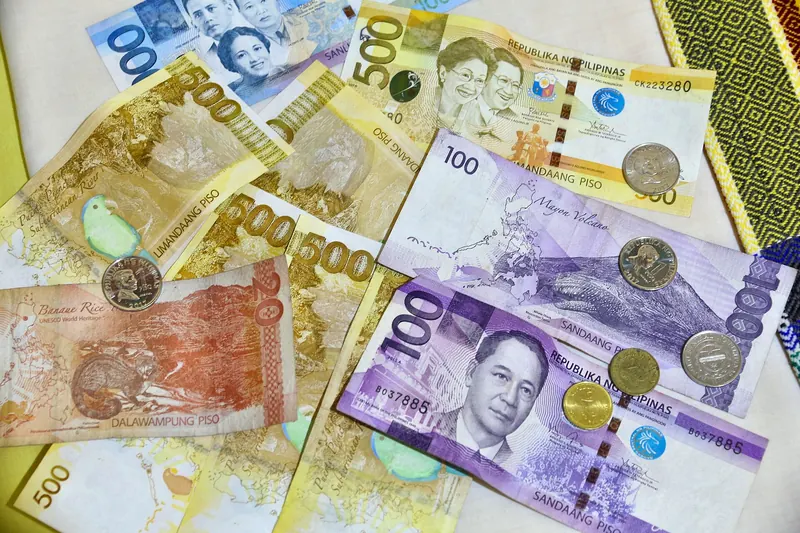
The fees are BI’s own published schedule. The extension that carries you past day 59 is ₱4,400 (First extension of authorized stay beyond 59 days, 1 month) (Philippine Bureau of Immigration, BI's published schedule, vintage 06 Mar 2014 — BI states fees "may change without prior notice") for one month, and the card itself is $50 + ₱500 (ACR I-Card, issuance) (Philippine Bureau of Immigration, BI's published schedule, vintage 06 Mar 2014 — BI states fees "may change without prior notice"). Note that BI quotes the card in dollars and publishes no peso price and no conversion rate, so neither do we: the peso cost of that USD 50 moves with the exchange rate, currently ₱62.49/USD (BSP RERB, 10 Sep 2026) against our FX dataset. Earlier versions of this page quoted “PHP 3,000 to 8,000 depending on visa type and rush processing.” That figure had no source, and it is gone.
Bring your passport, proof of legal stay, photocopies of both, and cash. Plan for a return visit to collect the card.
Open a Philippine bank account
This is the step that waits on everything else. Most banks want the ACR I-Card, which is why the sequence starts at Immigration and not at the branch.
| BPI | Metrobank | BDO | |
|---|---|---|---|
| Opening deposit | PHP 3,000 (regular savings) | PHP 2,000 (regular savings) | Not published; ask the branch |
| Interest starts at | PHP 5,000 daily balance | PHP 10,000 balance | Not published |
| ACR I-Card | Expected | Expected | Expected |
| Also bring | Passport, proof of address, lease | Passport, proof of address, lease | Passport, proof of address, lease |
Tourist-visa holders occasionally get an account opened on a passport, a lease and proof of income, but it is branch-by-branch and you cannot plan around it. The requirements, the branch variance and the documents that actually work are in the opening a bank account guide.
Until the account exists, GCash plus a multi-currency card handles daily life, and plenty of foreigners run that way for months. Watch the ATM side: a foreign-issued card is acquired over Visa or Mastercard, not over the domestic BancNet rail, and no Philippine bank publishes what it charges a foreign card. The widely-quoted “about PHP 250 at BDO” traces to Wise and YouTrip, named secondaries, not a bank tariff. Read the on-screen fee disclosure before you press confirm, always decline dynamic currency conversion, and see the ATM fees and withdrawal limits guide, which publishes that gap rather than papering over it.
Set up healthcare
Do this before you need it, not after.
Locate your nearest hospital. Save the address and the ER number. Perpetual Succour on Gorordo Avenue is closest to IT Park and Lahug; Cebu Doctors’ University Hospital and Chong Hua carry the widest specialist coverage. The healthcare guide covers which hospital handles what, and what it costs.
Sort your insurance, and get the PhilHealth branch right. PhilHealth treats foreign nationals in three different ways, and the version you get told at the counter depends on which one you are:
| You are | You pay | Under |
|---|---|---|
| Employed in the PH on a formal contract | 5% of monthly basic salary, PHP 10,000 floor to PHP 100,000 ceiling, split 50/50 with your employer | The ordinary Direct Contributor schedule |
| SRRV retiree (PRA) | PHP 15,000 a year, flat | The 2017 foreign-national circular |
| Any other foreign resident (ACR I-Card, not formally employed) | PHP 17,000 a year, flat | The 2017 foreign-national circular |
The caveat is worth publishing: the only issuance that sets those flat amounts is a 2017 circular that predates the Universal Health Care Act, and PhilHealth has never re-priced or restated the foreign-national category since. It survives because PhilHealth keeps printing the fee in its 2026 Citizen’s Charter. Expect local-office variation, and confirm at the counter before you pay. PhilHealth on its own will not carry you through a private-hospital admission in Cebu; it is a supplement, and the insurance strategy guide shows how to layer it with an HMO or international cover by age and visa.
Stock basic medications. Paracetamol, antihistamines, oral rehydration salts, and your own prescriptions. Ask for the generic.
Line up routine care. Find a GP near your neighbourhood for walk-ins, and put a telemedicine app on your phone for refills and minor questions. UCMed in Mandaue runs a free online charity teleconsultation programme that most first-month arrivals never hear about. Consultation prices move and are not published as tariffs, so the healthcare guide is where we keep them.
Week 3-4: Optimize and Settle
By week three the basics are in place. Now you tune.
Map your grocery route. Carbon Market, downtown near Colon, is the cheapest produce, meat and fish in the city. SM City Cebu and Robinsons handle the rest; S&R in Mandaue and Landers on the SRP stock imported brands at imported prices. Whether Carbon actually saves you money once you cost the trip is worked out in the grocery prices guide.
Establish your commute. Test it at 6 PM before your first workday, not on it. IT Park to Mandaue is 15 minutes off-peak and 45-plus on A.S. Fortuna in the evening peak. New this year: the Cebu Bus Rapid Transit began partial operations on 13 March 2026 with 17 buses running Il Corso to Cebu IT Park, using the completed dedicated median lanes on N. Bacalso Avenue and Osmeña Boulevard, and rides are free for the first year under the DOTr’s Libreng Sakay programme (reported by SunStar Cebu and The Freeman, both named secondaries; the operator publishes no fare table or service page). If your route follows that corridor, it is a genuinely new option. Fares and routes for everything else are in the transport costs guide.
Build a typhoon kit if you arrive July to December. Flashlight, a 20,000 mAh power bank, three days of water, canned food, a waterproof document bag. A UPS for the router covers the short outages of an ordinary squall. Typhoon Odette (December 2021) and Typhoon Tino (November 2025) are the tail you are actually preparing for: Tino cut power to roughly 1.4 million households across the Visayas and collapsed MCWD’s water production for days.
Get a barangay clearance. Some landlords and employers ask for one. Bring passport, lease and 2x2 photos to the barangay hall. Barangay fees are set locally and are not published centrally, so ask at the counter.
Set up the rest of the household. If you are hiring help, read the kasambahay law guide before you agree a wage, because the statute sets obligations most employers only discover later. Schools, a motorbike and a pet arriving behind you each carry their own trap: international schools and tuition, motorbike ownership, pet relocation.
How Much Does the Setup Month Cost
The honest answer is that only some of this is knowable in advance. The lease is. The utility rates are (we hold them in a ledger). The Bureau of Immigration fees are published, if you read the 2014 vintage stamp on them. The rest is a planning estimate, and it is labelled as one.
| Category | Range | Notes |
|---|---|---|
| Rent: 2-month deposit + 1-month advance | ₱42,000–₱75,000 | 3x a Lahug studio at PHP 14,000–25,000/month |
| Internet, first month | ₱1,299–₱2,699 | Converge/PLDT published plan prices; installation fee not published |
| SIM + first data load | ₱300–₱1,500 | Planning estimate; Globe/Smart do not publish tourist-SIM prices to us |
| Basic furnishing / supplies | ₱3,000–₱8,000 | Planning estimate. Bare unit: see the furnishing guide |
| First electricity bill | ₱2,500–₱5,500 | Planning estimate; depends entirely on aircon hours |
| First water bill | ₱316–₱488 | MCWD 12–18 cu.m., computed from the tariff ledger |
| Food | ₱8,000–₱12,000 | Planning estimate. Cooking + carinderia while settling |
| Transport | ₱1,500–₱4,000 | Planning estimate. More Grab while you learn the routes |
| Misc (pharmacy, household) | ₱2,000–₱5,000 | Planning estimate |
| BI: first extension past day 59 | ₱4,400–₱4,900 | BI's published total, 1–2 months. ACR I-Card is USD 50 + PHP 500 on top. |
| Setup month total | ₱65,315–₱119,087 |
The deposit is the shock, and it is the one line you can predict to the peso. Everything below it is adjustable. After month one the steady-state number is far lower, and the cost of living guide prices it properly. For a bare unit, the furnishing line above understates the real number badly; the furnishing cost guide does the new-versus-secondhand math.
How every figure on this page is sourced, and where the ledgers behind it live, is set out in our methodology.
Common First-Month Mistakes
Signing a 12-month lease the week you land. The costliest mistake on this page. You do not yet know which corridor floods, how the 6 PM commute feels, or whether the building’s water pressure holds in dry season. You learn that by living there, not by viewing. The lower-risk sequence is one to two months in a serviced apartment or co-living space, then the year lease once the neighbourhood has proven itself. The short-term rentals vs hotels guide prices that bridge.
Ordering internet late. Neither provider publishes a lead time, which means the queue is the whole game. Apply the day you sign.
Not photographing the unit at move-in. Without timestamped photos you have no evidence when “damages” appear at lease end.
Paying a reservation fee to someone you have not met. The most common rental scam in Cebu, and it runs on GCash because GCash is instant and hard to claw back. Never send money for a unit you have not stood inside. Details in the renting guide.
Choosing a neighbourhood on rent alone. A PHP 11,000 studio in Talisay looks cheap until you add the daily commute to IT Park. Put the transport line in the budget before you sign, not after.
Skipping the flood check. If the unit sits near the Guadalupe, Mahiga, Kinalumsan or Butuanon waterways, you are in a flood zone. Check HazardHunter before signing. Typhoon season runs July through December.
Assuming your home bank card is cheap here. It is not, the fee is not published, and the ATM screen is where you find out. See the ATM guide.
For the one-off fees nobody warns you about (association dues prepayment, water meter reset, aircon cleaning, broker fees) see the hidden costs of renting in Cebu.
FAQ
Frequently asked.
How much does the first month in Cebu City cost?
How do I set up electricity in Cebu?
Can foreigners use GCash in the Philippines?
Can foreigners open a bank account in Cebu?
Where is the Bureau of Immigration office in Cebu?
Data note. Prices, rates, and details are verified as of publication and may change. Always confirm with the listed provider or landlord before committing. This article is informational, not financial, legal, or immigration advice. Full disclaimer.