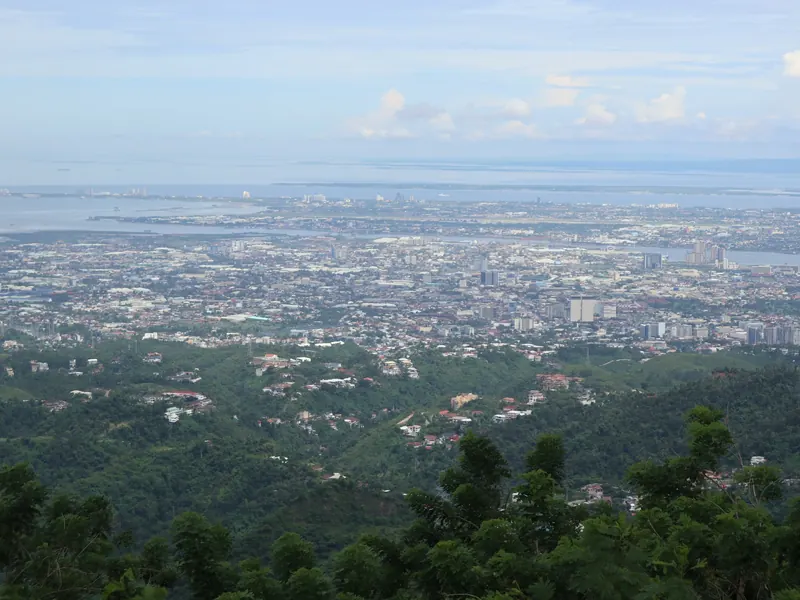
Cordova used to be the quiet end of Mactan, a fishing municipality on the island’s southern tip that most Cebu renters never had a reason to reach. The Cebu-Cordova Link Expressway changed the geography. Since the bridge opened in 2022 the town has a direct ramp to the Cebu City mainland, and with it a rush of reclamation plans, resort-residential pre-selling, and the beginnings of a housing market that did not exist five years ago. For a renter that is the whole story of Cordova in one line: cheap and coastal, newly connected, and still early enough that most of what is promised is not yet built.
Get one fact straight before you budget anything. Cordova is not on Visayan Electric. Like the rest of Mactan it draws power from the Mactan Electric Company (MECO), a separate utility with a separate rate, and the metro electricity figure LiveInPH tracks does not apply here. Water, on the other hand, does come from the mainland district. That split, one utility local to the island and one reaching across from Cebu, is the practical texture of living on the frontier edge of the metro.
Cordova held 70,595 residents at the 2020 census across 13 barangays, from the town-center Poblacion to the small island barangay of Gilutongan out in the channel. It is a compact, dense, low-lying place. The appeal for renters is low rent and a fast new road to the city; the cost is a thin, informal rental market and real exposure to storm surge on an island whose highest ground is barely above the tide.
What these rent numbers are, and are not. There is no Cordova rent series in the LiveInPH data catalog, no listing sample has been collected here, and nobody publishes a Cordova rent index. Every peso range below is an editorial estimate for orientation, not measured data. Much of the local stock trades off-platform through Facebook Marketplace, tarpaulin signs and barangay word of mouth, so asking prices on national listing sites are thin and skew high. Treat all of it as a starting point for a walk-around, and our methodology explains why we publish these as estimates rather than dress a hand-typed range as an index.
Who Cordova Actually Suits
Cordova works well for: people who work locally in the town or the resort strip, remote workers who weight low rent and water access over a daily metro commute, drivers heading to the south metro who can use CCLEX to skip the Mandaue bridges, and renters willing to trade a mature rental market for space, quiet and a coastline. If your destination is the South Road Properties, the Cebu Business Park side, or anywhere reachable off the Cebu South Coastal Road, Cordova’s bridge does real work for you.
Cordova does not work well for: anyone who needs deep rental inventory to choose from, renters who depend on Grab or delivery apps through the night, families needing mainland international schools close at hand, and anyone unwilling to pay a toll on every mainland trip. The honest read: Cordova is an early-mover value play for the local or remote worker and the south-metro commuter with a car, and a poor fit for someone who wants the settled condo-and-mall convenience that Lapu-Lapu’s Mactan Newtown corridor already offers across the island. The two are siblings on the same island, but Lapu-Lapu is built out and Cordova is still building.
From Fishing Town to CCLEX Landing
The single event that reorganised Cordova is the bridge. The Cebu-Cordova Link Expressway was inaugurated on April 27, 2022 and opened to the public three days later, a 8.9-kilometre tolled crossing from the town’s Barangay Pilipog over the Mactan Channel to the South Road Properties on the Cebu City mainland. It is operated by the Cebu-Cordova Link Expressway Corporation (CCLEC), a unit of Metro Pacific Tollways. Before it, Cordova reached the mainland only by looping north through Lapu-Lapu and over the older bridges. After it, the town became the fastest Mactan address to the south side of Cebu City.
That access pulled in reclamation. The largest confirmed project is the Cordova reclamation, a 254-hectare mixed-use development by Cordova Shores Development Corporation, a consortium of Ulticon Builders and Premium Megastructures. It is planned in two sites, roughly 204 hectares across barangays Catarman and Buagsong and about 50 hectares off Alegria and Poblacion, and it broke ground on February 18, 2022 at the roll-on roll-off port in Poblacion. A separate and far larger vision, a roughly 1,500-hectare resort-and-residential reclamation promoted by the SM group and sometimes called Dolphin Island, has been floated as a Sentosa-style island cluster with a target well later this decade. Treat that one as a concept rather than a commitment: no construction start for it could be confirmed, and a renter should underwrite the Cordova that exists, not the render.
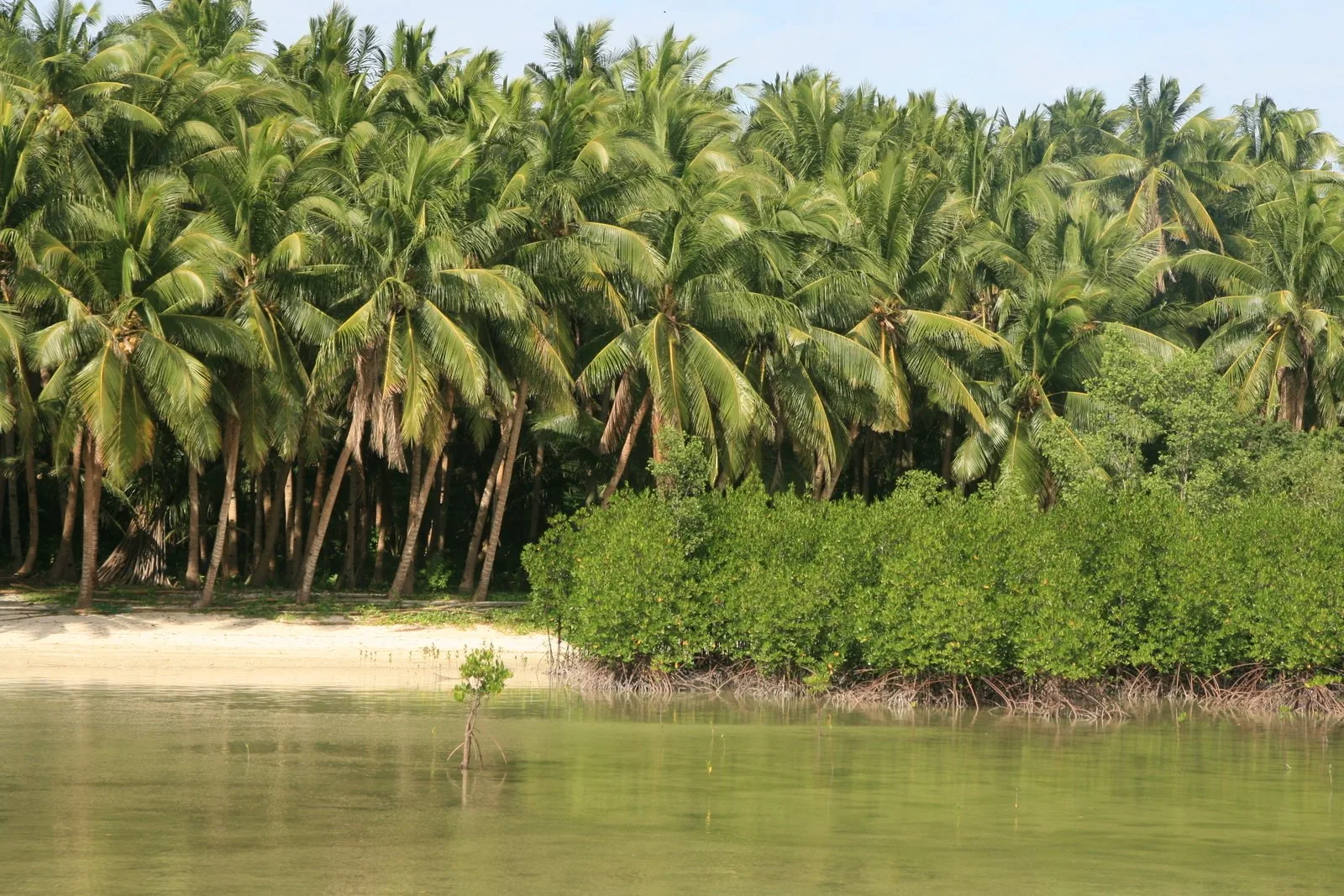
What already exists is a tourism layer that predates the boom. The waterfront 10,000 Roses Café draws day-trippers for its lighted-flower installation over the water, island-hopping boats leave for the Gilutongan and Nalusuan marine sanctuaries, and beach resorts operate on the southern coast. Cordova’s mangrove forest and its marine sanctuaries are the town’s older identity, and the local government has run mangrove-restoration programmes alongside the reclamation push, a tension worth noting: the same coastline is being both filled and replanted.
Underneath the new construction, the base economy is still fishing and small-scale coastal trade, with hospitality layered on top. There is no large industrial ecozone in Cordova of the kind that anchors Lapu-Lapu’s economic-zone belt, so the town does not draw a factory-worker rental crowd the way the north of the island does. What CCLEX added is a commuter and investor layer: people who work or invest on the mainland but want an island address a short toll away, and the pre-selling that follows them. For a renter, that mix is why Cordova feels early. The demand is real but not yet dense, the supply is being built rather than absorbed, and the character of a given barangay depends heavily on whether the fill and the ramps have reached it. Two barangays a few kilometres apart can feel a decade apart in build-out.
Key Barangays: Poblacion to the Channel Islands
Most rental decisions in Cordova come down to which of a small set of barangays you are shopping in.
Poblacion is the town center and civic core: the municipal hall, the public market, the roll-on roll-off port, and the San Roque Parish church, a Cordova parish designated in 1863 and known for its Moorish-influenced facade. It held 10,163 residents at the 2020 census, the second most populous barangay, and it is where a car-free renter has the easiest time reaching daily errands on foot.
Ibabao is the most populous barangay at 10,227 residents and the town’s built-up northern edge nearest the Lapu-Lapu boundary, so it carries a lot of the everyday apartment and boarding-house stock and the through-traffic toward the older Mactan bridges.
Pilipog is the CCLEX barangay. The expressway lands here, and the toll plaza and its approach roads sit on this side, which makes Pilipog the address most directly reshaped by the bridge. It held 4,660 residents at the 2020 census, and it is the barangay to watch as pre-selling and roadside commercial development follow the ramp.
Catarman and Buagsong are the reclamation barangays on the southern and southwestern coast, home to 5,844 and 5,733 residents respectively at the 2020 census, and the ground under the 204-hectare phase of the Cordova reclamation. These are still largely coastal-village in character, changing fastest where the fill is going in.
Gilutongan is the island barangay out in the channel, 1,606 residents at the 2020 census, reached only by boat and known for its marine sanctuary rather than any rental market. It is a reminder that “Cordova” includes off-island barangays where daily life runs on tides and boat schedules, not roads.
Rent Ranges by Type
Cordova’s rental market is narrow and mostly informal: boarding rooms and apartments serving locals and resort workers, plus a first wave of pre-selling and resort-residential units riding the CCLEX landing. There is no mature condominium inventory of the kind Lapu-Lapu already has. Before you use the numbers below, hold on to what they are. There is no Cordova rent series in the LiveInPH data catalog, no listing sample was collected, and nobody publishes a Cordova rent index. The bands here are editorial estimates for orientation, not measured data.
Boarding-house rooms circulate around ₱3,000–₱6,000/month (editorial estimate, 2026). Basic apartments and older one-bedrooms run about ₱6,000–₱12,000/month (editorial estimate, 2026). Newer townhouses and pre-selling or resort-residential units, where they are offered for rent at all, sit around ₱15,000–₱30,000/month (editorial estimate, 2026) and above, depending on the project and the proximity to the water.
| Category | Range | Notes |
|---|---|---|
| Boarding-house room (Poblacion / Ibabao) | ₱3,000–₱6,000 | Editorial estimate; often utilities-bundled; verify in person |
| Basic apartment / older 1BR (unfurnished) | ₱6,000–₱12,000 | Editorial estimate; you pay the MECO electricity bill |
| Newer townhouse / resort-residential unit | ₱15,000–₱30,000 | Editorial estimate; thin supply, mostly pre-selling near the CCLEX landing |
LiveInPH editorial estimate of 2026 asking rents. There is no Cordova rent series in the LiveInPH data catalog, no listing sample was collected, and no source publishes a Cordova rent index. Most Cordova stock trades off-platform (Facebook Marketplace, tarpaulin signs, word of mouth), so national listing sites are thin and skew high. Treat as a prior, not evidence.
The honest weakness here is that all three rows are editorial estimates rather than a counted sample, and we would rather say so than launder a hand-typed range into a table that looks measured. Retiring these bands means collecting a dated listing sample in Cordova, not finding a plausible URL. Until then, price your own shortlist at two or three units and keep the receipts. For the built-out comparison across the island, the Lapu-Lapu and Mactan overview carries the wider Mactan rent picture, which is also an editorial baseline rather than a measured index.
The CCLEX Commute
Cordova’s commute case rests almost entirely on one bridge. The Cebu-Cordova Link Expressway runs 8.9 kilometres from Barangay Pilipog across the Mactan Channel and touches down at the South Road Properties, feeding directly into the Cebu South Coastal Road toward the southern half of Cebu City. The Class 1 toll, covering cars, is PHP 107 each way, the full rate in force since October 1, 2025 after a phased increase. That is a real recurring cost: a five-day-a-week round trip runs well over two thousand pesos a month in tolls alone, before fuel, so price the toll into the rent when you compare Cordova against a mainland address.
Drive time is the variable that decides everything, and no agency publishes a Cordova travel-time series. The bridge crossing itself is a few minutes at the posted speed. Door-to-door from Cordova to the Cebu City business districts is roughly 20 to 40 minutes off-peak and materially longer in the 7 to 9 AM and 5 to 7 PM peaks, when the South Road Properties approaches and the coastal road back up. Those figures are editorial estimates from route distance and typical congestion, not a measured drive-time sample, so drive the route at your real hours before you sign.
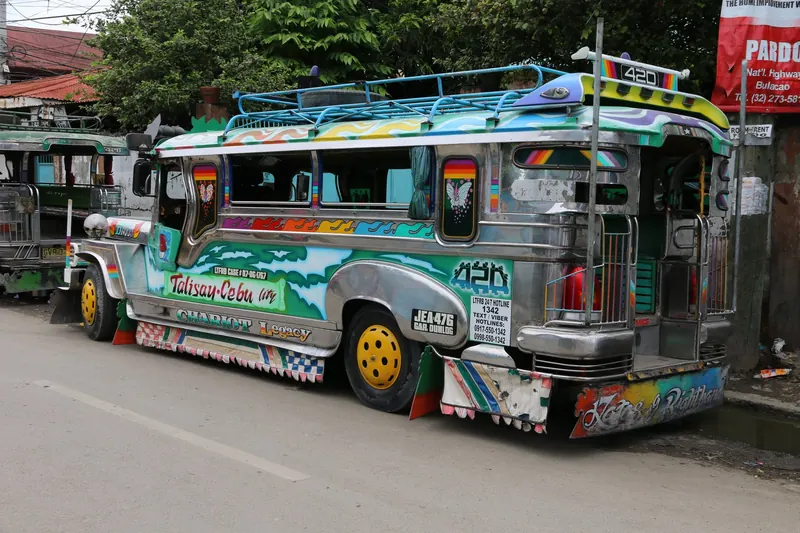
CCLEX earns its keep for trips ending on the south side of the city. It does far less for a destination in IT Park, Mandaue or the northern corridor, where the older Mactan bridges through Lapu-Lapu are still the shorter path, and where you would be paying a toll to head the wrong direction. For public transport, Cordova is served by jeepneys and multicabs toward the Lapu-Lapu commercial center, with onward connections over the older bridges, rather than by any direct mainland bus. A private vehicle or motorbike is the practical way to use the bridge, and Grab coverage thins on this side of the island, so treat night-time ride availability as unreliable and plan around it. The Cebu transport costs guide maps the jeepney and ride-hailing alternatives across the metro.
Power, Water, and Internet
Electricity. Cordova is served by the Mactan Electric Company (MECO), branded Mactan Enerzone, and the statute draws the line. Republic Act 10890, approved July 17, 2016, granted MECO a franchise to distribute electric power “to the end users in the City of Lapu-Lapu and the Municipality of Cordova, Province of Cebu.” Cordova is named in the franchise itself. This matters for budgeting: the Visayan Electric residential rate LiveInPH tracks does not apply here, MECO sets and publishes its own monthly residential rate on its own cycle, and LiveInPH does not track the MECO rate in its ledger. We publish no Cordova electricity figure rather than borrow the metro number. Read the current rate off your prospective unit’s latest MECO bill, or off MECO’s own published monthly rate, before you sign. That the site has a live Cebu electricity rate dataset is exactly why the gap is worth naming: the figure it tracks is a Visayan Electric figure, and Cordova is not on Visayan Electric. A metro rate quoted for a Cordova address is simply the wrong utility’s price.
Water. Here Cordova differs from the northern towns outside the metro. Its piped water comes from the Metropolitan Cebu Water District (MCWD), the same mainland district that serves Cebu City, which counts the Municipality of Cordova within its service area. Supply for this side of the metro is being reinforced by a new seawater desalination plant in Cordova, a public-private project feeding treated water into the MCWD system. Because MCWD is a chartered district with a published tariff, this is the one utility here that behaves like the metro rest of Cebu, though supply on a growing island edge can be tighter in the dry months, so ask what the building’s storage and pressure are like in April and May.
Internet. Fixed broadband in Cordova is thinner than in built-out Lapu-Lapu and best confirmed address by address. PLDT and Converge reach parts of the town, and fibre availability lags construction in the newer coastal developments, sometimes by months. Mobile data covers the populated areas reasonably. If a reliable home connection is non-negotiable for your work, make serviceability at the exact unit a condition of the lease and test it before you sign, because this is a genuine thin spot rather than a solved utility.
Living on a Low-Lying Island
Storm surge is the exposure that separates Cordova from mainland Cebu, and the honest position is the same one the island’s north end faces: the hazard is well established, the local damage record is not published. Cordova is flat and low, its highest point only about 10 metres above sea level, and several of its barangays sit on separate islands off the southern coast of Mactan. That geography is the risk.
What is established is that Cordova sits in the storm track. During Typhoon Tino (Kalmaegi), which crossed Cebu on November 4, 2025, Cordova was placed under the second-highest tropical cyclone wind signal, Signal No. 4, alongside Lapu-Lapu, Mandaue and Cebu City. What is not established, and what we therefore will not print, is a Cordova-specific damage, flood or surge count. The published Cebu flood reporting named the mainland cities and the northern towns; Cordova does not appear in it with a figure we could verify, and no agency or utility has published a per-barangay damage record for the town. Rather than invent one, we mark it unknown.
What you can do instead is check the specific address rather than the island. Run it through HazardHunterPH, the government’s own hazard-assessment tool, which returns storm-surge, flood and seismic ratings for a pinned location. On a low reclaimed or coastal-village lot that is a primary answer for your unit, and no town-level generalisation can replace it.
Where to Read Next
For the built-out sibling across the same island, the Lapu-Lapu and Mactan overview maps the resort corridor, the economic-zone belt and the airport side, all on the same MECO power that Cordova pays. The best neighborhoods in Cebu City for expats pillar covers the mainland alternatives, the Cebu rental market overview sets the metro context, and the complete guide to renting in Cebu is the legal frame and inspection runbook before you sign anywhere. For the utility boundary, the Cebu electricity bill guide explains the Visayan Electric rate that Cordova does not pay, and our methodology sets out how every figure on this site is sourced, and which ones, like Cordova rents and the MECO rate, we publish as gaps rather than invent.
Cordova rewards the renter who is early by choice: local or remote worker, south-metro commuter with a car, someone who wants a coastline and low rent and is comfortable that the town is still building. It punishes the renter who needs a settled market today. Match the barangay to the reason you are there, Poblacion for a car-free base, Pilipog for the bridge, the reclamation belt for whatever rises next, and get the power question right before anything, because the meter on the wall answers to an island utility the mainland metro never sees.
FAQ
Frequently asked.
How much is rent in Cordova, Cebu in 2026?
Who supplies electricity in Cordova, and is it VECO?
How long is the drive from Cordova to Cebu City over CCLEX, and what is the toll?
Is Cordova safe from flooding and storm surge?
What is being built in Cordova after CCLEX opened?
Data note. Prices, rates, and details are verified as of publication and may change. Always confirm with the listed provider or landlord before committing. This article is informational, not financial, legal, or immigration advice. Full disclaimer.