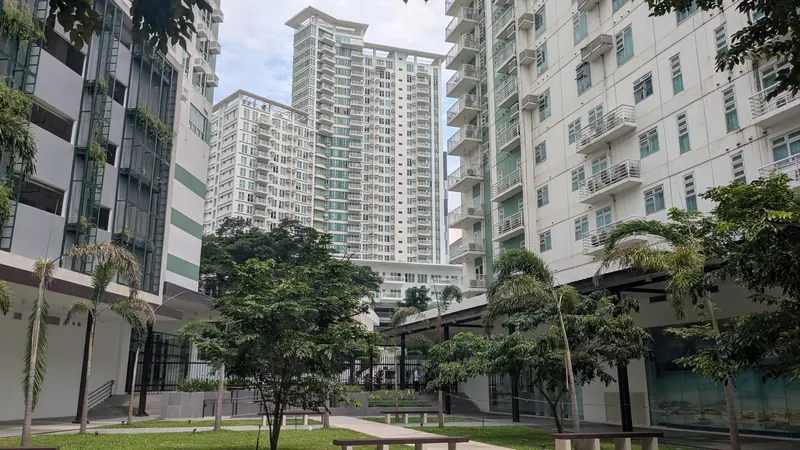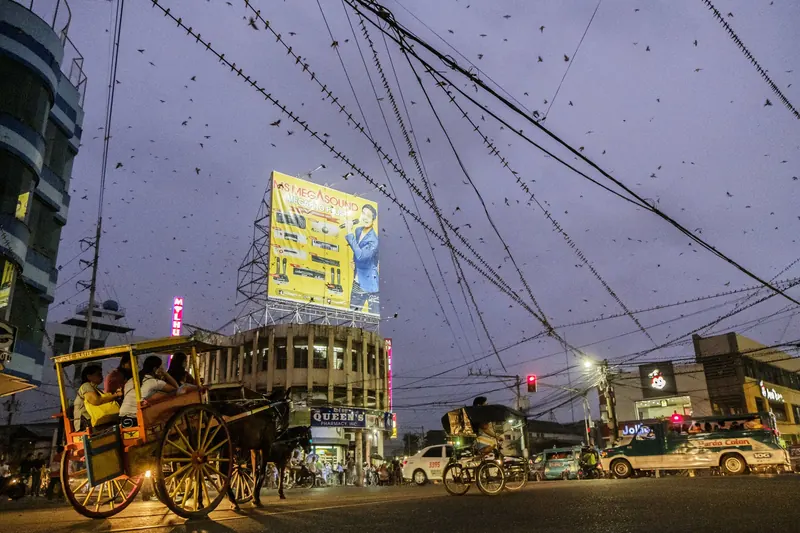
The interesting question about a PHP 20,000 to PHP 30,000 salary in Cebu is not what the city costs. It is what your payslip actually clears after SSS, PhilHealth and Pag-IBIG take their cut, and whether the number left over survives a Visayan Electric bill in the hot months. The math works at every tier in this band. The margin does not.
This guide runs the net-pay arithmetic first, then shows which rent band each net figure opens, using our own Cebu rent baseline rather than a scraped average. The audience is entry-level BPO agents, junior office staff, students on family support, and budget-conscious remote workers and retirees who have chosen this tier deliberately. If you want the full line-item budget in a form you can change, use the cost calculator. If your income sits above this band, the Cebu cost of living pillar covers the mid-range scenarios.
Gross Versus Net: What Actually Reaches Your Hands
Budget from gross and the month will not close. Three mandatory deductions come off every Philippine payslip before you see a peso, and above a certain point the BIR joins them.
- SSS. The contribution rate is 15% of the monthly salary credit, split 10% employer and 5% employee, under the RA 11199 schedule that reached its final step in 2025 and is unchanged for 2026. Your share is 5%. (SSS contribution table; the schedule is published as an image, not machine-readable text.)
- PhilHealth. The premium is 5% of monthly basic salary, shared equally, so your share is 2.5%. Members earning PHP 10,000 or less pay a fixed PHP 500 total premium; the ceiling is PHP 5,000 total at PHP 100,000. The rate is confirmed unchanged for 2026 (PhilHealth Advisory 2025-0002).
- Pag-IBIG. 2% of the fund salary, which is capped at PHP 10,000, so the employee share is PHP 200 for anyone earning above that.
- Income tax. Under the TRAIN table in force since January 2023, the first PHP 250,000 of annual taxable income is exempt, and 15% applies to the excess up to PHP 400,000. Taxable income is gross minus the three contributions above; 13th-month pay is exempt up to PHP 90,000, so it does not push this tier into tax.
| Gross / month | SSS (5%) | PhilHealth (2.5%) | Pag-IBIG | Total deductions | Income tax | Net take-home |
|---|---|---|---|---|---|---|
| PHP 20,000 | PHP 1,000 | PHP 500 | PHP 200 | PHP 1,700 | Zero | ≈ PHP 18,300 |
| PHP 25,000 | PHP 1,250 | PHP 625 | PHP 200 | PHP 2,075 | ≈ PHP 314 | ≈ PHP 22,600 |
| PHP 30,000 | PHP 1,500 | PHP 750 | PHP 200 | PHP 2,450 | ≈ PHP 1,008 | ≈ PHP 26,500 |
The tax step is the one that surprises people. At PHP 20,000 gross you pay nothing, because annual taxable income lands near PHP 219,600, under the exemption. At PHP 25,000 you cross it, and at PHP 30,000 you are paying roughly PHP 1,008 a month. Between PHP 20,000 and PHP 30,000 gross, a 50% raise buys you a 45% rise in net pay. That is not a disaster, but it is not what the gross figure promises either.
For a foreign remote worker or retiree choosing this tier, none of the above applies automatically, and the whole PHP 20,000 to PHP 30,000 band is yours to spend. At the BSP reference rate (₱62.49/USD (BSP RERB, 10 Sep 2026)) that is roughly USD 325 to USD 490 a month, which sits well below the USD 800 to USD 1,500 the nomad cost-of-living sites quote for Cebu. Those figures price an always-on-aircon condo in IT Park, frequent dining out and a Western pantry. This tier is the local-discipline version of the same city. It is workable on a foreign income, and it asks exactly the same restraint.
Where Each Net Figure Puts You on Rent
Rent is the first line to set, because it is the only one you cannot adjust after signing. Below is LiveInPH’s own Cebu rent baseline. Read the chart’s basis note carefully: these are editorial low–high bands with an arithmetic midpoint, not a measured index. No listing sample was ever collected, so there is no median and no quartiles, and we say so rather than dress the number up.
▸ Show the data table
| Segment | Low | Midpoint | High | n |
|---|---|---|---|---|
| IT Park / Cebu Business Park · Studio | ₱18,000 | ₱26,500 | ₱35,000 | — |
| IT Park / Cebu Business Park · 1BR | ₱25,000 | ₱40,000 | ₱55,000 | — |
| IT Park / Cebu Business Park · 2BR | ₱40,000 | ₱80,000 | ₱120,000 | — |
| Lahug · Studio | ₱14,000 | ₱19,500 | ₱25,000 | — |
| Lahug · 1BR | ₱20,000 | ₱27,500 | ₱35,000 | — |
| Banilad · Studio | ₱12,000 | ₱16,000 | ₱20,000 | — |
| Banilad · 1BR | ₱18,000 | ₱24,000 | ₱30,000 | — |
| Banilad · 2BR | ₱30,000 | ₱47,500 | ₱65,000 | — |
| Banilad · 3BR | ₱50,000 | ₱60,000 | ₱70,000 | — |
| Mabolo · Studio | ₱10,000 | ₱14,000 | ₱18,000 | — |
| Mabolo · 1BR | ₱20,000 | ₱27,500 | ₱35,000 | — |
| Mabolo · 2BR | ₱28,000 | ₱37,000 | ₱46,000 | — |
| Mabolo · 3BR | ₱45,000 | ₱55,000 | ₱65,000 | — |
| Mandaue · Studio | ₱10,000 | ₱14,000 | ₱18,000 | — |
| Mandaue · 1BR | ₱17,000 | ₱26,000 | ₱35,000 | — |
| Mandaue · 2BR | ₱15,000 | ₱17,500 | ₱20,000 | — |
| Capitol / Colon · Studio | ₱5,000 | ₱8,500 | ₱12,000 | — |
| Capitol / Colon · Room | ₱3,500 | ₱5,750 | ₱8,000 | — |
| Talamban · Studio | ₱12,000 | ₱18,500 | ₱25,000 | — |
| Talamban · 1BR | ₱26,000 | ₱30,000 | ₱34,000 | — |
| Talamban · Room | ₱3,500 | ₱5,250 | ₱7,000 | — |
Mapped against the net figures above, the bands sort cleanly:
| Segment (rent baseline) | Band | PHP 20k net | PHP 25k net | PHP 30k net |
|---|---|---|---|---|
| Capitol / Colon, room | PHP 3,500–8,000 | Yes | Yes | Yes |
| Talamban, room (student/dorm) | PHP 3,500–7,000 | Yes | Yes | Yes |
| Capitol / Colon, studio | PHP 5,000–12,000 | Entry only | Yes | Yes |
| Mabolo, studio | PHP 10,000–18,000 | No | Entry only | Lower half |
| Mandaue, studio | PHP 10,000–18,000 | No | Entry only | Lower half |
| Banilad, studio | PHP 12,000–20,000 | No | No | Entry only |
| Lahug, studio | PHP 14,000–25,000 | No | No | No |
| IT Park, studio | PHP 18,000–35,000 | No | No | No |
The 40% rule does the sorting above. At PHP 18,300 net, 40% is PHP 7,320, which lands you inside the Capitol/Colon and Talamban room bands and nowhere else. At PHP 22,600 net you clear PHP 9,040, which opens most of the Capitol/Colon studio band. At PHP 26,500 net you clear PHP 10,600, which on paper reaches the bottom of the Mabolo and Mandaue studios. IT Park and Lahug stay out of reach across the entire income range, and no amount of cutting elsewhere changes that, because the entry rent alone breaks the rule on its own.
Hold on to that Mabolo verdict, though. When we run the full budget further down, the 40% rule turns out to be too generous at this income, and the studio it says you can afford is one you cannot.
Named buildings do exist at the bottom of these bands (Urban Homes Tisa, City Clou Residences on D. Jakosalem Street), and they are worth walking into. We have not published their asking rents here because we have no dated listing snapshot to back one, and a building-specific price with no source is exactly the kind of figure that goes stale silently. Go and ask. For the neighbourhood detail behind these bands, see the Capitol and Colon guide, the Mabolo guide and the budget rentals playbook, which maps the sub-meter trap you will meet at this tier.
The Electricity Trap
Electricity is the line that breaks this budget, and it is breaking harder in 2026 than it did last year.
Visayan Electric’s residential all-in rate is ₱14.96/kWh, August 2026 (+₱0.06) (Visayan Electric, 2026-08-20 (primary — utility's own peso figure), Aug 2026). That August figure is primary, published by Visayan Electric itself on 20 August 2026. The cycle it should be read against is July, which sits PHP 1.16 above the June cycle of PHP 13.74. Read what it is, though, because the utility is explicit about it: PHP 14.90 is a capped rate. The ERC approved deferring part of the generation-cost recovery, holding the cycle below an unmitigated PHP 17.59/kWh while the generation charge itself hit a year-high PHP 11.00/kWh. Visayan Electric puts the effect on a 200 kWh household at roughly PHP 232 added this cycle instead of about PHP 770. The deferred amount is recovered in later cycles, so PHP 14.90 understates the true July cost of service and the catch-up lands on a bill you have not seen yet.
▸ Show the data table
| Billing cycle | ₱/kWh | Source |
|---|---|---|
| Feb–Mar 2025 cycle | ₱11.13 | Philstar / The Freeman |
| Aug–Sep 2025 cycle | ₱11.60 | Philstar / The Freeman |
| Sep–Oct 2025 cycle (2025 peak) | ₱12.51 | SunStar Cebu |
| Oct–Nov 2025 cycle | ₱11.51 | Philstar / The Freeman |
| January 2026 | ₱11.72 | Newsline Philippines (single source — re-verify) |
| February 2026 (+₱0.35) | ₱12.79 | Philstar / The Freeman; SunStar Cebu |
| March 2026 | ₱12.36 | Visayan Electric official (stated in April announcement) |
| April 2026 (+₱0.21) | ₱12.57 | Visayan Electric official |
| May 2026 (+₱0.31) | ₱12.88 | Visayan Electric official, May 2026 cycle |
| June 2026 (+₱0.86) — named-secondary only | ₱13.74 | SunStar Cebu, 2026-06-28 (named secondary — Visayan Electric published no June peso figure) |
| July 2026 (+₱1.16, 2026 high) | ₱14.90 | Visayan Electric, 2026-07-18 (primary — utility's own peso figure) |
| August 2026 (+₱0.06) | ₱14.96 | Visayan Electric, 2026-08-20 (primary — utility's own peso figure) |
At that rate, using the same appliance assumptions as our electricity pillar so the two pages cannot disagree:
| Setup | Monthly kWh | Monthly bill at the current rate |
|---|---|---|
| Fan only, fridge, lights, chargers | 120–200 | PHP 1,790–2,980 |
| Inverter aircon, ~5 hrs/day, plus the above | 240–365 | PHP 3,590–5,450 |
| Inverter aircon, 8 hrs/day, plus the above | 312–464 | PHP 4,670–6,950 |
| Non-inverter 1.5 HP aircon, 8 hrs/day, plus the above | 432–560 | PHP 6,440–8,340 |
Read the bottom row against the net-pay table. A PHP 8,340 electric bill is 46% of a PHP 18,300 net wage. That is not a budget with a problem, it is not a budget. This is why the PHP 20,000 tier runs a fan, full stop, and why the single most valuable question to ask a prospective landlord is whether the aircon is an inverter unit. Run the same 8 hours a day and a non-inverter burns 96 to 120 kWh more each month, which at the current rate costs you PHP 1,430 to PHP 1,795. Over a year that is most of a month’s rent, paid for nothing.
Three Budgets, Honestly Labelled
Here are the three tiers as tables. Two things to notice. First, the totals are computed from the rows, not typed by hand, so they cannot drift away from the lines above them. Second, the high column is not a lifestyle, it is the failure mode. In every scenario it exceeds net pay, which is precisely the point: at this tier, the top of every range is simultaneously reachable and unaffordable.
The rent and electricity lines are read from our ledgers. Water is the MCWD tariff, whose minimum charge is ₱259.16 (first 10 cu.m.) (MCWD via Philstar / The Freeman — final 10% tranche, effective 2026-04-01, Apr 2026) [Sourcing note: MCWD publishes NO residential tariff schedule on its own website. Every peso figure in this ledger (minimum ₱259.16 / 10 cu.m.; tiers ₱28.64, ₱33.71, ₱82.52) is attributed to MCWD via NAMED SECONDARIES — Philstar / The Freeman (2026-03-28) and Cebu Daily News — not via a primary MCWD publication.] and whose next bracket is ₱28.64/cu.m. (11–20 cu.m.) (MCWD via Philstar / The Freeman — final 10% tranche, effective 2026-04-01, Apr 2026) [Sourcing note: MCWD publishes NO residential tariff schedule on its own website. Every peso figure in this ledger (minimum ₱259.16 / 10 cu.m.; tiers ₱28.64, ₱33.71, ₱82.52) is attributed to MCWD via NAMED SECONDARIES — Philstar / The Freeman (2026-03-28) and Cebu Daily News — not via a primary MCWD publication.], so a single person on 10 to 16 cu.m. lands between PHP 259 and PHP 431. Everything else (food, internet, phone, transport, lifestyle) is an editorial estimate, not a sourced figure, and is flagged as such in the article’s claim register. We would rather tell you which half of the table is evidence.
| Category | Range | Notes |
|---|---|---|
| Rent (room, Capitol/Colon or Talamban) | ₱3,500–₱8,000 | Cebu rent baseline, editorial |
| Electricity (VECO, fan only) | ₱1,790–₱2,980 | 120–200 kWh at the live rate |
| Water (MCWD) | ₱259–₱431 | Minimum charge to 16 cu.m. |
| Internet | ₱900–₱1,200 | Editorial estimate |
| Food | ₱5,000–₱7,000 | Editorial estimate |
| Transport (jeepney) | ₱520–₱1,200 | 20 workdays, 2 rides/day at PHP 13 |
| Phone | ₱300–₱500 | Editorial estimate |
| Misc | ₱800–₱1,500 | Editorial estimate |
| Floor total | ₱13,069–₱22,811 |
| Category | Range | Notes |
|---|---|---|
| Rent (studio, Capitol/Colon) | ₱5,000–₱12,000 | Cebu rent baseline, editorial |
| Electricity (VECO, inverter ~5 hrs) | ₱3,590–₱5,450 | 240–365 kWh at the live rate |
| Water (MCWD) | ₱259–₱431 | |
| Internet | ₱1,000–₱1,800 | Editorial estimate |
| Food | ₱7,000–₱10,000 | Editorial estimate |
| Transport | ₱800–₱2,000 | Editorial estimate |
| Phone | ₱400–₱800 | Editorial estimate |
| Lifestyle (basic gym, small discretionary) | ₱1,500–₱3,000 | Editorial estimate |
| Middle total | ₱19,549–₱35,481 |
| Category | Range | Notes |
|---|---|---|
| Rent (studio, lower Mabolo or Mandaue) | ₱10,000–₱18,000 | Cebu rent baseline; only the lower half clears the 40% rule |
| Electricity (VECO, inverter 8 hrs) | ₱4,670–₱6,950 | 312–464 kWh at the live rate |
| Water (MCWD) | ₱259–₱431 | |
| Internet | ₱1,200–₱2,000 | Editorial estimate |
| Food | ₱9,000–₱13,000 | Editorial estimate |
| Transport | ₱1,000–₱2,500 | Editorial estimate |
| Phone | ₱500–₱1,000 | Editorial estimate |
| Lifestyle | ₱2,000–₱4,000 | Editorial estimate |
| Savings / emergency fund | ₱1,000–₱3,000 | Only survives if something else gives |
| Ceiling total | ₱29,629–₱50,881 |
Now do the arithmetic the old version of this page did not do, because it is the most useful thing here. Scenario C does not close, even at its low column. Add the low figures up and you get about PHP 29,600 against a net take-home of PHP 26,500: a shortfall of roughly PHP 3,100 a month, appearing at the cheapest version of the scenario rather than the expensive one.
That is not a mistake in the table. It is a mistake in the 40% rule, and this is where the rule breaks. Forty percent of PHP 26,500 net is PHP 10,600, which is exactly what put a Mabolo or Mandaue studio inside reach two sections ago. But the lines that survive the rent decision do not scale down with your income. Visayan Electric charges ₱14.96/kWh (Visayan Electric, 2026-08-20 (primary — utility's own peso figure), Aug 2026) whether you earn PHP 20,000 or PHP 30,000. Water is ₱259.16 (first 10 cu.m.) (MCWD via Philstar / The Freeman — final 10% tranche, effective 2026-04-01, Apr 2026) [Sourcing note: MCWD publishes NO residential tariff schedule on its own website. Every peso figure in this ledger (minimum ₱259.16 / 10 cu.m.; tiers ₱28.64, ₱33.71, ₱82.52) is attributed to MCWD via NAMED SECONDARIES — Philstar / The Freeman (2026-03-28) and Cebu Daily News — not via a primary MCWD publication.] regardless. Food and transport barely move. So the rent you can actually carry at this tier is what is left after those fixed lines, not a percentage of the top.
Run it backwards. Take PHP 26,500 net, subtract every non-rent line at its low value (about PHP 19,600), and the rent you can genuinely afford is about PHP 6,900, or roughly 26% of net — inside the Capitol/Colon studio band, not the Mabolo one. At PHP 30,000 gross in Cebu in 2026, the 40% rule overstates what you can pay for rent by something like PHP 3,700 a month. Use 25% and the budget closes with the savings line intact. The July rate rise moved that ceiling: at the June rate the same arithmetic left about PHP 7,300, so roughly PHP 380 of affordable rent went to Visayan Electric in a single cycle.
Food, and the Tingi Economy
Food at this tier is a pattern, not a number. Carinderia lunches, home-cooked dinners, one Carbon Market run a week for produce, fish and meat, one or two supermarket trips a month at Gaisano or Metro for rice, oil and cleaning supplies. No imported groceries: no olive oil, no imported cheese, no cereal. Two to four restaurant meals a month, mostly at mall food courts. Our food bands above are editorial, and the grocery prices guide carries the item-level detail behind them.
Transport: The Walking-Distance Rule
Transport costs at this budget are either trivial or fatal. There is no middle, and the deciding variable is whether you live within walking distance of work.
The minimum jeepney fare is PHP 13 for the first four kilometres, plus PHP 1.80 per succeeding kilometre. That figure is more current than it looks: the LTFRB approved an increase to PHP 14 (and PHP 2.00 per kilometre) on 17 March 2026, and the President ordered it suspended the following day, so the old fare stands (Inquirer, 17 and 18 March 2026, both named secondaries; the LTFRB’s own fare-rates page returns HTTP 403 to fetchers). At two rides a day across 20 workdays, that is PHP 520 a month floor, and errands rarely push a jeepney-only month past PHP 1,200. Add weekend trips and the occasional wet-season Grab and the line climbs to PHP 2,000 or PHP 2,500, which is what Scenarios B and C carry.
Grab is the other world. A daily return commute from Mandaue to IT Park at rush hour runs into the thousands per month and is simply incompatible with this income band. We do not publish a per-ride Grab figure here because Grab’s pricing is dynamic and we have no dated fare sample; the transport guide treats it properly.
What This Budget Does Not Cover
- HMO or private health insurance. PhilHealth is not health insurance in the sense a Westerner means it; it is a partial subsidy on a hospital bill. Your PhilHealth employee share at this tier is PHP 500 to PHP 750 a month, and that is the entire backstop. A hospital stay at Chong Hua or Cebu Doctors without an HMO can run into five figures out of pocket. A foreign remote worker or retiree at this tier has no employer, so even that backstop is not automatic; you enrol voluntarily or you carry the whole bill. The Cebu hospitals and healthcare cost guide breaks down what each room and procedure actually bills.
- A real emergency fund at the two lower tiers. It only appears in Scenario C, and only with discipline.
- Imported groceries or a dining habit. A daily coffee-shop coffee across 20 workdays is a rent-band’s worth of money a year.
- Consumer electronics on cash. A new phone at this budget is a month of take-home. It gets bought on instalment, which is a debt line the budgets above do not carry.
- A car or a motorcycle. Motorcycle loan payments consume a fifth of this budget before fuel, registration or insurance. Walking, jeepney and occasional Grab are the transport set.
Bottom Line
Living in Cebu on PHP 20,000 to PHP 30,000 gross is workable and it is not comfortable, and the honest version of that sentence is sharper than the one you will read elsewhere: run the tables and even the top tier does not close on the rent the standard rule says you can afford. Three levers decide whether yours does.
Keep rent near 25% of net, not 40% of gross. Get an inverter aircon or run a fan, because at ₱14.96/kWh (Visayan Electric, 2026-08-20 (primary — utility's own peso figure), Aug 2026) the gap between those two is PHP 1,436 to PHP 1,795 a month for the identical hours. And live close enough to work to walk, which is the only line in this budget that can go to zero. Get all three right and Scenario B closes with a small margin and Scenario C closes with a real one, savings line included. Get the rent one wrong and no income in this range closes at all, which is what the PHP 29,600 low column above is telling you.
The ledgers behind this page are public. The Cebu rent baseline is at /data/cebu-rent-index, the Visayan Electric rate series at /data/cebu-electricity-rate, and the MCWD tariff at /data/cebu-water-tariff, each downloadable as CSV and JSON with its provenance and its known limitations attached. How they are built, and where they are weak, is set out in the methodology. Run your own gross figure through the cost calculator rather than trusting any budget table, including this one.
FAQ
Frequently asked.
Can you live on PHP 20,000 a month in Cebu?
How much do BPO agents earn in Cebu?
What is my take-home pay on a PHP 25,000 salary in Cebu?
What is the minimum wage in Cebu in 2026?
How much rent can I afford in Cebu on a PHP 30,000 salary?
How much is the electricity bill in Cebu at this budget?
Data note. Prices, rates, and details are verified as of publication and may change. Always confirm with the listed provider or landlord before committing. This article is informational, not financial, legal, or immigration advice. Full disclaimer.